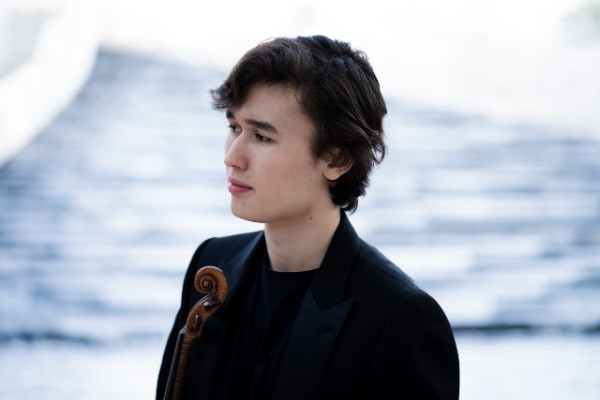
The story of a pianist often begins not with public triumphs but with quiet rooms, patient teachers, and a town that offers neither glamour nor pressure. Jakub Kuszlik, who celebrates his birthday on 23 December, emerged from such a landscape.
Kuszlik grew up in Bochnia, a modest town in southern Poland whose cultural life is not defined by spectacle. In this environment, music was not something to be conquered, but something that flowed gradually.
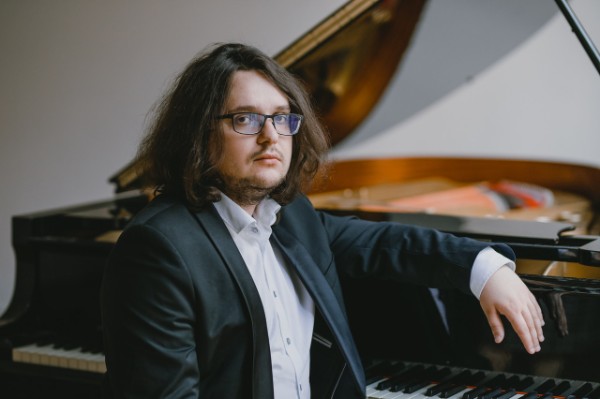
Jakub Kuszlik
As we celebrate his birthday, let’s explore how the great pianism of Jakub Kuszlik did not emerge from a pressure-cooker environment or a spectacular childhood narrative. Rather, it grew patiently and was shaped by time and commitment.
Jakub Kuszlik plays Chopin: Mazurka in C-sharp minor, Op. 30, No. 4
Endurance before Brilliance
Bochnia, one of Poland’s oldest towns, carries a strong sense of historical depth. Its famous salt mine, operating since the Middle Ages, has long symbolised endurance rather than display.
Kuszlik’s first encounters with the piano were typical of many Polish musicians, yet decisive in their seriousness. Poland’s system of state-supported music schools provides early, disciplined training for children who show aptitude, and Kuszlik entered this world at a young age.
From the outset, the piano was not treated as a hobby but as a language to be learned with precision. Daily practice, solfège, theory, and ensemble work formed part of a comprehensive musical education that prioritised literacy over virtuosity.
Jakub Kuszlik plays Chopin: Scherzo in C-sharp minor, Op. 39
Maturity without Noise
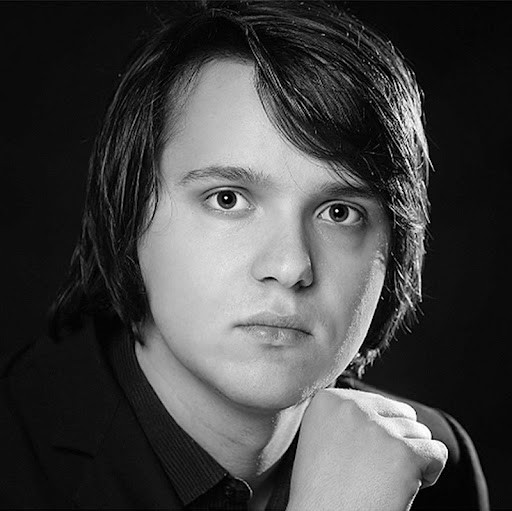
Jakub Kuszlik
What distinguishes Kuszlik’s early development is not prodigious flamboyance but steadiness. Teachers and listeners have often remarked on the absence of showmanship in his playing, even when he was first a student.
Instead, there was a marked concern for phrasing, balance, and harmonic awareness. These traits suggest an early internalisation of music as a structured art rather than an arena for personal display.
Bochnia’s relative distance from major cultural centres may have played a crucial role here. Without constant exposure to competitive pressures or international comparison, Kuszlik could mature musically at his own pace. In many respects, his early formation reflects an older pedagogical ideal that favoured mastery through repetition, reflection, and slow accumulation of insight.
Jakub Kuszlik plays Chopin: Etude in G-sharp minor, Op. 25, No. 6
Tradition Absorbed
Central to this formative period was Poland’s pianistic tradition, which inevitably shaped Kuszlik’s musical imagination. Chopin, omnipresent in Polish music education, was not introduced as a monument to be revered from afar, but as a living language that was rooted in dance, song, and national idiom.
Kuszlik’s later affinity for Chopin’s mazurkas, often praised for their natural rubato and rhythmic grounding, can be traced back to this early, culturally embedded exposure. Rather than treating Chopin as a vehicle for sentimentality, he absorbed the composer’s syntax as something spoken fluently from childhood.
Equally important was the influence of teachers who emphasised listening over projection. His early teachers encouraged sensitivity to touch and colour, fostering an awareness that the piano is not merely a mechanism, but a responsive instrument capable of nuance and depth.
Jakub Kuszlik plays Chopin: Ballade in F Major, Op. 38
Repertoire as Education
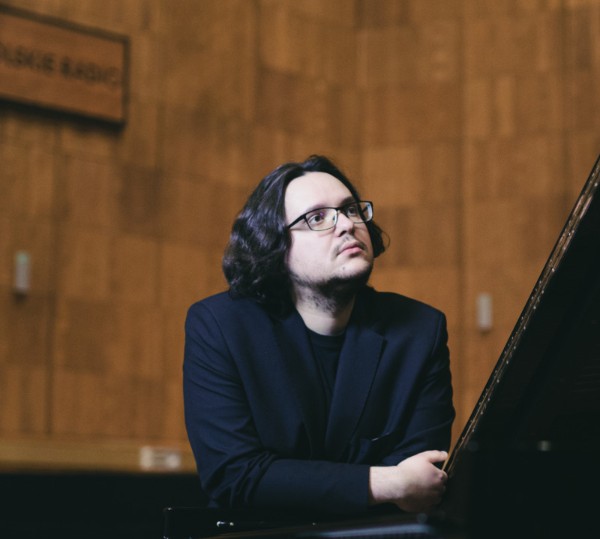
Jakub Kuszlik
As Kuszlik progressed through his teenage years, his musical interests broadened. Alongside the central Romantic repertoire, he encountered Bach, Mozart, and later Brahms. This exposure reinforced his inclination toward structural understanding rather than episodic effect.
The transition from local training to higher-level education did not disrupt this trajectory but refined it. When Kuszlik later studied at the Feliks Nowowiejski Academy of Music in Bydgoszcz, under the guidance of Katarzyna Popowa-Zydroń, he entered a lineage known for intellectual rigour and stylistic integrity.
Yet the foundations for this advanced work had already been laid in Bochnia. This included the discipline of daily practice, the habit of careful listening, and a respect for the score as an ethical framework rather than a flexible suggestion.
Jakub Kuszlik plays Clementi and Prokofiev
Assurance not Urgency
Looking back, Kuszlik’s early life resists the familiar narrative of the child prodigy. There are no stories of viral performances or meteoric childhood fame. Instead, there is continuity in years of preparation that favoured depth over acceleration.
When international recognition finally arrived, it appeared not as a transformation but as a natural extension of an already formed artistic identity.
His upbringing in Bochnia offered space for growth without distortion, allowing technique and imagination to mature together. The result is an artist whose playing conveys not urgency but assurance, not conquest but conversation.
For more of the best in classical music, sign up for our E-Newsletter