
Ludwig van Beethoven, the titan of classical music, has inspired generations with his profound emotional depth, structural genius, and unrelenting passion. His symphonies, sonatas, and quartets are more than just musical compositions. They are monumental expressions of human experience, ranging from triumph to tragedy.
For those who find themselves captivated by Beethoven’s intensity, there is a modern figure whose interpretations of his work breathe new life into these timeless masterpieces. And I am talking of Daniel Barenboim, a conductor, pianist, and musical polymath, who has engaged with Beethoven’s music throughout his life.
Daniel Barenboim plays Beethoven: Piano Sonata No. 23 in F minor, Op. 57 “Appassionata”
A Meeting of Minds
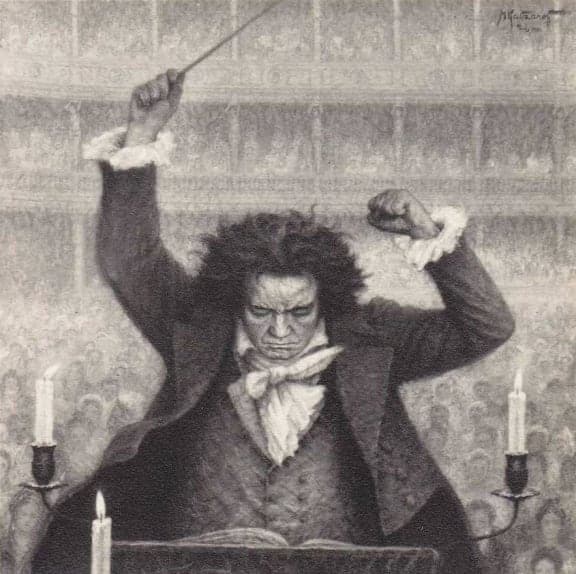
Beethoven conducting
To love Beethoven is to be drawn to music that transcends mere notes on a page. Beethoven’s compositions demand an interpreter who can navigate their emotional extremes while honouring their architectural precision. Daniel Barenboim, born in 1942 in Buenos Aires, has dedicated much of his career to this very challenge.
His performances of Beethoven’s works, whether as a pianist tackling the 32 piano sonatas or as a conductor leading the nine symphonies, reveal a profound understanding of the composer’s spirit. Barenboim’s approach is rooted in finding a balance between the rigorous structure and the raw emotions of Beethoven’s music.
In his recordings of Beethoven’s piano sonatas, Barenboim approaches this duality with a clarity of phrasing and dynamic control. Yet, the sonatas also pulse with an emotional immediacy that feels almost improvisatory. Meticulously crafted and viscerally compelling, Barenboim captures Beethoven’s revolutionary spirit.
Daniel Barenboim plays Beethoven: Piano Sonata No. 8 in C minor, Op. 13 “Pathétique”
A Lifelong Dialogue
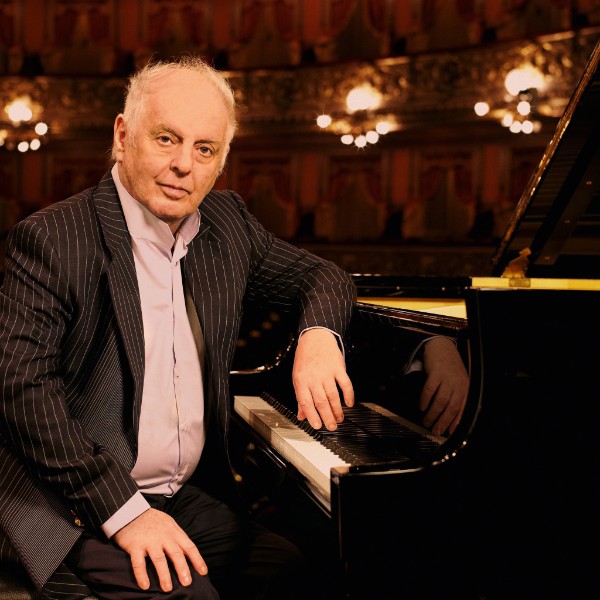
Daniel Barenboim
Barenboim’s affinity for Beethoven is not merely professional but deeply personal. He has often spoken of Beethoven as a lifelong companion, a composer whose music has shaped his understanding of art and humanity. In his book Music Quickens Time, Barenboim reflects on Beethoven’s ability to convey universal truths through music, describing him as a composer who “speaks to the human condition in a way that is both specific and infinite.”
In 2011, he undertook the monumental task of performing and conducting all nine Beethoven symphonies in a single cycle with the West-Eastern Divan Orchestra. These performances were not just musical events but cultural statements, showcasing Barenboim’s belief in music’s power to bridge divides.
The West-Eastern Divan Orchestra, co-founded by Barenboim and Edward Said in 1999, brings together young musicians from Israel, Palestine, and other Middle Eastern countries in a radical act of unity inspired, in part, by Beethoven’s vision of universal brotherhood.
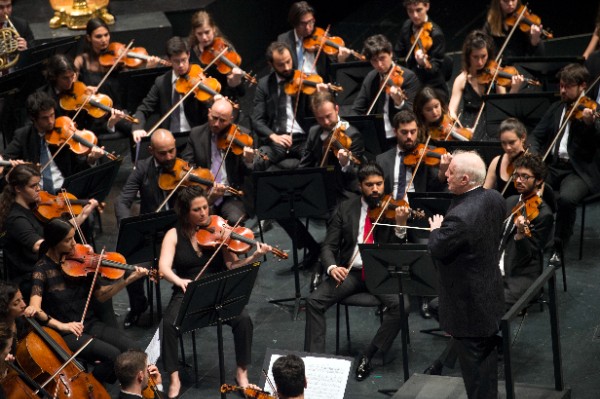
West-Eastern Divan Orchestra
Beethoven’s music often grapples with themes of struggle, freedom, and human solidarity, and Barenboim’s work with the West-Eastern Divan Orchestra embodies these ideals in a modern context. His performances of Beethoven with this ensemble are imbued with a sense of purpose, as if the music itself is a call to transcend conflict and embrace shared humanity.
Daniel Barenboim/West-Eastern Divan orchestra play Beethoven: Leonore Overture No. 3
Beyond Performance
Barenboim’s connection to Beethoven extends beyond his performances to his broader musical and philosophical outlook. Like Beethoven, who was a revolutionary in his time, Barenboim challenges conventions and pushes boundaries.
Beethoven defied the classical norms of his era, expanding the scope and elevating music to new heights. Similarly, Barenboim has consistently sought to innovate, whether through his interpretations, his advocacy for music education, or his efforts to make classical music accessible to diverse audiences.
One of Barenboim’s most significant contributions is his emphasis on music as a force for dialogue and understanding. In a world often divided by politics and ideology, Barenboim’s work echoes Beethoven’s belief in music’s capacity to unite.
Daniel Barenboim plays Beethoven: Piano Sonata No. 14 in C-sharp minor, Op. 27, No. 2 “Presto”
Art and Humanity
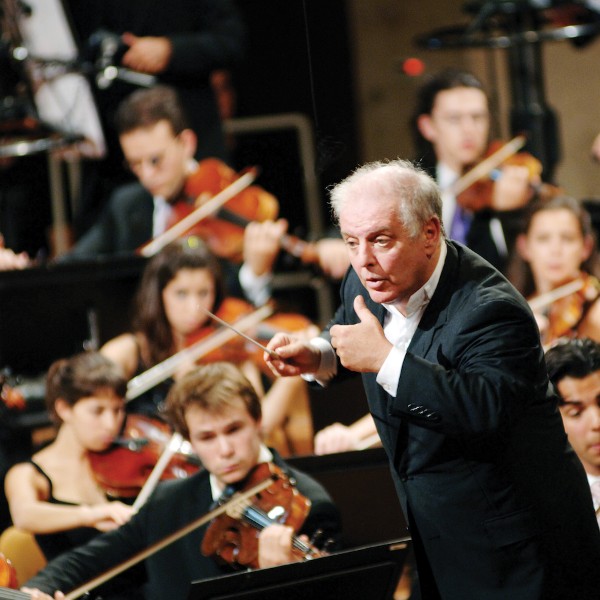
Daniel Barenboim
His Beethoven performances are not just concerts but invitations to reflect on the human condition, a quality that resonates deeply with those who admire Beethoven’s ability to express profound truths through sound.
Beyond grandeur lurks quiet vulnerability, and this balance between the epic and the intimate make Barenboim’s interpretations a natural extension of the composer’s vision.
Beethoven was a composer who believed in the transformative power of art, and Barenboim embodies this ethos through his work with the West-Eastern Divan Orchestra, his writings on music’s role in society, and his tireless advocacy for cultural dialogue. His performances of Beethoven are infused with this sense of purpose, making them particularly compelling for listeners who see music as more than entertainment.
Daniel Barenboim plays Beethoven: Piano Concerto No. 3 in C minor, Op. 37
Conclusion
If you are drawn to Beethoven’s music, to its emotional power, its intellectual rigour, and its universal appeal, Daniel Barenboim’s artistry will probably speak to you. His performances capture the essence of Beethoven’s genius, balancing technical precision with profound feeling.
Beyond the concert hall, Barenboim’s philosophy and activism reflect the same humanistic spirit that animates Beethoven’s greatest works. Barenboim offers a bridge between Beethoven’s era and our own, inviting listeners to rediscover the composer’s music with fresh ears and an open heart.
For Beethoven lovers, Barenboim is not just an interpreter but a kindred spirit, channelling the composer’s passion and vision into performances that resonate in modern times.
For more of the best in classical music, sign up for our E-Newsletter





The best Beethoven 32 Sonatas are with Austrian pianist Friedrich GULDA!