In the October 1922 issue of La revue musicale, the musical supplement contained an Hommage to Gabriel Fauré. The 7 piano pieces were all to be written using Fauré’s name, done into pitches. His entire name came out as GABDBEE FADGDEE.
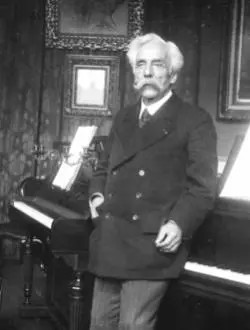
Gabriel Fauré
It was Ravel who organised this writing party, at the invitation of Henri Prunières, editor of La Revue Musicale. Even though these pieces were ‘in memory’ of their teacher, Gabriel Fauré was still very much alive, though reduced in his activities because of his hearing problems, in which musical sounds became distorted. His death occurred in 1924. He died on 4 November 1924 of pneumonia.
He had retired from leadership of the Paris Conservatoire in 1920, at age 75. That year, he was awarded the Grand-Croix of the Légion d’honneur, the most prestigious order of merit in France, which was rarely given to musicians. In 1922, Alexandre Millerand, president of France, led a national hommage for him, in which the country’s leading musical artists participated.
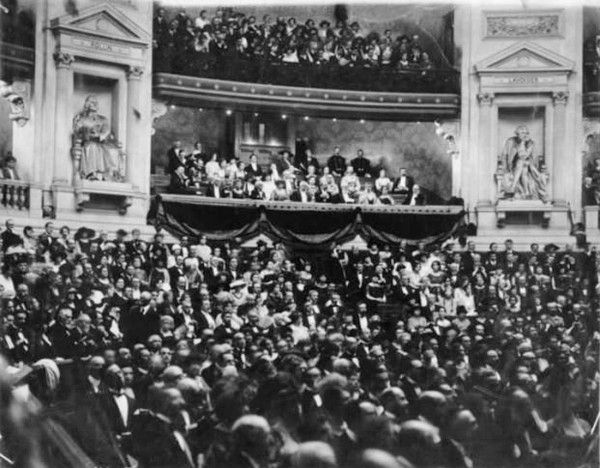
National hommage to Fauré, 1922. Fauré and President Millerand are in the box between the statues ( Bibliothèque nationale de France, département Musique, Est.FauréG.118)
In the musical homage in La Revue Musicale, the entire issue was devoted to Fauré:
The articles, written by many of his students, covered his life and works. The article on Fauré and his poets was written by René Chalupt, a poet whose works were frequently set to music by Fauré’s students. He was also a music critic for La Revue musicale. The final bibliography is a chronological listing of all of Fauré’s compositions.
| Souvenirs | Gabriel Fauré |
| Gabriel Fauré | Émile Vuillermoz |
| Les Mélodies de Gabriel Fauré | Maurice Ravel |
| Gabriel Fauré et les poètes | René Chalupt |
| Le Théâtre | Charles Kœchlin |
| Les Œuvres d’orchestre | Florent Schmitt |
| La Musique de Chambre | Roger-Ducasse |
| La Musique de piano | Alfred Cortot |
| La Musique religieuse | Nadia Boulanger |
| Bibliographie de l’œuvre de Gabriel Fauré |
The Musical Supplement contained the seven pieces ‘par ses anciens élèves’, and the cover was an original design by Maxime Dethomas.
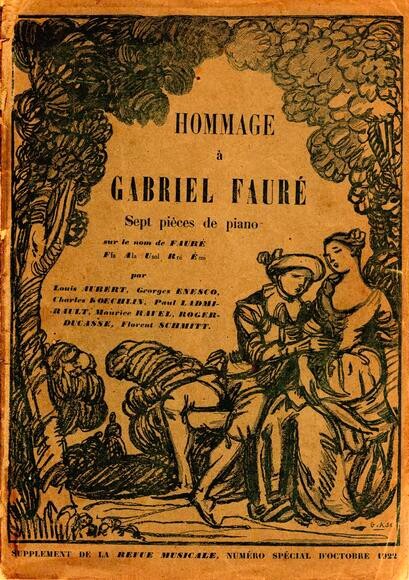
Musical Supplement Cover
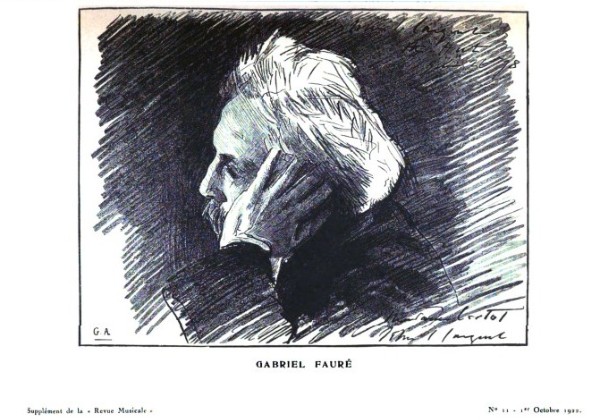
Also included in the text of the journal were three portraits of Fauré: an unpublished drawing by ‘Sir John Sargent’ engraved in wood by Georges Aubert; a portrait of Fauré, designed and engraved by Aubert; and an unpublished sketch by Jules Flandrin.
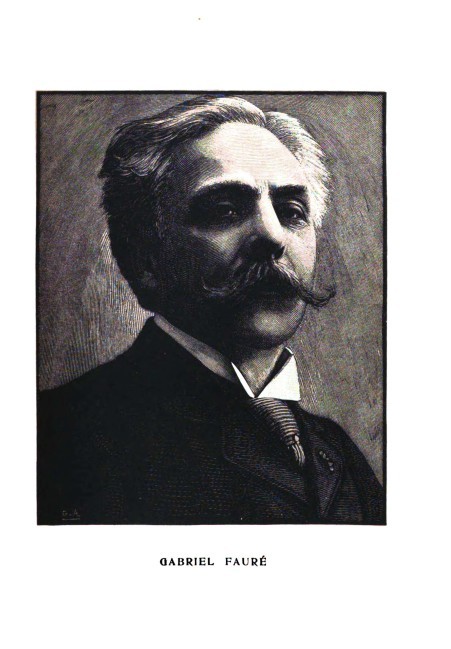
Sargent, engraved by Aubert: Gabriel Fauré
Aubert: Gabriel Fauré
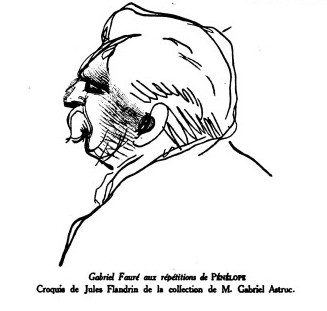
Flandrin: Gabriel Fauré at the rehearsals for Pénélope
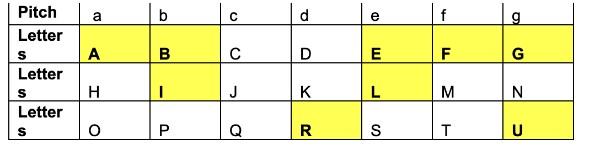
We’ll focus on the Musical Supplement. The issue was in honour of Fauré, but with a unifying musical idea, based on a musical theme based on Fauré’s name. The theme followed a pattern established earlier in La Revue Musicale for these kinds of homage pieces. Because the regular scale only has a limited number of pitches, A-B-C-D-E-F-G, only a few composers’ names could translate easily, such as Eduardo Caba or Ralf Gabe. By reusing the A-G alphabet, Gabriel Fauré becomes GABDBEE FAGDE.
In the chart below, his name letters are highlighted. The pitches are in the top row.
Seven of Fauré’s students participated in the musical homage: Louis Aubert, Georges Enescu, Charles Koechlin, Paul Ladmirault, Maurice Ravel, Roger-Ducasse, and Florent Schmitt. They all faced a choice: follow their own style or their teacher’s.
Ravel’s Berceuse (Lullaby), when published separately, was dedicated to Claude Roland-Manuel (1922-2005), as a birthday present for the son of his friend, Roland-Manuel. Fauré’s work was for violin and piano, and Roger-Ducasse’s for 2 pianos; otherwise, all the works were for solo piano.
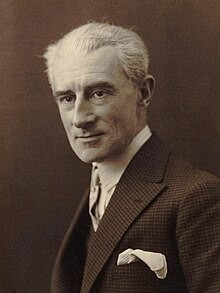
Maurice Ravel, 1925
Ravel set the name row in the opening violin line and proceeded from there.
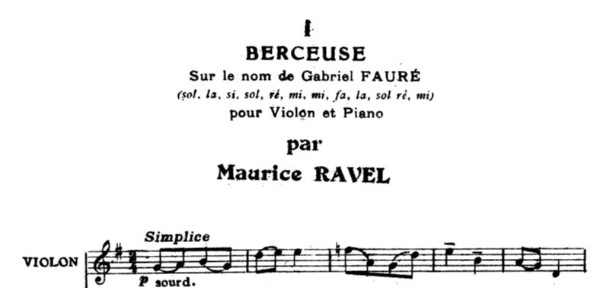
Ravel opening
Ravel’s setting followed what he took from Fauré’s teaching: the artistic side rather than the technical side, so his work is a model of simplicity. He was one of two composers who used the full musical acronym of Fauré’s name, rather than just the 5 notes of the last name.
Maurice Ravel: Berceuse sur le nom de Gabriel Fauré (Kenneth Sillito, violin; Margaret Fingerhut, piano)
Romanian composer George Enescu (1881–1955), on the other hand, in this piece for someone who was described as ‘the gentlest of men’, started his work Molto moderato e cantabile with directions to use the pedal and to make the accompaniment ‘harmonieux et voilé’ (harmonious and veiled), and included the marking ‘senza rigore’ several times. It has both a free-flowing rhythm paired with extreme precision in its gestures.
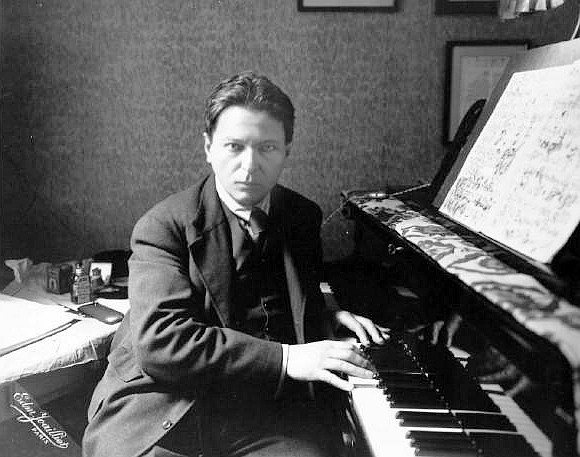
E. Joaillier: George Enescu in 1930
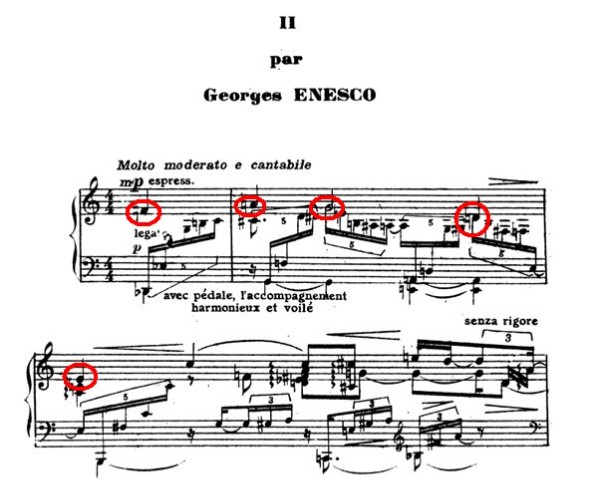
Enescu opening, with the name pitches circled
George Enescu: Piece sur le nom de Fauré (Margaret Fingerhut, piano)
Louis Aubert (1877–1968) wrote a work that flows gently and carries the Fauré signature upbeat rhythms and elliptical harmonies.
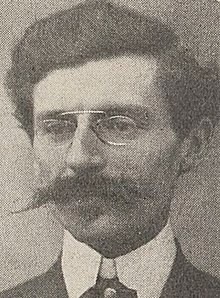
Louis Aubert
Louis Aubert: Hommage a Gabriel Fauré (Margaret Fingerhut, piano)
Florent Schmitt (1870–1968) created one of the most ambitious works, using the full musical anagram rather than just the last name. Fauré’s last name provided the Scherzo theme and the theme for the waltz section. French pianist Alfred Cortot said about the work that ‘Gabriel’ was set as a ‘caressing, whispered phrase, bathed in arpeggios [in the flavour of Fauré], bringing to the effervescence of the first subject an unexpected expressive contrast [underlining the] living dialogue which is established between these two themes.”
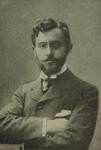
Florent Schmitt in 1900
In the final analysis, however, writers concluded that this work was not one that Fauré would have written. It is very much a work by Schmitt that bows in the direction of his teacher but shows what his student has become. The work was later orchestrated as In Memoriam, Op. 72, with the Scherzo from the homage edition becoming the second part.
In the opening of his work, Schmitt carefully labels the second and third measures with Fauré’s name.
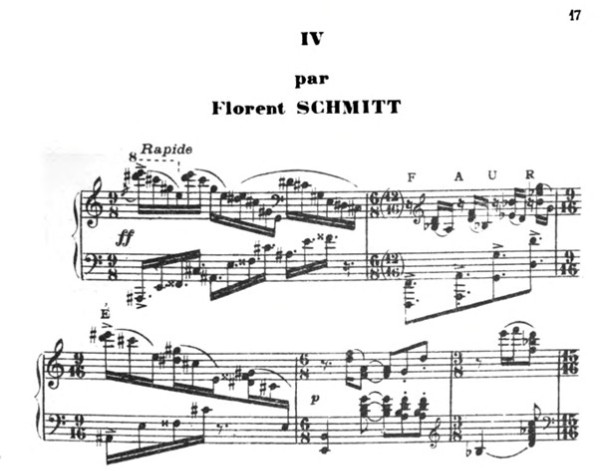
Schmitt opening
Florent Schmitt: Hommage Musical à Gabriel Fauré (Margaret Fingerhut, piano)
Charles Koechlin (1867–1950) also followed the model of simplicity that Ravel and Enescu used in modelling his work on his teacher’s style. The work is also known as Choral sur le nom de Fauré and later became part of his 2 Chorals, Op. 76/2, for small orchestra.
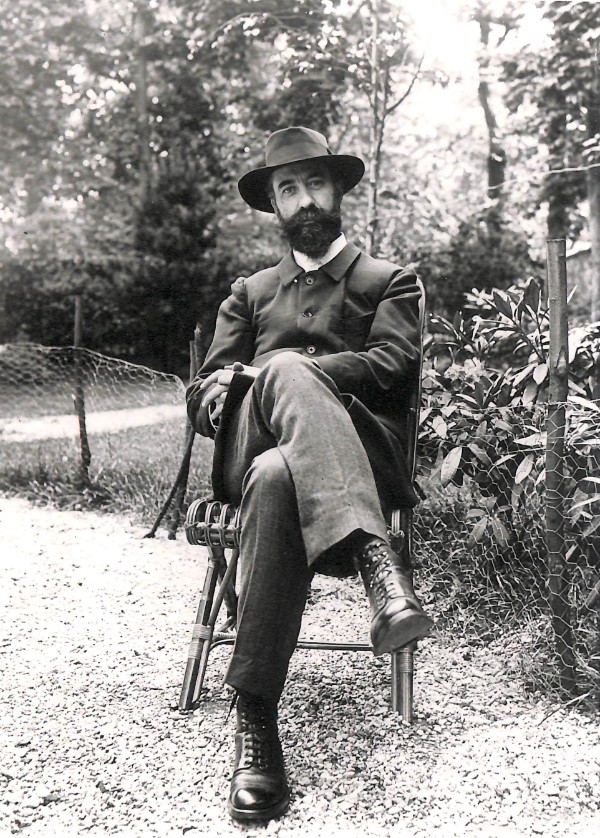
Charles Koechlin
Koechlin worked closely with Fauré, first with him as his teacher and then orchestrating works such as Pelléas et Mélisande in 1898.
Charles Koechlin: Hommage Musical a Gabriel Fauré (Margaret Fingerhut, piano)
As in Aubert’s earlier work, Paul Ladmirault (1877–1944) wrote a piece that carries Fauré’s upbeat rhythms and characteristic harmonies. The rhythmic gesture used throughout is the triplet, particularly in the trio section. The more exuberant outer sections explore, like Fauré did, the idea of modality (versus tonality)
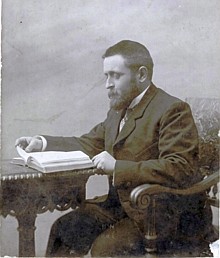
Paul Ladmirault
Paul Ladmirault: Hommage a Gabriel Fauré (Margaret Fingerhut, piano)
Although what was printed in the Musical Supplement was for piano 2 hands, in 1922, Jean Roger-Ducasse (1873–1954) also produced a version for piano 4 hands, and a symphonic version, known as the Poème symphonique sur le nom de Gabriel Faure. The 4-hand version was played at the premiere in December.
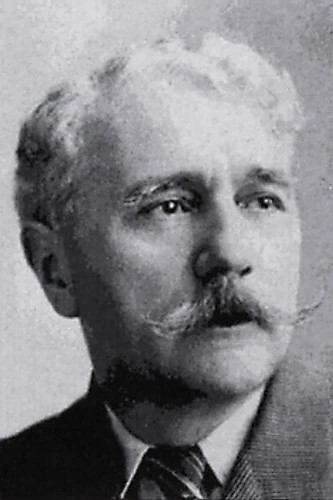
Jean Roger-Ducasse
Jean Roger-Ducasse: Hommage a Gabriel Fauré (Margaret Fingerhut, piano; Clifford Benson, piano)
The premiere of the tribute works occurred on 13 December 1922 at the Salle de l’Ancien Conservatoire, as part of the 88th Société musicale indépendante (SMI) concert. The pianist was Madeleine Grovlez, with Hélène Jourdan-Morhange on the violin for Ravel’s Berceuse. Roger-Ducasse’s work was played in the two-piano, 4-hands arrangement, with Daniel Éricourt as the second pianist.
And, all of this was for a dedicatee who couldn’t hear the music properly. By the end of his life, Fauré had both a growing deafness and a systematic distortion that made high pitches sound a third lower, low pitches sound a third higher, and where only the middle range sounded correct. He refused to sanction performances of his string quartet, written in the last years of his life, because he knew that he couldn’t really hear what was being played. It received its premiere 8 months after his death.
A collection such as this is recognition of the true effect a teacher can have on his or her pupils. Fauré at the Paris Conservatoire had the finest composers in France and elsewhere who passed through his classes. In this special edition of La Revue musicale, his students show what they learned from him, both in writing appreciations of his works and in writing their own works in his honour.
For more of the best in classical music, sign up for our E-Newsletter