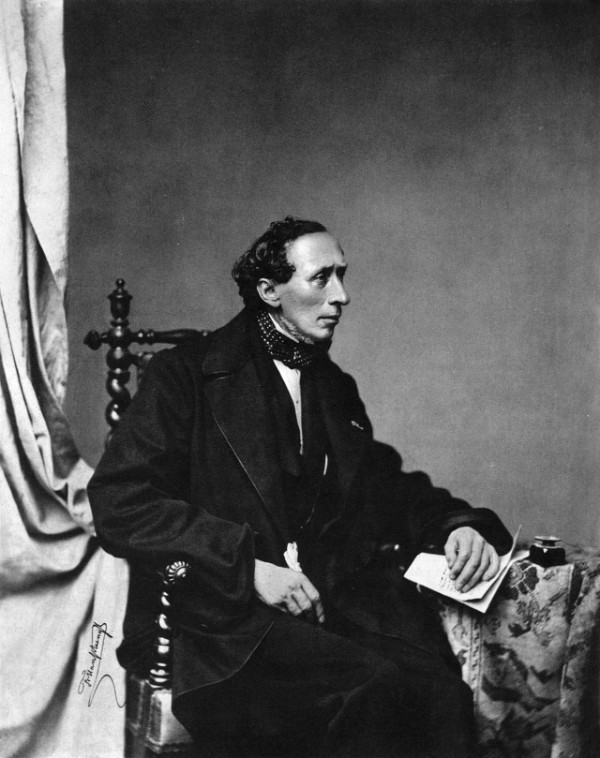
As a young girl, I just couldn’t stop reading the fabulous fairy tales of Hans Christian Andersen (1805-1875). The Little Mermaid, The Ugly Duckling, The Snow Queen, and The Princess and the Pea feature 3-dimensional characters who offer timeless lessons of kindness and resilience. Other characters, sadly, endure cruelty and deep suffering.
Andersen was much celebrated in his lifetime, and his 156 stories across 9 volumes have been translated into more than 125 languages. However, Andersen was also a prolific writer of novels, travelogues, poetry and stage works.
Peter Arnold Heise: Jylland mellem tvende Have (Jutland) (Musica Ficta; Bo Holten, cond.)
Andersen the Musician
Hans Christian Andersen
But did you know that he had dreams of becoming a singer? He was an opera singer and dancer at the Royal Theatre in Copenhagen for a short period of time, and he wrote opera libretti for both the Danish and German stages.
He travelled across Europe to listen to opera and concert performances, and, as Anna Harwell Celenza, in her fascinating book Hans Christian Andersen and Music, explained, Andersen embraced and later rejected performers like Malibran and Liszt, and he promoted Wagner and Mendelssohn, while strongly objecting to Brahms.
On the occasion of his birthday on 2 April 1805, why don’t we celebrate with some musical selections inspired by Hans Christian Andersen’s fairy tales?
Boris Tchaikovsky: Andersen Fairy Tales Suite (Musica Viva Moscow Chamber Orchestra; Kirill Ershov, cond.)
The Little Match Girl
The Little Match Girl
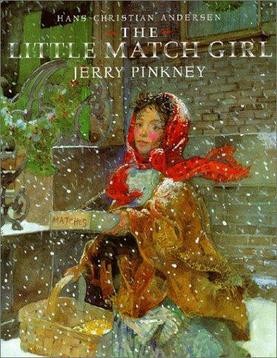
It is New Year’s Eve, and a poor little girl wanders barefoot through the streets in the bitter cold. All she is carrying is a box of matches to sell, but nobody is interested. The girl dares not go home empty-handed, because she knows that her father would beat her.
Unbearably cold, she crouches down and lights a match to warm her frozen hands. When the match is lit, she imagines sitting in front of a big stove. She lights one match after another and imagines a roast goose on a set table, and then sits herself under a Christmas tree.
She next sees her grandmother, who takes her into her arms, and together they soar in a halo of light and joy far above the earth. Her little body is found the next morning, New Year’s Day, frozen to death. People said she must have tried to warm herself, but no one knew the wonderful visions she had.
The late-Romantic Danish composer August Enna (1859-1939) is primarily known for his operas. Much of his music has been forgotten, but the overture to his small one-act opera The Little Match Girl still appears on concert programmes. He wrote some lovely melodies, and the “Overture” presents themes of anguish, joy, and resignation.
August Enna: Den lille pige med svovlstikkerne (The Little Match Girl): Overture (Odense Symphony Orchestra; Ole Schmidt, cond.)
The Feast at Kenilworth
C.E.F. Weyse
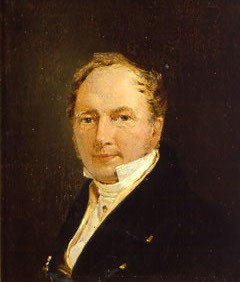
Hans Christian Andersen made his famous journey from Odense to Copenhagen in 1819, and the Danish musical establishment was in the hands of composers Friedrich Kuhlau and C.E.F. Weyse (1774–1842). Weyse was the organist at Our Lady’s Church in Copenhagen, and with his dramatic works and an occasional cantata, he enjoyed a special position in Danish musical life.
Andersen and Weyse collaborated on a single work, the romantic Singspiel The Feast at Kenilworth. Set during the reign of Queen Elizabeth I, the story weaves together court intrigue, romance, disguise, and above all, a festive banquet.
Hans Christian Andersen wrote the libretto for this opera, which was performed six times at the Royal Theatre, Copenhagen, in 1836. As far as I know, it has not been performed since. Weyse composed some lively music evoking the colourful and exotic entertainment and dramatic energy of the castle feast.
Christoph Ernst Friedrich Weyse: Festen pa Kenilworth (Feast at Kenilworth): Sigojnerdans (Gypsy Dance) (Odense Symphony Orchestra; Ole Schmidt, cond.)
The Little Mermaid
The Little Mermaid
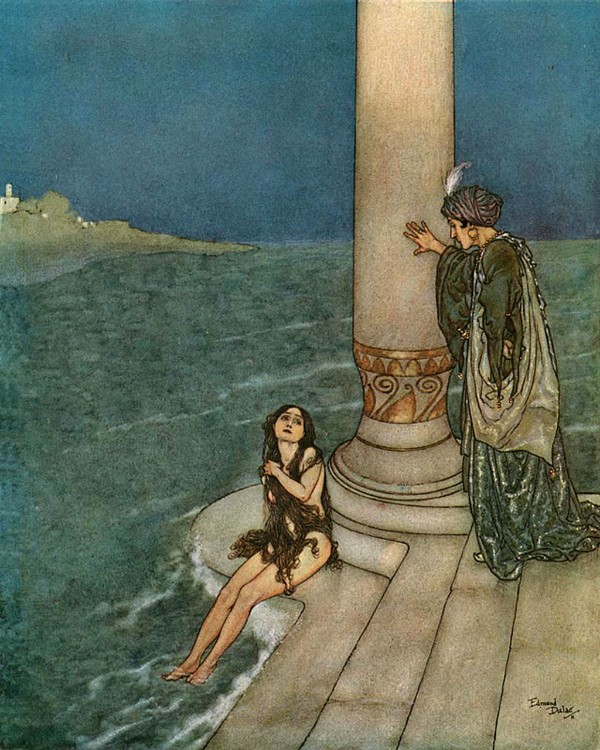
Hans Christian Andersen published The Little Mermaid in 1837 as part of a collection of fairy tales for children. The story follows a young mermaid princess who swims to the surface and falls in love with a human prince while saving him from a shipwreck.
Longing for the prince and an immortal human soul, she visits the Sea Witch, who swaps her enchanting voice for human legs. On land, the prince treats her as a beloved friend, but marries another. Devastated, she is given a chance to return to the sea by killing the prince, but she refuses.
When she throws herself into the sea, she instantly becomes foam. However, her selflessness earns her a place as a “daughter of the air,” with a chance to earn an immortal soul.
It is one of Andersen’s most beloved fairy tales, and it has inspired books, comics, animations, films, operas and much classical music. And that includes the enchanting “Mermaid Song” by the Danish composer and conductor Niels Gade.
Niels Wilhelm Gade: Havfruesang (Mermaid Song) (Musica Ficta; Bo Holten, cond.)
The Elf Hill
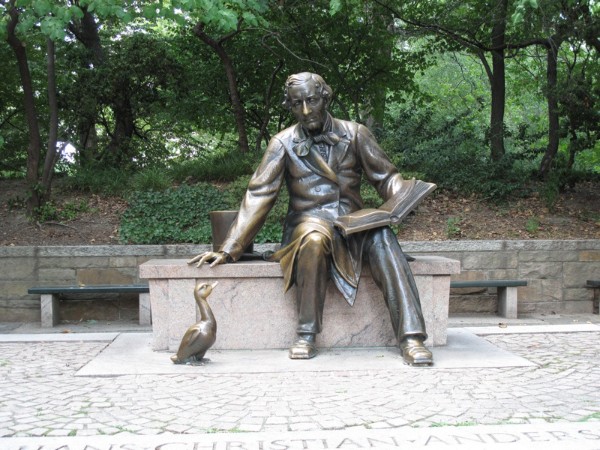
Hans Christian Andersen
The old Elf King lives deep inside an elf mound with his daughters. Three lizards gossip about strange noises and activity coming from the mound, and they soon find out that the elf hill lavishly prepares a feast with peculiar food like roasted frogs, snail-skin dishes, and grave-cellar wine.
They prepare for a lavish feast to welcome visiting Norwegian goblins, specifically a Goblin Chief and his two sons who are seeking elf brides. There is plenty of dancing and storytelling, and the elf daughters display their magical talents.
The Goblin Chief is charmed by the youngest daughter and proposes marriage. The two young goblins behave rudely, however, and show no interest in marriage at all. As dawn approaches, the feast closes down, and the lizards reflect on the lively night.
A student of Gade and Wieniawski, the Danish composer Louis Glass (1864-1936) was greatly overshadowed by his contemporary and compatriot Nielsen. Glass was a gifted pianist, but an illness forced him to withdraw from concert appearances. However, he wrote six symphonies and some programmatic music, including for Andersen’s Elf Hill.
Louis Christian August Glass: Episodes from H.C. Andersen’s Fairy-Tale ‘The Elf Hill’, Op. 67 (Odense Symphony Orchestra; Ole Schmidt, cond.)
The Snow Queen
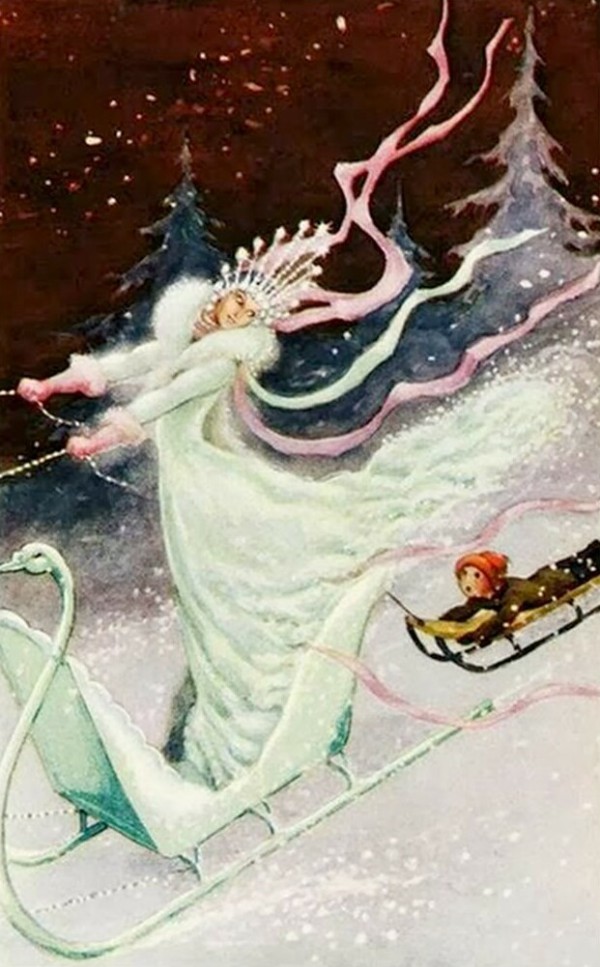
The Snow Queen
First published on 21 December 1844, The Snow Queen is one of Andersen’s longest and most highly acclaimed stories. It is a story about the struggle between good and evil as experienced by Gerda and her friend Kay. Unlike other fairy tales, the story is written in a novel-like narrative and divided into seven chapters.
The story tells of a mirror that reflects only bad things. When demons carry it toward heaven, it slips and falls to earth, shattering into millions of pieces. As these pieces get picked up by the wind, they blow into people’s eyes and hearts, corrupting their souls.
A little girl called Gerda embarks on a journey to find her best friend, Kay, who has been taken away by the Snow Queen. On her journey, Gerda meets a wonderful variety of magical characters, including talking animals, a prince and a princess, and a woman who can do magic and guards made of snowflakes.
Brave little Gerda fights the powerful and evil Snow Queen for Kay, the boy she loves, and of course, love wins. Tuomas Kantelinen composed music for a ballet production of this story in 2012. It is strong, figurative music, with national dances at the centre of the work.
Tuomas Kantelinen: Lumikuningatar (The Snow Queen) (Finnish National Opera Orchestra; Tuomas Kantelinen, cond.)
There Is No Doubt About It
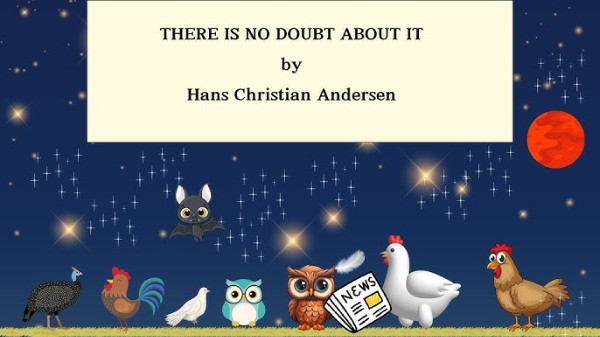
There Is No Doubt About It
Written as a short bedtime story for children, There is No Doubt About It revolves around an incident in the hen-roost. One hen accidentally pulled out a feather, and she said in jest that the more feathers she plucked out, the more beautiful she would get.
Another bird heard what the hen had said, and the gossip quickly spread that she intends to pluck all her feathers out. Then the gossip turns it into two hens, then three, then five, all wanting to pluck out their feathers to appear more slender for the rooster.
This story gets back to the original hen, who does not recognise herself as the originator. She is determined to get the story in the newspaper. One small truth has become a monstrous lie.
Finn Høffding, a 20th-century Danish composer, is known for writing witty and inventive orchestral music. His light and whimsical composition underscores the satirical nature of the story, and there is a good amount of plucking in the strings going on.
Hans Christian Andersen’s imagination has taken us on journeys of heartbreak and folklore with texts that blend folk simplicity with deep emotion. His wonderful fairy tales have inspired composers across centuries, and they still do so today.
For more of the best in classical music, sign up for our E-Newsletter
Finn Høffding: Det er ganske vist (There Is No Doubt About It), Op. 37 (Odense Symphony Orchestra; Ole Schmidt, cond.)