On 17 February 2026, we celebrate the centenary of the birth of Friedrich Cerha (1926-2023). He was an Austrian composer, conductor, teacher, and interpreter whose nearly eight-decade career made him a decisive figure in post-war European music.
His work bridged tradition and avant-garde experimentation, and his oeuvre encompasses all genres. He spent much of his career delving into various musical styles of the 20th century, including 12-tone technique, neoclassicism, and serial music.
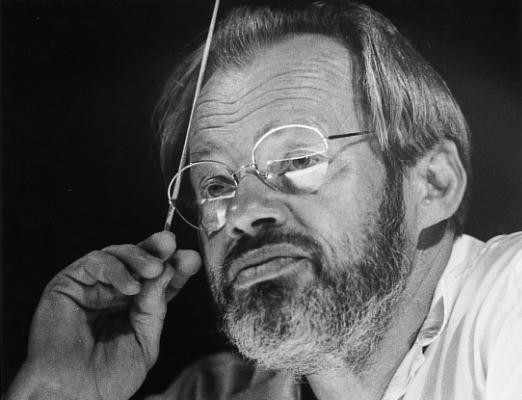
Friedrich Cerha
It is not possible to relate Friedrich Cerha to any one aesthetic or tradition, as the most important feature of his work is not its use of each music theory, but its sensuous sound experiences. (Friedrich-Cerha.com)
To commemorate Cerha’s 100th birthday, let us explore his influence as a teacher and champion of contemporary music, and how he reshaped the way modern music is heard, taught, and understood.
Friedrich Cerha: 21 Cheeky Notes for Piano, No. 12 “Sommerabendduft”
Beginnings in a Fractured World
Friedrich Cerha, born in Vienna on 17 February 1926, was the son of an electrical engineer. His first steps in music began very young as he started violin lessons at the age of six. By eight, he was already composing small pieces.
His adolescence unfolded against the backdrop of World War II. At seventeen, he was drafted into service as an air force auxiliary and later into the German military. During this period, he was involved in acts of resistance and twice deserted, eventually living in the Austrian Alps to evade capture before returning to Vienna after the war in November 1945.
After the war, Cerha entered the Vienna Academy of Music and Dramatic Arts to study violin with Vasa Příhoda and composition with Alfred Uhl, alongside training in music pedagogy. Concurrently, he pursued academic studies in musicology, philosophy, and German language and literature at the University of Vienna, culminating in a dissertation on the Turandot topic in music in 1954.
During the late 1940s and early 1950s, Cerha’s early works reflected a synthesis of influences. We find neoclassicism reminiscent of Paul Hindemith, touches of impressionistic colour, and early experiments with atonality. To this formative period belongs the Sonata No. 1 for violin and piano, which shows a composer testing the boundaries between tradition and innovation.
Friedrich Cerha: Violin Sonata No. 1 (Ernst Kovacic, violin; Mathilde Hoursiangou, piano)
Cerha Meets the Avant-Garde
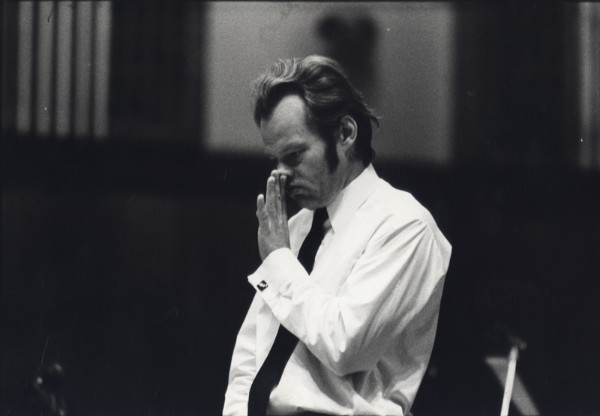
Friedrich Cerha
By the mid-1950s, Cerha was increasingly involved with the avant-garde music scene. He connected with underground writers, painters, and proponents of Schoenberg’s Second Viennese School within the International Society for Contemporary Music in Austria.
Critical to his development was his work with Josef Polnauer, a student of Schoenberg, and a composition seminar with Josef Matthias Hauer in 1953.
His attendance at the Darmstadt International Summer Courses for New Music (1956–1959) further immersed him in the European avant-garde. Darmstadt was a breeding ground for serial composition, pointillism, and structural experimentation, and Cerha absorbed these influences while maintaining a personal voice.
Early serial works like Deux éclats en réflexion and Formation et solution exhibit a fascination with texture, grouped events, and extended instrumental techniques. Towards the end of the decades sound-aggregates produced a static effect, while colour and complexity of sonority occasionally take on form-determining functions. (Grassl, 2001)
Friedrich Cerha: 2 Eclats en reflexion (Ernst Kovacic, violin; Mathilde Hoursiangou, piano)
Building a Modern Platform
In 1958, Cerha, together with composer Kurt Schwertsik and later HK Gruber, founded the ensemble Die Reihe in Vienna. The ensemble became a vital platform for contemporary music in Austria, touring extensively and presenting works by living composers and members of the Second Viennese School.
Over the decades, Die Reihe played a central role in bringing avant-garde music to audiences at home and abroad, helping to redefine Austria not merely as a fountainhead of classical tradition but also as a hub of modern creativity.
This advocacy was not limited to performance. Cerha’s concert series “Paths into Our Time” was a precursor to the later “Wien Modern” festival.
The intention was to contextualise contemporary composition historically and culturally, in order for audiences to engage with new music as an organic continuation of musical evolution.
Friedrich Cerha: Eine letzte Art Chansons (HK Gruber, vocals; Ensemble Die Reihe, Ensemble; Friedrich Cerha, cond.)
Completing Lulu
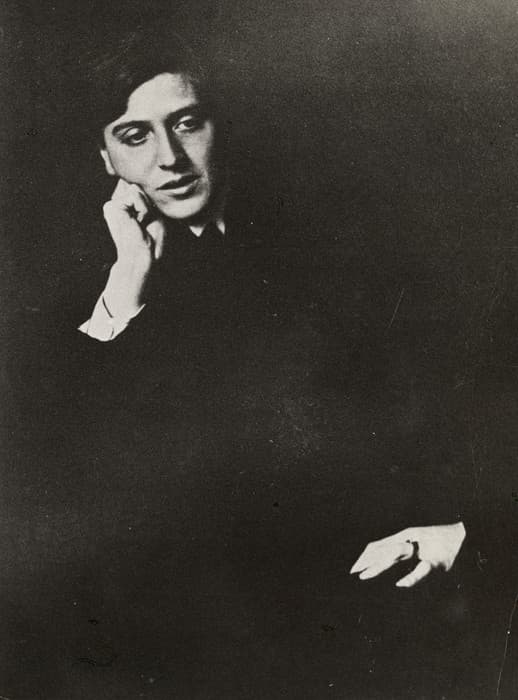
Alban Berg, 1920s
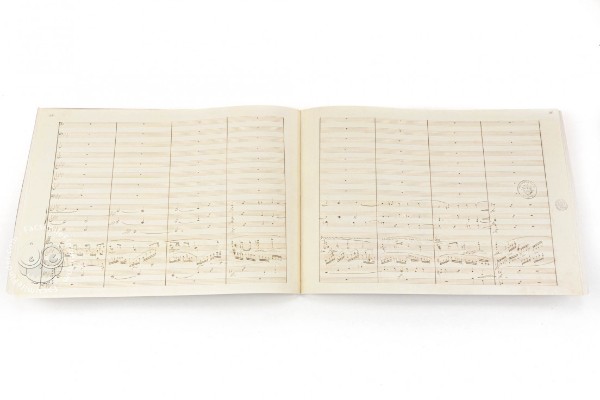
Perhaps Cerha’s most internationally recognised achievement was his completion of Alban Berg’s unfinished opera Lulu. Berg had left a detailed short score of the third act, but only part of it was orchestrated.
Beginning his meticulous study in 1962, Cerha spent more than a decade examining all available material. He deciphered Berg’s sketches and realised a performable third act while remaining faithful to Berg’s idiom.
The completed three-act Lulu premiered on 24 February 1979 at the Paris Opéra, conducted by Pierre Boulez in a production by Patrice Chéreau.
The work opened new perspectives on Berg’s music and brought Cerha international acclaim, both for the scholarship underlying his reconstruction and the artistic sensitivity that made the completion convincing rather than intrusive.
Alban Berg: Lulu (Constance Hauman, soprano; Julia Juon, mezzo-soprano; Theo Adam, bass; Peter Straka, tenor; Monte Jaffe, baritone; Michael Myers, tenor; Gert Henning-Jensen, tenor; Sten Byriel, baritone; Helene Gjerris, contralto; Ulrik Cold, bass; Susanne Elmark, soprano; Edith Guillaume, contralto; Daniel Viklund, bass-baritone; Morten Frank Larsen, baritone; Helene Ranada, mezzo-soprano; Stig Hoffmeyer, actor; Jan Oluf Ostrom, actor; Danish National Radio Symphony Orchestra; Ulf Schirmer, cond.)
Teaching and Creating
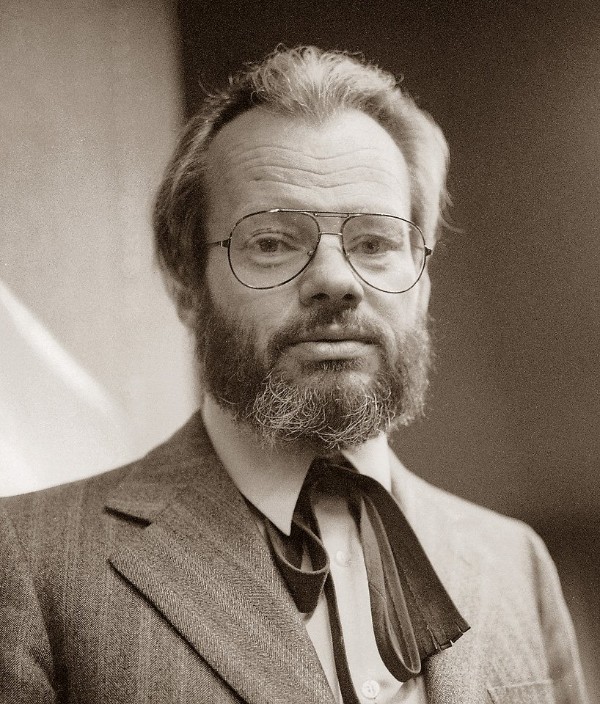
Friedrich Cerha
From 1959 onward, Cerha held a position at the University of Music and Performing Arts Vienna, where he taught composition, notation, and interpretation of new music. He became a full professor in 1976 and remained in this role until 1988.
Many of today’s leading Austrian composers, including Georg Friedrich Haas and Karlheinz Essl, were among his students. His teaching and mentorship, above all, espoused an ethos of openness, intellectual discipline, and humility before the music.
Cerha’s reputation initially rested on instrumental and ensemble works. Yet, he made significant contributions to opera and music theatre as well. His first opera, Baal, premiered at the Salzburg Festival in 1981 and soon entered the repertoires of the Vienna State Opera and Staatsoper Berlin.
Subsequently, Cerha composed Der Rattenfänger and Der Riese vom Steinfeld, with a libretto by Peter Turrini, expanding his operatic vocabulary and experimenting with theatrical form, text setting, and musical commentary. These operas delve into human psychology and social dynamics, reflecting a composer concerned with the interaction between music, narrative, and human experience.
Friedrich Cerha: Baal, Act II (excerpt)
Dialogue in Sound
Beyond opera, Cerha’s instrumental oeuvre is vast and varied. He wrote more than 250 works across genres, including solo, chamber, orchestral, and vocal compositions. His music from the 1960s and early 1970s continued to integrate serial principles, but over time, he moved toward a more refined and expressive language.
In the late twentieth and early twenty-first centuries, Cerha produced a series of concertos for violin, cello, soprano saxophone, clarinet, and percussion that exemplify his complex yet transparent later style.
Cerha also continued to explore the relationship between individual and collective sound worlds, a theme evident in both his operatic and instrumental writing.
His chamber works, ranging from string quartets to oboe quintets, reflect an ever-deepening engagement with dialogue, contrast, and musical transparency. (Grassl, 2001)
Friedrich Cerha: String Quartet No. 4 (Stadler Quartett, Ensemble)
Legacy and Recognition
Cerha’s contributions earned him numerous honours, including the prestigious Ernst von Siemens Music Prize in 2012, often regarded as the “Nobel Prize of music.” His influence extended beyond national borders in recognition of both his artistic importance and international standing.
He became a cultural institution in Austria; a central figure in contemporary music, a widely performed composer, an influential performer, and a teacher whose ideas live on through his students. Establishing and directing Die Reihe, he laid the groundwork for a vibrant contemporary music culture.
Cerha also had a passion for painting. What struck Karsten Witt was the mastery with which various materials were used in pictures that could almost be described as sculptures. “Clearly, this is abstract art that is nevertheless inspired by concrete objects. Timeless art that arises from a very personal connection to the respective material.” (Witt, Cerha as Painter)
Beyond doubt, Friedrich Cerha’s life and work reflect a sustained commitment to openness, clarity, and innovation.
For more of the best in classical music, sign up for our E-Newsletter