In his exploration of the early piano works of Alexander Scriabin (1872–1915), French pianist Clément Lefebvre speaks of coming to the edge of the abyss when he plays the finale of the Russian composer’s Piano Sonata No. 3.
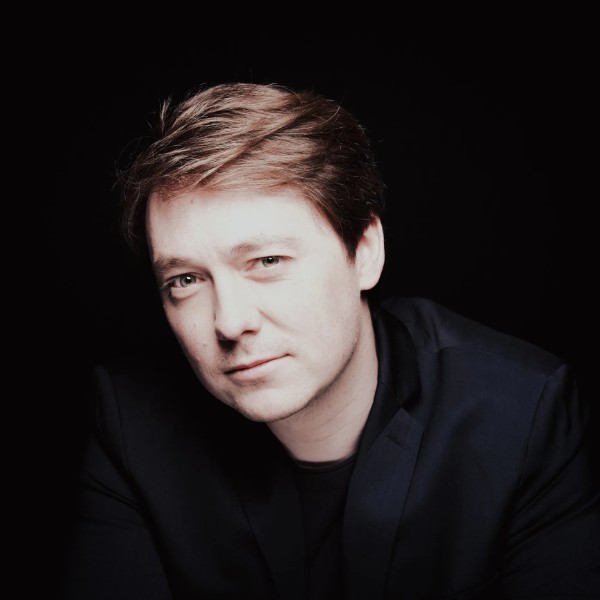
Clément Lefebvre (photo by Lyodoh Kaneko)
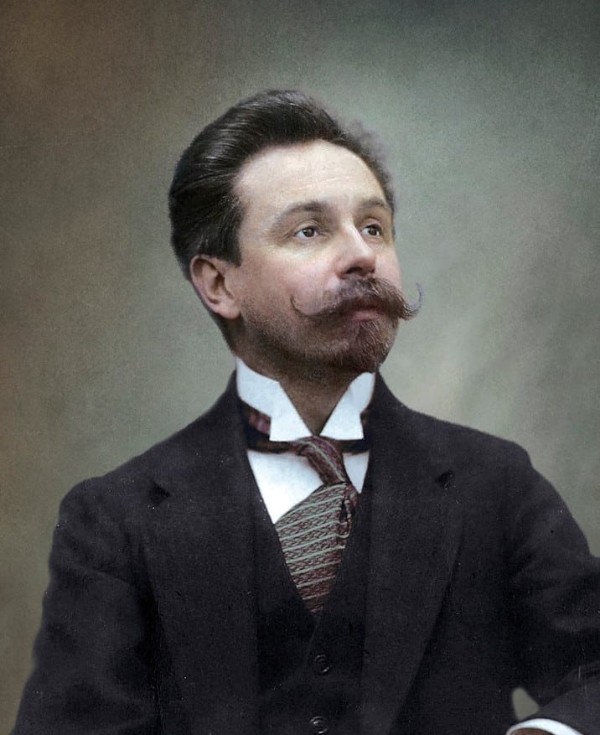
Alexander Scriabin
This is the work that he opens his program with, and its subtitle, ‘Etats d’Âme’ (States of Mind), given to it by Scriabin’s second wife, Tatiana Schloezer-Scriabina, and he takes up the idea that no one can really know what the composer’s state of mind was when he composed it. The performer has to bring his own perception to the work, and for Lefebvre, it’s tied in with memories of the birth of his daughter.
The sonata’s opening, with its dramatic statements and equally dramatic silences, is matched by the whirl of the final movement, and it is this movement that Lefebvre speaks of giving him such a feeling a danger at the edge.
Alexander Scriabin: Piano Sonata no.3 in F sharp minor, Op. 23 – I. Drammatico
Lefebvre goes on to explore 4 sets of Impromptus, Opp. 7, 1, 12, and 14, written early in his career, between 1892 and 1895. Very much in debt to Chopin’s contribution to the genre, Scriabin’s Op. 7 impromptus even take Polish titles, being Impromptu-Mazurkas. Lefebvre considers these early works as snapshots that give the background of the larger and more important works on this recording.
The focus of the recording is the Fantaisie in B minor, Op. 28, written in 1900. It may be for the piano, but it seems symphonic in structure, if rhapsodic in mood, as one writer put it. The melancholic first theme gradually evolves into a lyrical second theme and before developing into a majestic third movement. This work contains a hint of what Scriabin was to contribute to music, but still remains part of his early stylistic period.
The recording closes with 2 works from his next period. The Deux Poèmes, Op. 32, were composed in 1903 and were his first attempts in what would become a major genre for him for the next decade. He has developed further than the early style of the Impromptus, abandoning the romantic style of the earlier works for one that approaches the sense of the intangible. In the first one, the rhythms sway and float, removing you from the everyday.
He closes with another work from 1903, The Waltz in A flat major, Op. 38. It’s charming and elegant to start with, until it suddenly goes mad with cascading octaves. It’s not unlike the world Ravel showed unraveling in his 1920 composition, La Valse.
Clément Lefebvre has brought us some youthful gems by Alexander Scriabin that deserve further development, particularly in the Impromptus. By opening with the Piano Sonata, Op. 23, he’s emphasized the composer’s early works, showing the developmental background behind something that would create its own definitions.
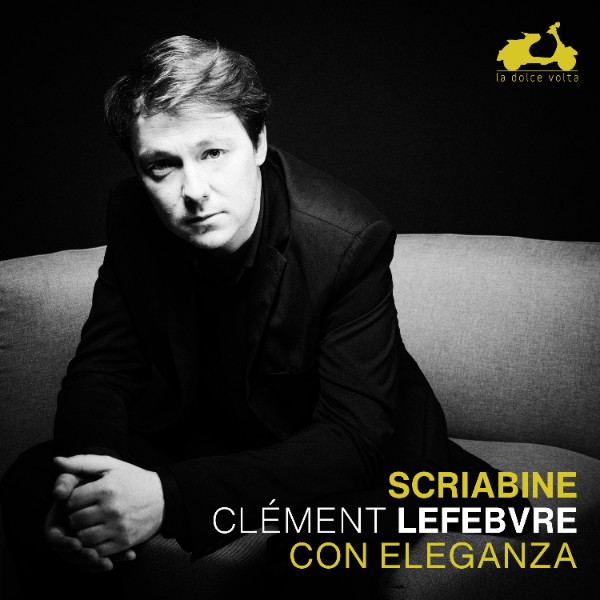
Scriabin: Con Eleganza
Scriabin: Con Eleganza
Clément Lefebvre, piano
La Dolce Volta, LDV141
Official Website
For more of the best in classical music, sign up for our E-Newsletter