Talk to a classical music lover about Baroque composers, and you’ll likely be talking about men like Bach, Handel, and Vivaldi. But how many French Baroque composers do you know?
One of the leading Baroque composers of France – male or female – was a woman named Élisabeth Jacquet de La Guerre.
A devoted subject of Louis XIV, the Sun King himself, she made her debut at Versailles at the age of five.
She continued seeking favour from him for the rest of her life, brilliantly synthesising Italian forms with characteristic French panache.
Today, we’re looking at her remarkable life and work, and what her music tells us about passion and power in early eighteenth-century France.
Élisabeth Jacquet de La Guerre’s Family Background
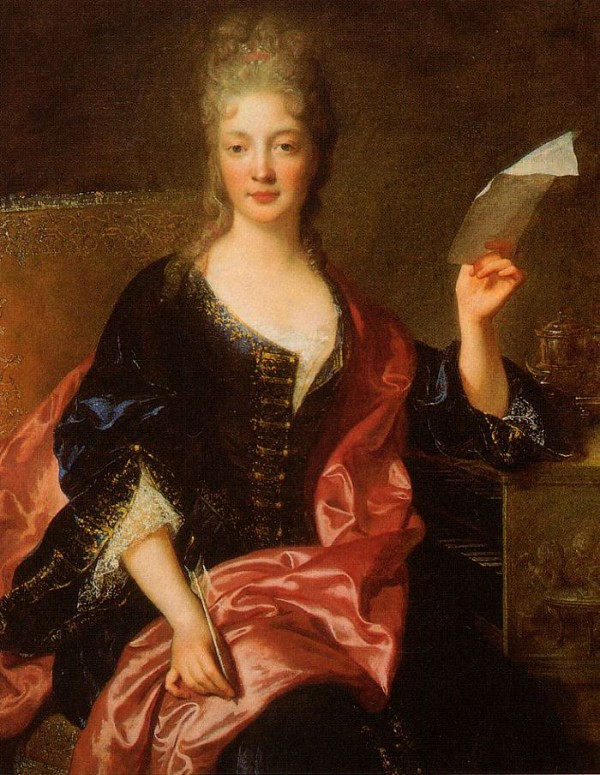
Élisabeth Jacquet de La Guerre
Élisabeth Jacquet de La Guerre was born in March 1665 into a family of harpsichord makers and musicians. In fact, a few months before her birth, her father had just accepted a position as an organist at the church of Saint-Louis-en-l’Île.
She demonstrated musical ability from an early age, and her father began teaching her the keyboard (along with her brothers and sisters).
It seems that Élisabeth was uniquely talented. When she was just five years old, she performed at Versailles. According to legend, Louis XIV himself first noticed her talent.
She entered into a period of intensive study with her father and reappeared as a singer at court in the summer of 1677, when she was just twelve.
Working for the King’s Mistress
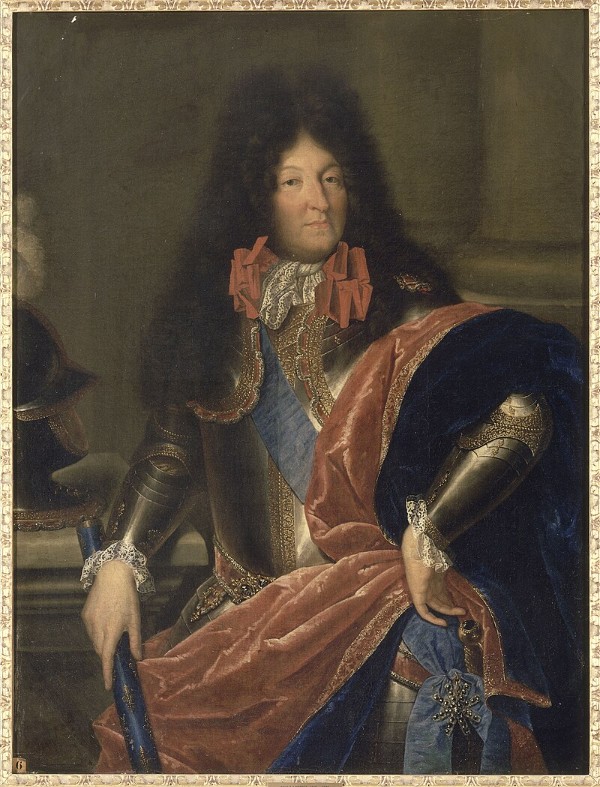
Louis XIV
In Jacquet’s mid-teens, she became a musician for the household of Madame de Montespan, who was Louis’s favoured mistress.
In 1677, another of Louis’s mistresses – a teenager named Duchess of Fontanges – died after a miscarriage. Madame de Montespan fell under suspicion of witchcraft, or even outright murder of her rival. This scandal became known as the Affaire des Poisons.
Although she would continue giving birth to the king’s illegitimate children through 1678, Madame de Montespan’s position in court declined after the Affaire. She left court altogether in 1691.
Observing this fraught situation would have been Jacquet’s apprenticeship on how to navigate political power…and in particular, the absolute power wielded by Louis XIV.
Throughout the rest of her life, perhaps in part due to what she witnessed as a teenager, she aligned herself with Louis and always used her music to promote his political might.
Jacquet de la Guerre’s Menuet from Suite in D-minor
Élisabeth Jacquet’s Marriage
In September 1684, nineteen-year-old Jacquet married a man named Marin La Guerre.
Marin was also a musician, and he came from a celebrated family of organists (his grandfather had been named the organist at the Notre-Dame Cathedral at the age of just fourteen). It wasn’t long before Marin was named to a prestigious position at the Sainte-Chapelle.
After the wedding, Jacquet hyphenated her name to Jacquet La Guerre, symbolising the union of these two prominent musical families.
Élisabeth Jacquet de La Guerre’s First Published Work
Three years later, in 1687, Jacquet de La Guerre published her first collection of keyboard works: Les pièces de clavecin: Livre I.
Not surprisingly, she dedicated this work to Louis XIV. She signed that dedication as “the most obliging servant and subject Elizabeth Jacquet.”
Her using her maiden name has suggested to historians that perhaps these works originally dated from before her marriage, during her time spent at court.
Jacquet de La Guerre’s Suite in A-minor
Jacquet de La Guerre’s Prélude & Chaconne “L’Inconstante” from Les pièces de clavecin: Livre I
Élisabeth Jacquet de La Guerre’s Operas
We don’t know a lot about her activities throughout the 1690s, but what we do know is intriguing.
In 1691, she wrote an opera-ballet called Jeux à l’honneur de la Victoire (Games in Honour of the Victory), but unfortunately, although it was praised at the time, its music has not survived.
In 1694, she produced another opera named Céphale et Procris, which, unfortunately, was not a success. The reasons why are murky. At the time, late composer Jean-Baptiste Lully’s music was extremely popular, and perhaps audiences weren’t in the mood for something new.
Apparently, her husband defended the work, saying it was great, but that perhaps the overture was too long. Despite the work’s failure and despite the fact that she never tried to write another opera, she still had the score published.
Becoming a Widow
There is another break in the historical records between 1694 and 1698. However, we do know that during that time, the La Guerres lived in a pleasant apartment opposite the Sainte-Chapelle, where Marin worked. It seems almost certain that Élisabeth would have given performances and entertained musical friends and family here.
Marin died in 1704, leaving Élisabeth a thirty-nine-year-old widow.
We also know from records that she had a son who died shortly after his eighth birthday, but we don’t know when he was born or when he died, or whether this loss intersected with the loss of her husband in any way.
Jacquet de la Guerre’s Violin Sonata No. 1 in D-minor
Pioneering the Sonata Form
After Marin’s death, she relocated to her childhood neighbourhood, near her brother, and began to devote herself solely to composition.
Jacquet de la Guerre’s Sonata No. 2 in B-flat
In 1707 she published her “Pièces de clavecin qui peuvent se jouer sur le violon” (Pièces for Harpsichord which can be Played on the Violin”).
These works are early sonatas. She became the first composer in French music, male or female, to give the viol (the cello) melodic and harmonic roles within the same piece of music: a revolutionary development.
In fact, she was one of the first sonata writers in France, period. Some of her manuscripts date from even before Couperin, the composer usually credited with pioneering the genre in France.
Traditionally, the ageing king had not been a fan of sonatas. (The form was too Italian for his tastes.) However, he apparently liked Jacquet’s. She went to perform them while the king ate lunch at Versailles.
“Elle est originale,” he proclaimed.
Mastering Cantatas
Next, she turned her attention to writing twelve sacred cantatas. One especially interesting one, given her gender, was the story of Judith’s slaying of Holofernes, a story featuring a brave heroine.
After these, sometime around 1715, she published three secular cantatas.
Jacquet de la Guerre’s cantate “Le Sommeil d’Ulysse”
Historians have suggested that she gravitated toward this genre both because she was fascinated by making an Italian genre French, but also because composing a cantata offers dramatic challenges similar to composing an opera, which she, rightly or wrongly, did not want to risk doing again.
Other works may have been created afterwards, but these cantatas are the final major ones that survive.
One of her Te Deums was performed in the chapel of the Louvre in 1721, giving thanks for Louis XV’s recovery from smallpox.
Élisabeth Jacquet de La Guerre’s Final Years and Modern Legacy
Élisabeth Jacquet de la Guerre died in the summer of 1729. She was sixty-four years old.
During her life, she was renowned as one of the leading French composers and musicians, male or female.
Sadly, over the generations, her star faded compared to some of her contemporaries, like Couperin…for no reason other than that she was a woman. Her heirs – her nephews – did not move to preserve her music or effects in any major way.
Luckily, with the rise of interest in women composers, more and more of her works are being discovered and performed. Once again, her reputation is on the rise.
For more of the best in classical music, sign up for our E-Newsletter