The 2026 edition of “La Folle Journée de Nantes,” took place from 28 January to 1 February and chose “Les fleuves” as its central theme. As metaphors for life itself, the world’s great rivers simultaneously underscore both the timeless and the ephemeral in human experience and existence.
Vested with enormous spiritual significance, rivers have given rise to temples, cities and civilisations, but they have also been used as material pathways for trade, the migration of people and ideas.
Because rivers sustain life by renewing the fertility of the land, poetry, folklore, and music have long emphasised their purification and cleansing properties.
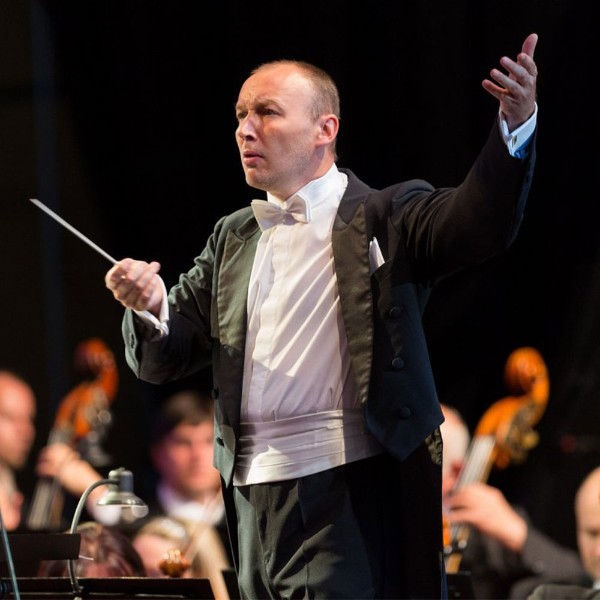
Stanislav Vavřínek
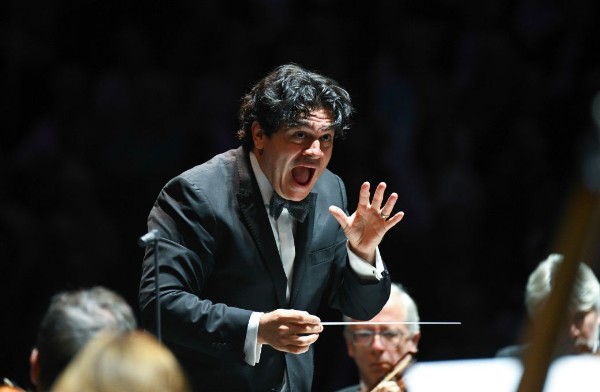
In this spirit, conductor Stanislav Vavřínek and the Filharmonie Hradec Králové delivered a folk-inspired programme of Brahms and Dvořák that captured rhythmic vitality and cultural exchange evoked by the Danube.
Stanislav Vavřínek conducts Brahms and Dvořák
Available until 01/02/2027
Brahms Meets Hungary
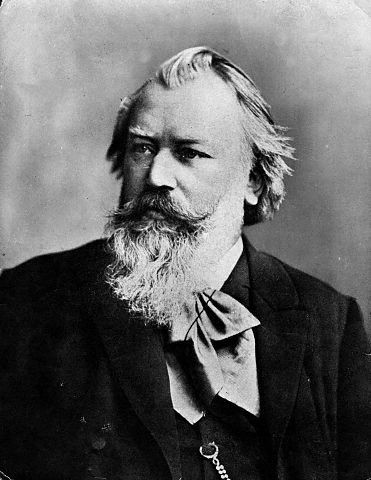
Johannes Brahms
In 1853, the famous Hungarian violin virtuoso Ede Reményi, born Eduard Hoffmann, embarked on a highly successful concert tour around Germany. Serving as his accompanist was a young and unknown pianist by the name of Johannes Brahms (1833-1891).
On this tour, lasting almost 2 months, they not only met Joseph Joachim, Peter Cornelius, Joachim Raff and Franz Liszt, but Brahms also became familiar with various elements of Hungarian folk music.
Almost immediately, he began to assimilate these elements into his own compositional language. Attempting to capture the rich and vibrant soul of Hungary’s beloved tradition of dance, Brahms quickly engaged with the lilting and jubilant energy of the csárdás and verbunkos, traditional Hungarian folk dances characterised by dramatically varying tempos, lively rhythms, and whirling virtuosic passages.
From Piano Duet to Worldwide Success
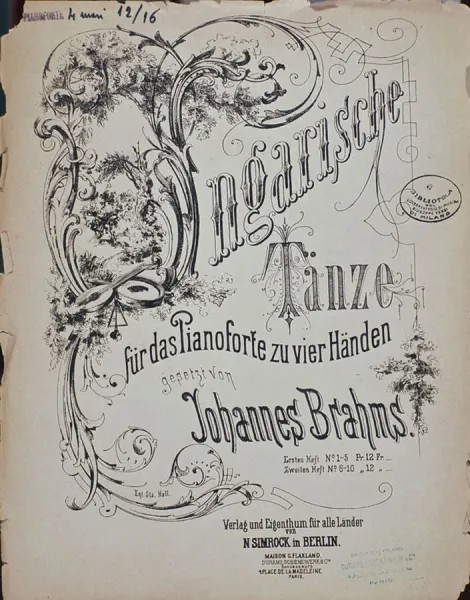
Johannes Brahms’ Hungarian Dances frontispiece
In all, Brahms composed 21 Hungarian Dances for piano four-hands. As these compositions rapidly gained in popularity, Brahms arranged the first ten dances for solo piano and subsequently published selected dances in orchestrated versions.
Brahms claimed only to have arranged pre-existing melodies when he finally published the first set in 1869. In the event, these lively dances became hugely popular, and Brahms frequently played them for his friends, “his eyes flashing, the rhythm darting and halting, and his hands all over the keyboard at once.”
From Stipend to Friendship
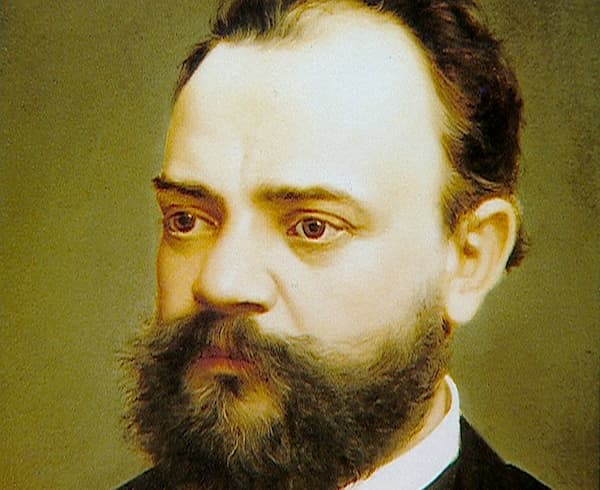
Antonín Dvořák
In 1874, Antonín Dvořák submitted an application for an artist’s stipend from the Austrian government for poor but talented students. Hoping to supplement the meagre income from his job as organist at St. Adalbert, Dvořák sent a number of musical scores along with his application.
The head of the selection committee was a close personal friend of Johannes Brahms, the highly influential Viennese music critic Eduard Hanslick. According to the committee, Dvořák’s works “display undoubted talent, but in a way which as yet remains formless and unbridled.”
Dvořák won the annual government grant three times, but even more importantly, made friends with Brahms. Brahms introduced Dvořák to his publisher, Fritz Simrock, who requested a set of eight folk dances. Modelled after Brahms’ Hungarian Dances, Dvořák produced his first set of Slavonic Dances in 1878.
Convincing Folk Spirit
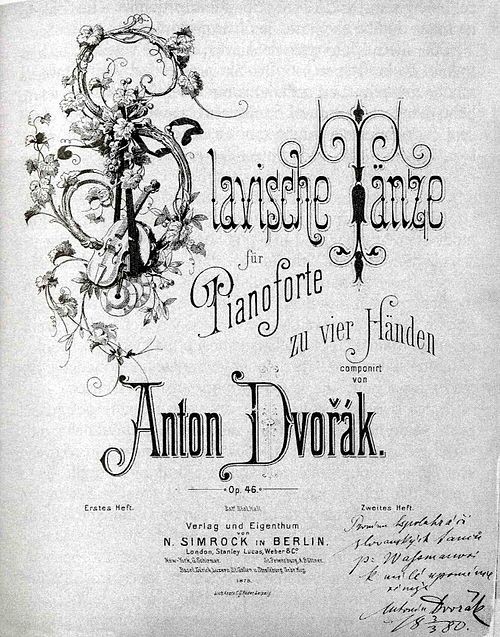
Antonín Dvořák’s Slavonic Dances
Originally also scored for piano duet, Dvořák quickly arranged the Dances for full orchestra, and the 1878 Dresden premiere was a rousing success. Seven of the eight “Slavonic” dances are Bohemian in origin, with one dance native to Serbia.
In his sequel, the Op. 72 set of dances from 1886, Dvořák also featured dances from Poland, Slovakia, and Ukraine. The melodies are all of Dvořák’s own making, yet they resemble authentic folk music very convincingly.
Under the baton of conductor Stanislav Vavřínek, a graduate of the Brno Conservatory and the Academy of Performing Arts in Prague, the Filharmonie Hradec Králové delivered a concert that showcased their strong mastery of the Central European repertoire. Lively, festive, and energetic, the performance evoked the Danube as a musical and cultural force connecting Vienna and Prague.
For more of the best in classical music, sign up for our E-Newsletter
Stanislav Vavřínek conducts Brahms and Dvořák
La Folle Journée 2026