Frédéric Chopin is, without question, Poland’s most famous composer.
His Polish identity, as well as his exile from Poland after the November Uprising of 1830, was deeply important to his work, contributing to his music’s character of melancholy longing.
However, it wasn’t just the landscape that Chopin missed so acutely. It was the Polish people: his family and friends.
Today, we’re looking at the lives of four of Chopin’s closest Polish friends and how those lives intersected with Chopin’s.
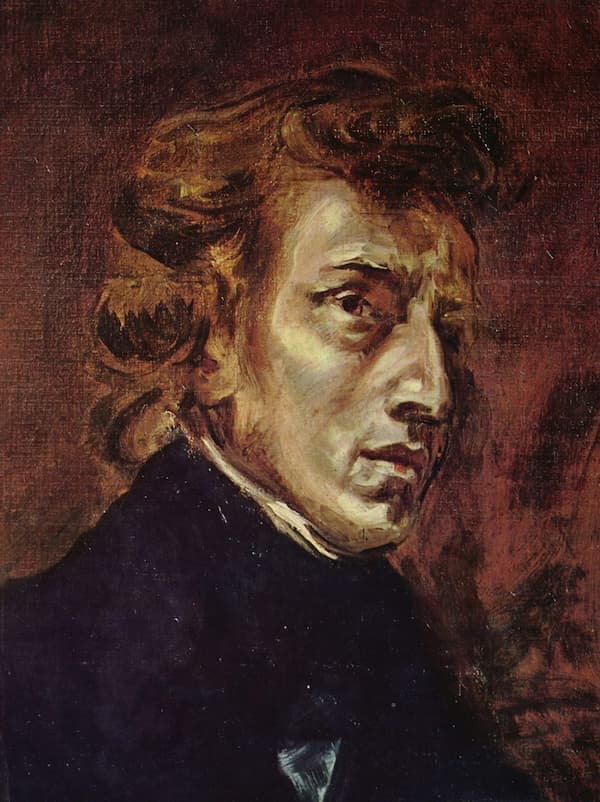
Portrait of Frédéric Chopin by Eugène Delacroix, 1838
Jan Białobłocki (c. 1806-1828)
We don’t know exactly when Jan Białobłocki was born, but it was sometime around 1806, a few years before Chopin. He was born in the village of Sokołowo, a town about 270 kilometers east of Warsaw.
In 1816, around the age of ten, he was sent to Warsaw to enroll at the Warsaw Lyceum. While there, he studied under Frédéric’s teacher father, Nicolas Chopin, and boarded with the Chopin family.
Białobłocki was artistic on a number of fronts. He played the piano and sang, as well as painted.
He attended the Lyceum until 1823, when he began studying law at Warsaw University.
Tragically, poor health forced him to drop out before he earned a degree. He died of “tuberculosis of the bone” in 1828, a complication that occurs when tuberculosis infection moves past the lungs into the bones. He was only in his early twenties.
Jan Matuszyński (1808-1842)
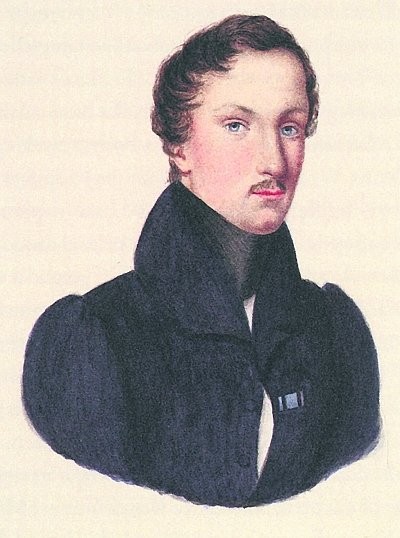
Jan Matuszyński
Jan Matuszyński was born on 14 December 1808 in Warsaw.
His family was musical. His brother became a tenor, and Matuszyński was an amateur flute player.
As a boy, Matuszyński, like Białobłocki, enrolled at the Warsaw Lyceum and studied under Nicolas Chopin. He met Frédéric when they sat on the same bench at school.
In 1827, he began studying medicine at the University of Warsaw.
The November Uprising in 1830 interrupted Matuszyński’s studies. During the fighting, he worked as a medic. For his work, he was awarded the Virtuti Militari for valour, the highest military decoration offered by Poland.
The revolutionaries were crushed, and for his own safety, Matuszyński fled to Germany. He finished his medical training at the University of Tübingen.
In 1834, he moved to Paris and roomed with Chopin for two years. While he lived with him, he did his best to treat Chopin’s tuberculosis, prescribing medicine for him.
He earned another degree in Paris and got married.
Tragically, he also became ill with tuberculosis in 1842, at the age of 34. The infection spread quickly. In a touching reversal of their earlier roles, Chopin and his partner George Sand helped to take care of him.
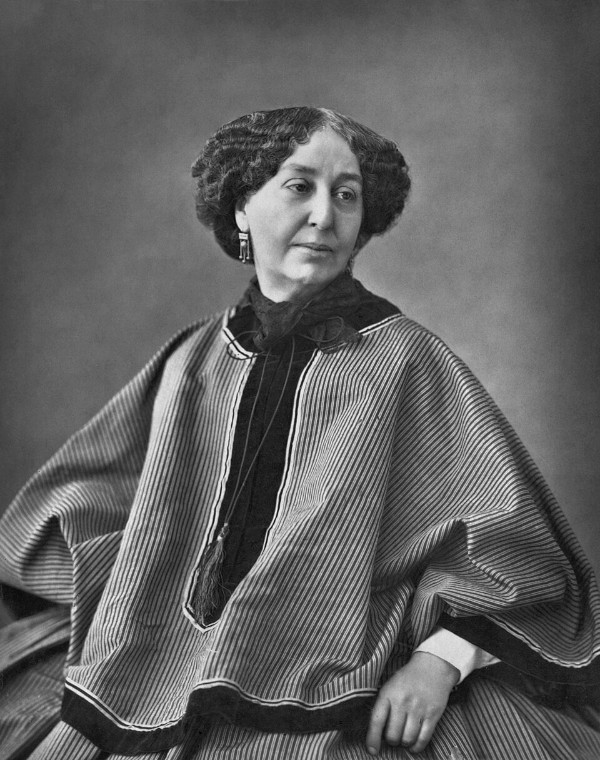
George Sand – Portrait by Nadar (1864)
George Sand wrote to singer and composer Pauline Viardot:
His Polish friend, the doctor, an old schoolmate of Chopin’s, died in our arms in a slow and cruel agony that made poor Chopin suffer as if he was going through it himself.
Chopin would die in the same way seven years later.
Tytus Woyciechowski (1808–1879)
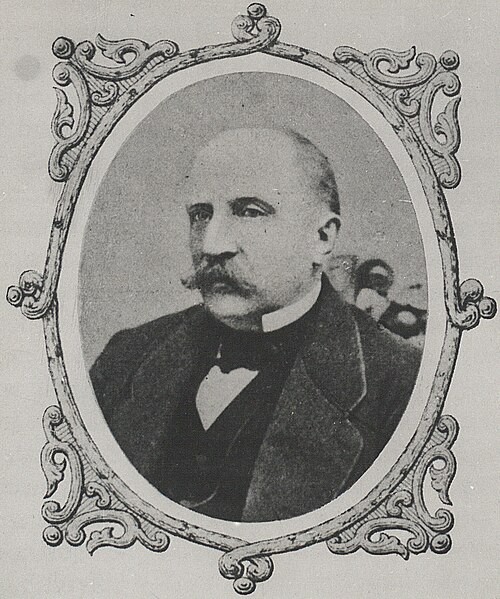
Tytus Woyciechowski
Tytus Woyciechowski was born on 31 December 1808 in current-day Lviv, Ukraine.
He was sent to be educated in Warsaw at the Warsaw Lyceum and boarded with the Chopin family.
After graduation, he studied law at the Warsaw Conservatory.
Chopin and Woyciechowski had an extremely passionate friendship. Chopin’s side of the correspondence makes clear that he felt a deep, even physical connection to Tytus. However, it’s unclear exactly how enthusiastically Woyciechowski returned Chopin’s obsession.
Chopin dedicated his op. 2, “Variations on ‘Là ci darem la mano’”, to Woyciechowski; Woyciechowski wrote on the front page “J’accepte avec plaisir” (“I accept with pleasure”).
Yunchan Lim plays Chopin: Variations on “Là ci darem la mano,” op. 2
In 1830, when Woyciechowski was twenty-one and Chopin twenty, they left Poland together on a concert tour. They had barely left when news of the November Uprising reached them, and Woyciechowski decided to turn back to fight for the revolutionaries.
During his military career, he became a second lieutenant and earned the Virtuti Militari, like Jan Matuszyński.
In 1838, he married Countess Aloysia Poletylo. Proving Woyciechowski’s affection for his old friend, the couple named their second son Frédéric after Chopin.
In later life, he devoted himself to working on his estate. He was one of the first Polish farmers to experiment with the practice of crop rotation. He also founded a sugar factory.
Chopin’s ardour toward Woyciechowski cooled over the years, but he treasured memories of the relationship for the rest of his life.
When it became clear that Chopin was terminally ill, he wrote to Tytus twice, inviting him to visit him in Paris.
On 12 September 1849, Chopin wrote:
Perhaps you will manage to get here. I am not selfish enough to demand that you should come here for me; I am so weak that you would have only a few hours of boredom and disappointment, alternating with a few hours of pleasure and good memories; and I should like the time that we spend together to be only a time of complete happiness.
But Woyciechowski was unable – or unwilling – to make the long journey to Paris. Chopin died a month later.
Julian Fontana (1810-1869)
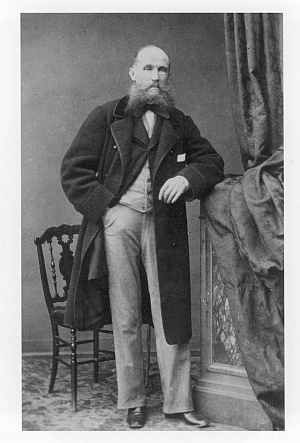
Julian Fontana
Julian Fontana was born in Warsaw in July 1810, a few months after Chopin.
He studied law at the University of Warsaw and music at the conservatory. At the conservatory, he studied under piano teacher Józef Elsner, who was also teaching Chopin.
After the November Uprising, he left for Hamburg before settling in Paris in 1832, the same year as Chopin. While in Paris, he worked as a piano teacher and performer.
Between 1836 and 1838, after Jan Matuszyński moved out, Julian Fontana became Chopin’s roommate.
As a tribute to their friendship, Chopin dedicated his 2 Polonaises, op. 40, to him.
Chopin – Polonaise A major Op. 40 No. 1 “Military” – Grzegorz Niemczuk
Chopin corresponded extensively with Fontana, and enlisted him to help with day-to-day issues in Paris, especially during the summers when he would stay with George Sand at her country house and needed a representative in Paris.
After Chopin died, Fontana (luckily for us) decided to ignore Chopin’s instructions that all his unpublished manuscripts be burned.
Instead, in 1855, Fontana published some of his late friend’s unpublished manuscripts. A few of these works became some of Chopin’s best-loved works.
In the following years, Fontana worked all around the world, including in England, France, Cuba, and America.
In his later years, he fell into poverty and became deaf. He died by suicide in December 1869.
For more of the best in classical music, sign up for our E-Newsletter