John Cage’s 4’33” is one of the most famous works in the classical music repertoire.
Written in 1952, it consists of three movements. Together, the movements’ running time adds up to four minutes and thirty-three seconds.
Per the composer’s instructions, the performer (or performers) are meant to sit and play nothing. The ambient noise of the performance space becomes the music. This is why every performance of 4’33” is so drastically different.
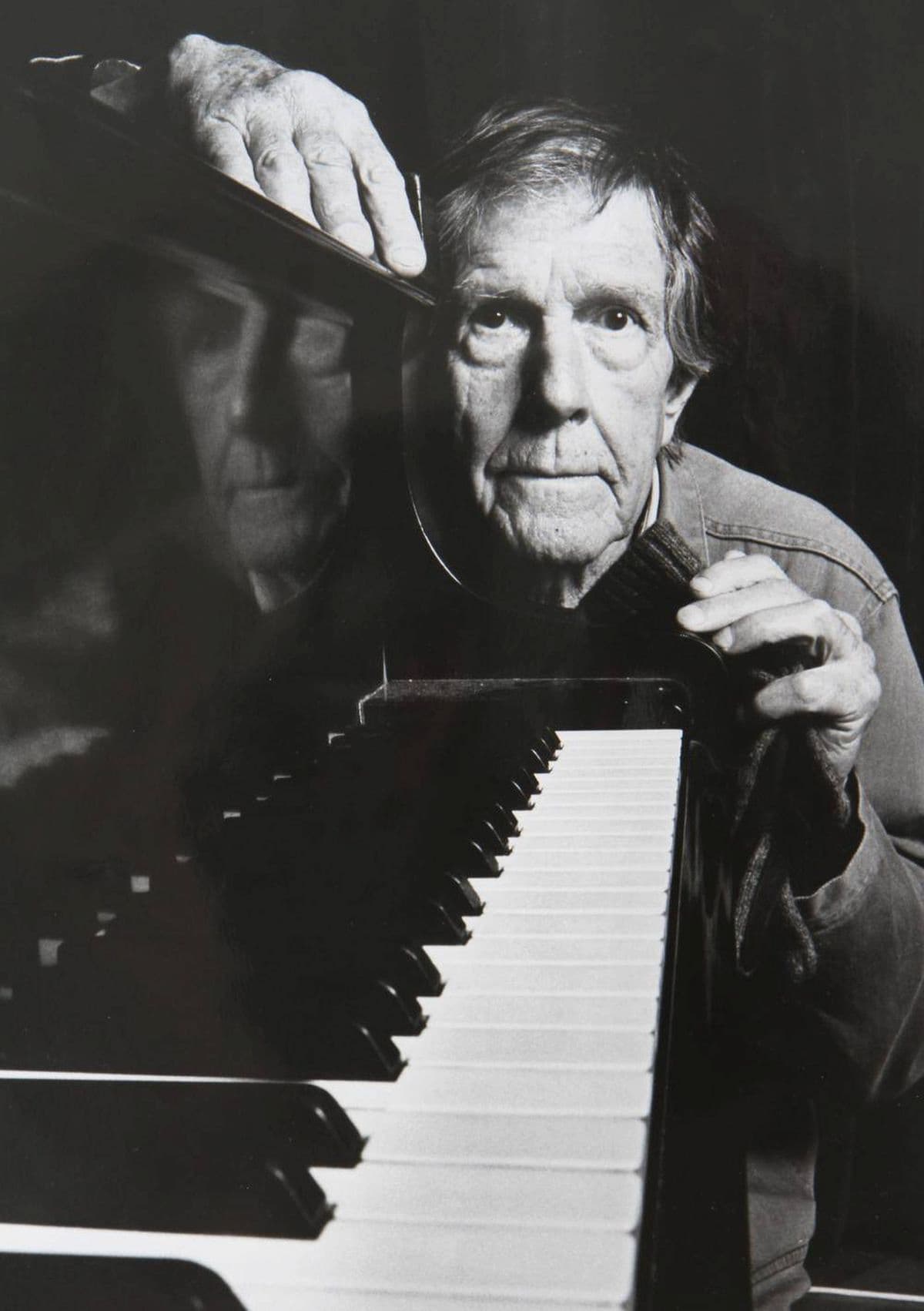
John Cage
Today, we’re taking a tongue-in-cheek look at ten wildly different performances of 4’33”, ranging from the death metal version to the Berlin Philharmonic version to the version made by John Cage himself. They are numbered in reverse countdown order to create a totally subjective, arbitrary list. (John Cage would be proud.)
So grab a drink, sit down, and prepare to experience ten 4’33”s.
10. Tommy Cash
159k views
This performance was given by Tommy Cash, a rapper, singer, and visual artist who represented Estonia in the 2025 Eurovision Song Contest.
In this performance, we hear Cash take a drink of coffee and proceed to ignore a number of stereotypical distractions, including coughing, a passing ambulance, hesitant clapping in between movements, the squeak of a piano bench, the ringing of a cell phone (and an insulted whisperer castigating the phone’s owner), snoring, more hesitant clapping in between movements, more piano bench squeaking, and more snoring.
It’s comedic, but it also pokes fun at the kinds of background noises a concertgoer often hears.
9. EBU Euroradio Orchestra
108k views
Here’s our first orchestral performance of 4’33” on the list, performed by the European Broadcasting Union’s Euroradio Orchestra.
The recording emphasises the sounds of the conductor approaching the podium and the musicians’ applause, making the silence afterwards all the more striking.
These musicians have made the choice to get into a position that suggests they are right on the precipice of playing their instruments: not something that’s written in the score, but a nice touch all the same!
A chorus also participates: unusual during a performance of 4’33”.
8. Dead Territory (Death Metal Version)
828k views
Dead Territory may be a modern Austrian death metal band, but they’ve created an intriguing interpretation of this 1952 classic.
They choose to begin their performance before the 4’33” begins with an instrumental riff…which in turn leads to an incredibly loud silence.
That initial blast of sound makes us hear everything that follows more acutely, including the quiet feedback from their equipment, and a ding that triggers one unified headbang.
7. Bill Marx
9.9 million views
Bill Marx was born in 1937 and became the adopted son of actors Harpo Marx and Susan Fleming.
He made his start in show business working for his father, taking care of his props.
Eventually, he went to the Juilliard School to study composition. He made his career in music, often working with Harpo on musical projects, since Harpo couldn’t read or write musical notation.
He became a beloved lounge pianist in the Los Angeles area. This performance of 4’33” was filmed at a theater just outside Palm Springs.
6. BBC Symphony Orchestra
47k views
This performance is by the BBC Symphony Orchestra, conducted by American conductor Lawrence Foster.
The concert host mentions in his introduction that “hopefully” the audience will be silent, but technically, the audience doesn’t have to be.
In fact, the audience choosing what to do is part of what makes the work so participatory and revolutionary!
This performance is amusing in that even while the piece is being performed, the audience saves its rustling programs and coughs in between movements. This is the only major work in the repertoire in which coughs become part of the art.
5. David Tudor
1.3 million views
It’s important to include a performance by pianist David Tudor on this list.
Tudor was born in Philadelphia in 1926. He became a pianist and experimental musician who was a close colleague of John Cage’s. In fact, it was he who gave the premiere of 4’33”.
His devotion to Cage’s work ran deep. From 1951 to the late 1960s, he was one of Cage’s primary champions, and Cage even began writing with Tudor in mind.
4. Daniil Trifonov
73k views
Daniil Trifonov, one of the great pianists of our generation, gave this performance of 4’33” at the Verbier Festival in 2019.
He uses a stylish wristwatch to keep time. (The cameraman makes sure to zoom in on it.)
We also see little visual details in the extreme closeup of his face: individual hairs moving, the motion of his eyelids and eyelashes as he blinks.
Unlike some other performers, Trifonov doesn’t close the keyboard in between movements; we are left to imagine where the breaks for the three movements occur.
At one point, a woman in the front row sneaks a surreptitious glance at her own watch: a bit of unintentionally funny meta-commentary, perhaps.
3. John Cage
82k views
We had to include this performance, even though only part of it is filmed: John Cage himself performing 4’33”!
Cage chose a fascinating, unconventional setting for this performance: outside, surrounded by people.
The chatter and outdoor sounds make this particular performance of 4’33” fresh and social in a way that performances filmed in concert halls aren’t.
2. Berlin Philharmonic
2.1 million views
Here’s a third striking orchestral performance of 4’33” by the orchestra that many believe is the greatest in the world: the Berlin Philharmonic.
This performance lasts around 3 minutes and 30 seconds, making it one of the fastest performances of 4’33” on record.
1. NOLA the Cat
204k views
In our opinion, the greatest performance of 4’33” is not by the Berlin Philharmonic or even John Cage.
It’s this 2015 performance from The Late Show With Stephen Colbert, featuring Nola the cat, who (and this is true) does cat acrobatics with the group the Acrocats when she’s not performing Cage.
A performance by Nola with the Acrocats
Nola’s performance (along with the uncredited accompaniment-cat behind her) is our pick for the greatest performance of 4’33”.
It was filmed for a major late-night show, bringing Cage’s concept into mainstream culture; it underlines the joyful absurdity of Cage’s idea, and it also reminds every listener how truly universal, accessible and reproducible Cage’s idea is.
Even if we’re not human, we can access our own 4’33” just by taking a breath, being quiet, and listening to what’s all around us…and isn’t that what 4’33” is really all about?
Conclusion
Have you ever seen a performance of 4’33”? What was it like? Would you consider these the best performances of 4’33”? And while we’re talking about it, do you even consider it to be music?
For more of the best in classical music, sign up for our E-Newsletter