Some people know the outlines of the famous story of Tchaikovsky’s eccentric benefactress, Nadezhda von Meck: how she supported his composing career for years, how they made a pact never to meet in person, and how she suddenly and unexpectedly stepped away from their friendship in 1890.
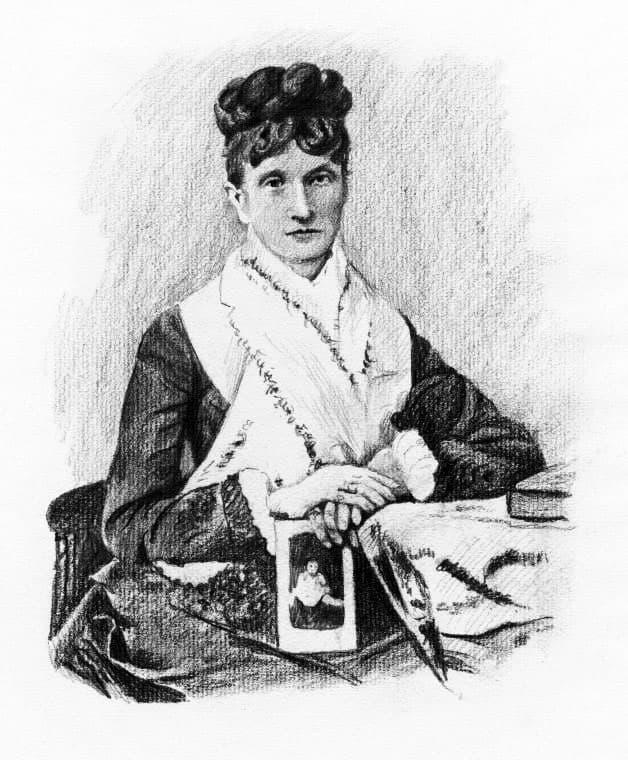
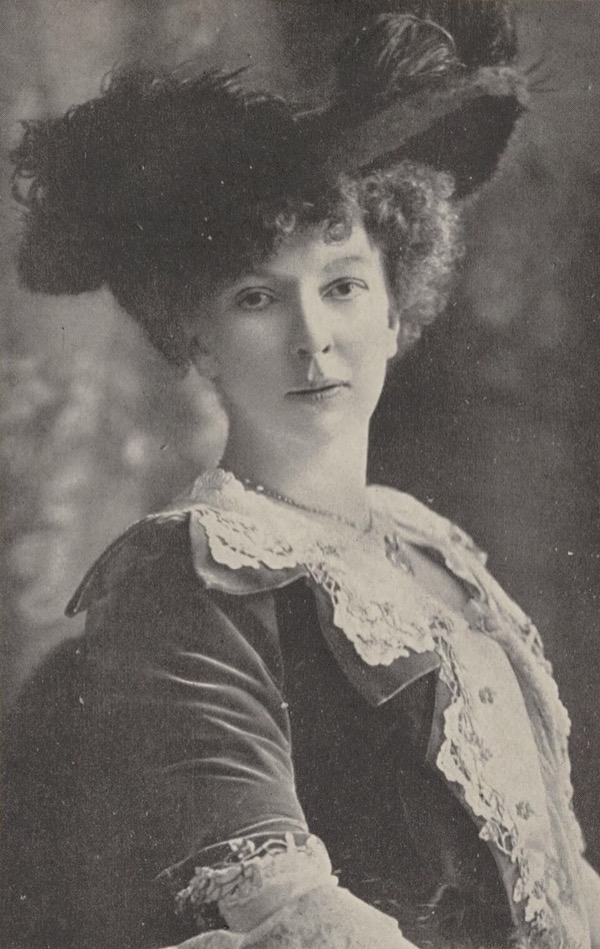
Nadezhda von Meck
But not as many people know what brought them together: a talented, charming young violinist named Yosif Kotek…who Tchaikovsky was once madly in love with.
Pyotr Tchaikovsky Falls for Yosif Kotek
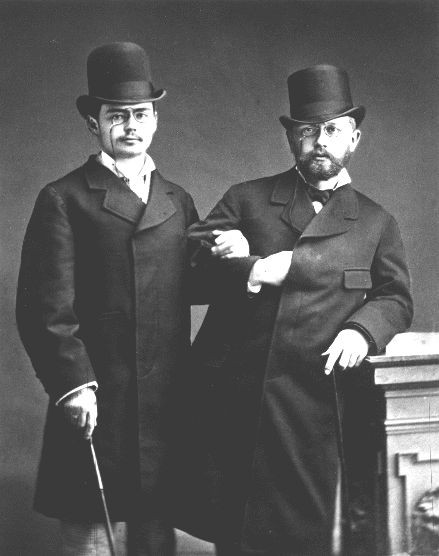
Yosif Kotek with Tchaikovsky
Violinist Yosif Kotek was born in Russia in 1855.
As a young man, he went to study at the Moscow Conservatory, where composer Pyotr Ilyich Tchaikovsky was one of his professors.
By 1876, the year of Kotek’s graduation, Kotek and Tchaikovsky were embroiled in some kind of romantic relationship.
Tchaikovsky’s brother Modest was also a gay man, and unlike most others in Tchaikovsky’s life, he understood the difficulties of being a queer person in 1870s Russia. Consequently, Tchaikovsky shared details about his love life with him that other brothers might not.
In 1876, Tchaikovsky wrote Modest:
When [Kotek] caresses me with his hand, when he lies with his head inclined on my breast, and I run my hand through his hair and secretly kiss it…passion rages within me with such unimaginable strength…
Yet I am far from the desire for a physical bond. I feel that if this happened, I would cool towards him. It would be unpleasant for me if this marvellous youth debased himself to copulation with an ageing and fat-bellied man.
The two men may have been attracted to each other, but there was never going to be any kind of fairytale ending for them, and they both knew it.
Kotek Gets an Intriguing Job Offer
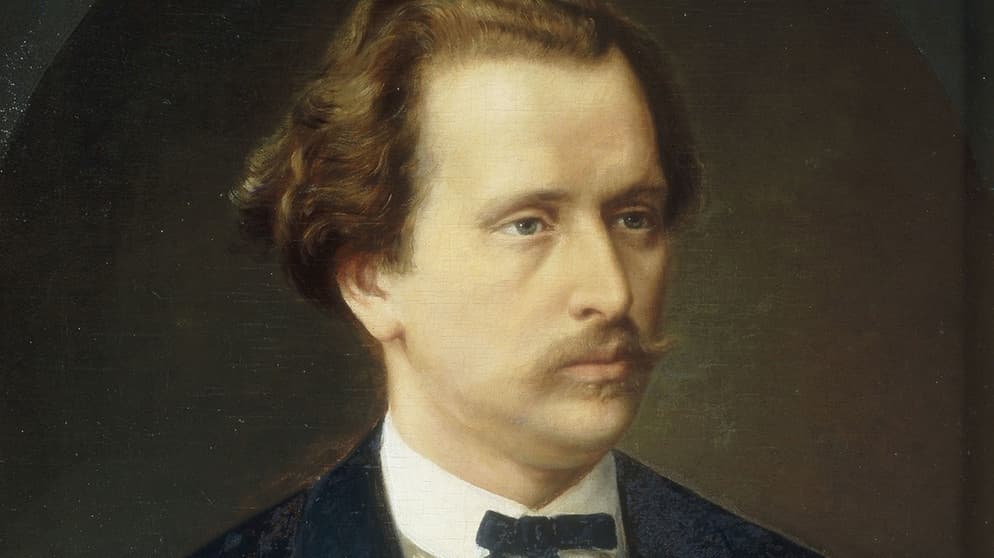
Nikolai Rubinstein
Kotek came from a poor family. In 1876, the year of his graduation, he received a welcome job offer through the Moscow Conservatory’s president, Nikolai Rubinstein.
Nadezhda von Meck – businesswoman, widow, and patron of the arts – wanted to hire a violinist to come live with her family.
This violinist would play chamber music and travel with the von Meck family, whether they were ensconced in Moscow, luxurious accommodations abroad, or her sprawling estate.
Of course, Kotek accepted the invitation.
He also, understandably, began to talk up his former professor to von Meck. He introduced her to multiple pieces by Tchaikovsky, and she was immediately intrigued by his work.
Tchaikovsky’s Valse-Scherzo, written for Kotek in January/February 1877
Kotek Tells von Meck About Tchaikovsky
However, von Meck wasn’t just taken by Tchaikovsky’s music. She also questioned Kotek about what Tchaikovsky was like as a person.
Kotek wasted no time telling his new boss that Tchaikovsky wished he could compose more, but much of his time and energy was taken up by his professorial duties.
To help alleviate his worries about money, von Meck commissioned violin arrangements of some of Tchaikovsky’s works from the composer himself, with Kotek acting as the charming go-between.
For his part, Tchaikovsky was also fascinated by von Meck in a similar way: not just by her wealth and her mind for business, but by what made her tick as a human being and lover of music.
Their First Letters to Each Other
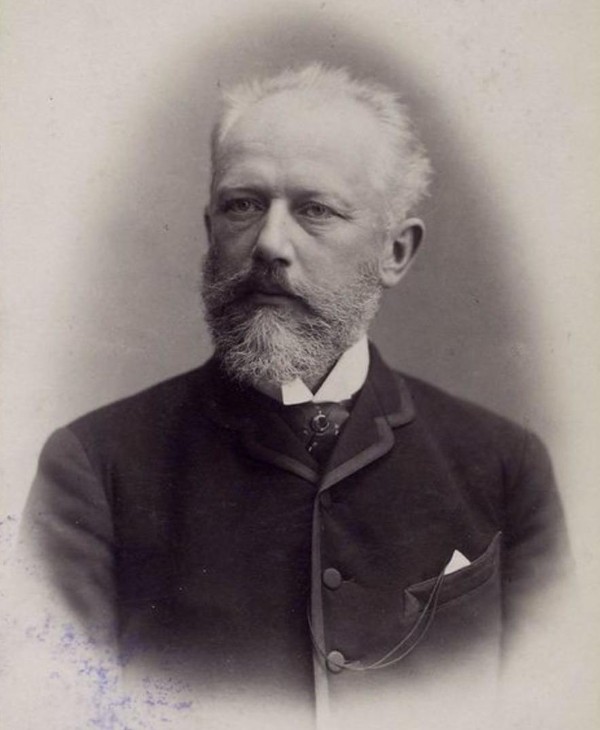
Émile Reutling: Pyotr Ilych Tchaikovsky, ca. 1888
Composer and benefactress exchanged letters for the first time in late December 1876, after Kotek had facilitated the violin commission. Nadezhda von Meck was the first to reach out.
Honoured Sir –
Allow me to express my sincere thanks for the prompt execution of my commission.
I deem it superfluous to tell you of the enthusiasm I feel for your music, because you are doubtless accustomed to receiving homage of a very different kind from any which could be offered you by so insignificant a person, musically speaking, as myself.
It might, therefore, seem ridiculous to you, and my admiration is something so precious that I do not care to have it laughed at.
Therefore, I will only say one thing, which I beg you to accept as the literal truth – that your music makes life easier and pleasanter to live.
The following day, Tchaikovsky replied:
Honoured Madam,
I thank you most cordially for the kind and flattering things you have written to me.
On my part, I can assure you that, amid all his failures and difficulties, it is a great comfort to a musician to know that there exists a handful of people – of whom you are one – who are genuine and passionate lovers of music.
Tchaikovsky’s Méditation from Souvenir d’un lieu cher, secretly dedicated to von Meck
Nadezhda von Meck’s Thank You Note Opens a Door
Two more months passed. Nadezhda von Meck requested another commission.
Tchaikovsky obliged. When she received it, she sent out the following intriguing thank-you note. It contains clear indications that – thanks to Kotek, presumably – she was preoccupied with thoughts of not just the compositions, but their composer.
She began by including his name in the salutation. She was also afraid of being laughed at.
Dear Sir – Peter Ilich –
I do not know how to express my thanks for your kind indulgence of my impatience.
Were it not for the real sympathy I feel for you, I should be afraid you might want to get rid of me, but I value your kindness too greatly for this to happen.
I should like to tell you a great deal about my fantastic feelings towards you, but I am afraid of taking up your leisure, of which you have so little to spare.
I will only say that this feeling – abstract as it may be – is one of the best and loftiest emotions ever yet experienced by any human being.
Therefore, you may call me eccentric, or mad, if you please, but you must not laugh at me.
All this would be ridiculous if it were not so sincere and serious.
Your devoted and admiring,
N.F. von Meck
Tchaikovsky’s Response
Tchaikovsky answered her the following day.
In the salutation, he copied her use of their names. The unspoken subtext seems to be that, despite their many differences, especially in gender, class and social station, they would be able to meet on an equal field in their correspondence.
Dear Madam – Nadejda Filaretovna –
Accept my hearty thanks for the too lavish fee with which you have repaid such a light task.
I am sorry you did not tell me all that was in your heart. I can assure you it would have been very pleasant and interesting, for I, too, warmly reciprocate your sympathy. This is no empty phrase. Perhaps I know you better than you imagine.
Tchaikovsky then included a fateful invitation:
If some day, you will take the trouble to write me all you want to say, I shall be most grateful.
In any case, I thank you from my heart for your expressions of appreciation, which I value very highly.
Tchaikovsky’s fourth symphony, written between 1877 and 1878, which would be dedicated to von Meck (credited as “my best friend”)
Wait, Was This a Romance?
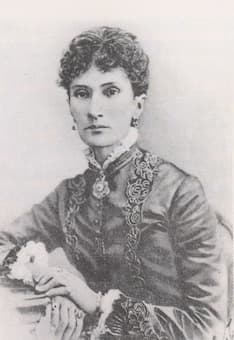
Nadezhda von Meck
Nowadays, this reads more as the start to a romance than the beginning of a professional relationship or even friendship!
Nadezhda von Meck was a recently widowed, 45-year-old mother of eleven children, who had played an active role in her late husband’s career and reaped the financial rewards.
She had withdrawn from society after her husband’s death and wanted to focus on her musical passions. She had no interest in remarriage or a physical relationship with any man.
Meanwhile, Tchaikovsky was a gay 36-year-old full-time professor and part-time composer, who could only dream of the freedom offered by von Meck’s financial resources.
She proposed that they never meet, and he readily agreed. Arguably, the knowledge that they’d be communicating solely through the written word made them open up to each other more than they otherwise would have.
Theirs was never going to be a traditional romance. But at the very least, it was a striking emotional and creative intimacy that has rarely been found in the history of music…with profound consequences for the symphonic repertoire.
An excerpt from Tchaikovsky’s Suite No. 1, secretly dedicated to von Meck
A Legendary Friendship Begins (And Others End)
In the end, Nadezhda von Meck gave enough money to Tchaikovsky to enable him to compose full-time.
During these years, he’d write multiple masterpieces that are still played frequently today, including his fourth and fifth symphonies.
As for Kotek, he developed an interest in women (to Tchaikovsky’s frustration and von Meck’s disgust). Eventually, he and von Meck fell out altogether, and Kotek lost his cushy job.
This may have been because of the womanising (especially since von Meck had daughters at home), but it may also have been due to her desire to push away one of Tchaikovsky’s emotional intimates.
Tchaikovsky fretfully tried to mend the break with von Meck, but to no avail. He continued a friendship with Kotek (in fact, his violin concerto was written with Kotek at his side as Tchaikovsky recovered from his ill-advised marriage in 1878). But despite their once-deep connection, eventually they too drifted apart. After the lukewarm reception of the concerto, Kotek refused to play it, which wounded Tchaikovsky.
Kotek died of tuberculosis at 29 before the couple was ever able to reconcile. Tchaikovsky would die on what would have been Kotek’s 38th birthday.
But the fruits of this unusual friendship triangle still live on today. We have the violin concerto, as well as all of the many works that von Meck’s financial support made possible.
For more of the best in classical music, sign up for our E-Newsletter