For musicians, the focus of a performance is naturally the music itself – and that is how it should be. After all, all those hours of practice and technical refinement culminate in the act of playing.
However, speaking to the audience before a performance can enrich the experience for both the performer and the listener in meaningful ways. A few well-chosen words can bridge the gap between performer and audience, creating a more engaging connection and, especially in the case of more “difficult” music (such as contemporary or lesser-known repertoire), provide the listeners with a “way in” to the music.
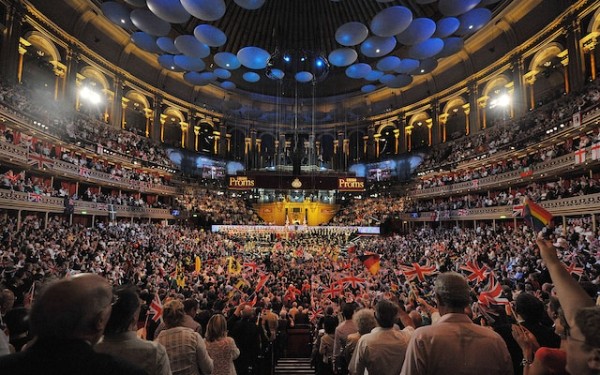
The Proms
When I went to concerts as a child in the 1970s, the atmosphere in the concert hall was very formal, old-fashioned in fact – from the musicians’ clothing (white tie and tails for the men) to the way musicians comported themselves on stage. I do not recall a time when a musician spoke to the audience, and there was a strong sense of a barrier between musicians and audience, an invisible line which must not be crossed.
Thankfully, today things are a whole lot more relaxed and those who work in classical music, be they performers, promoters or venue staff, go to some lengths to ensure the experience for the audience is not stiflingly formal. I believe this helps both with audience enjoyment and debunking long-held perceptions that classical music is elitist, highbrow and accessible only to the cognoscenti.
Robert Schumann: Piano Concerto in A Minor, Op. 54 – I. Allegro affettuoso (Florian Uhlig, piano; German Radio Saarbrücken-Kaiserslautern Philharmonic Orchestra; Christoph Poppen, cond.)
Performers speaking to the audience at the start of a concert, usually to introduce their programme, add another dimension to the concert experience, especially if done well. Audiences are curious, and a performer who can offer insights into the music and, more importantly, explain why they have selected to play that music or what it is about the repertoire that particularly appeals to them, creates a connection with the audience before a single note has been played. This connection can make the audience more receptive, attentive and emotionally involved in the performance.
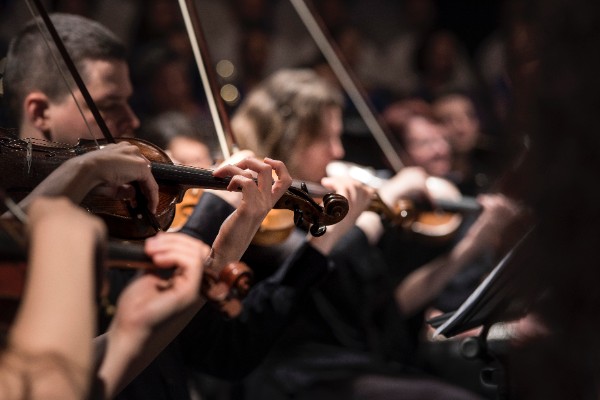
In some instances, performers may highlight aspects of the music which they feel are interesting for the audience to listen to. This again “prepares the ears” for what is being performed and can encourage audiences to listen more attentively or deeply. In my experience, when lesser-known or contemporary music is being performed, this kind of introduction can be especially enlightening.
Brian Eno: An Ending (Ascent) (arr. D.L. Page for violin, harp and orchestra) (Noksani, violin; David Le Page, violin; Eleanor Turner, harp; Orchestra of the Swan; Daniele Rosina, cond.)
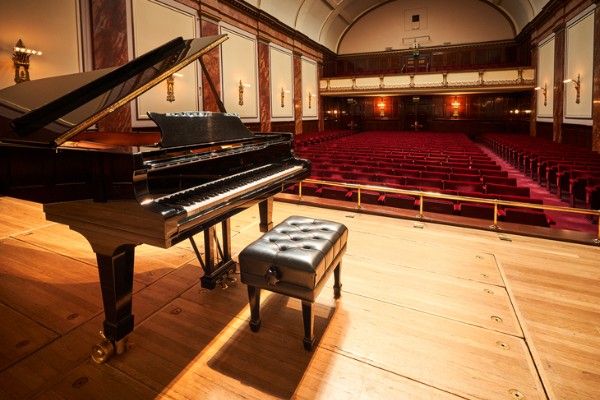
Inside the Wigmore Hall
Of course, if you’re going to talk to your audience, you need to do it well. Don’t talk down to your audience or patronise them. Make them feel receptive and excited about the music to be performed. Don’t simply repeat what is written in the programme notes – highlight interesting or intriguing aspects of the music or the composer’s life – and be sure to speak clearly so those at the back can hear! Joking apart, speaking to the audience demonstrates confidence and professionalism, poise and stage presence – qualities that are as much a part of performance as technical skill and artistry. Audiences appreciate seeing musicians who are not only talented players but also engaging communicators. It signals that the musician is offering an experience to be shared.
Talking ahead of a performance can also ease nerves. For the performer, a few moments of casual speech can act as a warm-up, breaking the ice and calming anxiety. For the audience, hearing a musician’s voice and personality can set the tone for a more open, intimate and responsive listening environment.
Finally, live performance is about presence. By speaking to the audience, musicians reinforce the uniqueness of the live performance and remind listeners that this is not just about sound, but about people coming together for a shared and enriching artistic experience.
For more of the best in classical music, sign up for our E-Newsletter