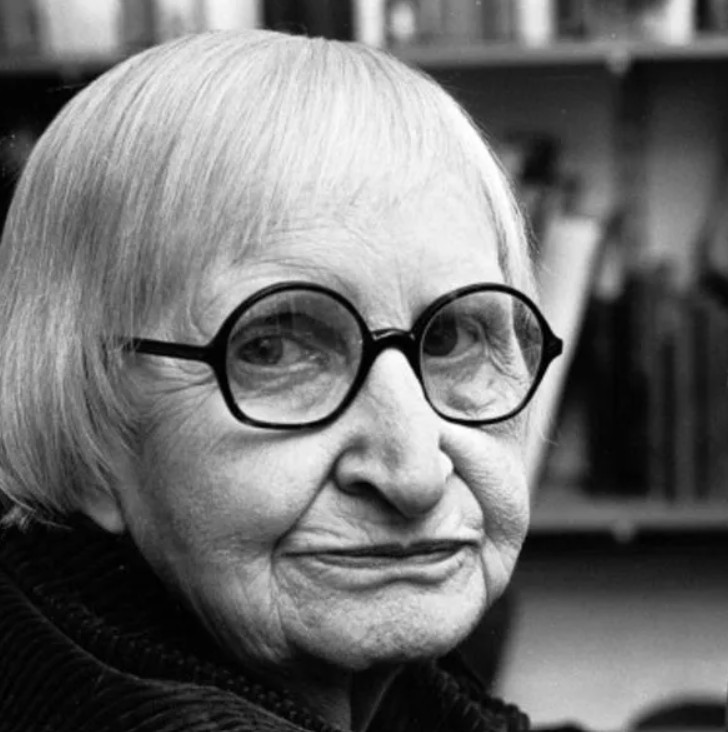
Born in 1851, Eugenie Schumann was the seventh of composer Robert Schumann and pianist Clara Schumann’s eight children.
She was also the only child to write a memoir about her life.
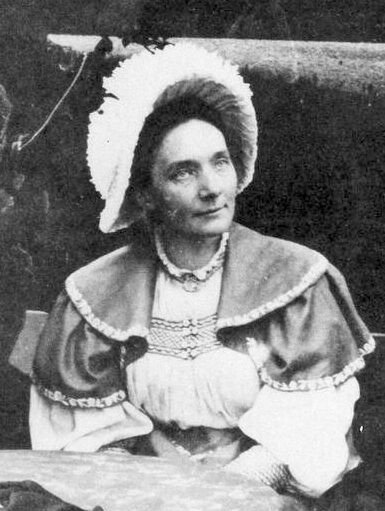
Eugenie Schumann
That memoir offers invaluable insight not only into her remarkable childhood but also into her family’s friendship with Brahms.
In the memoir, she writes:
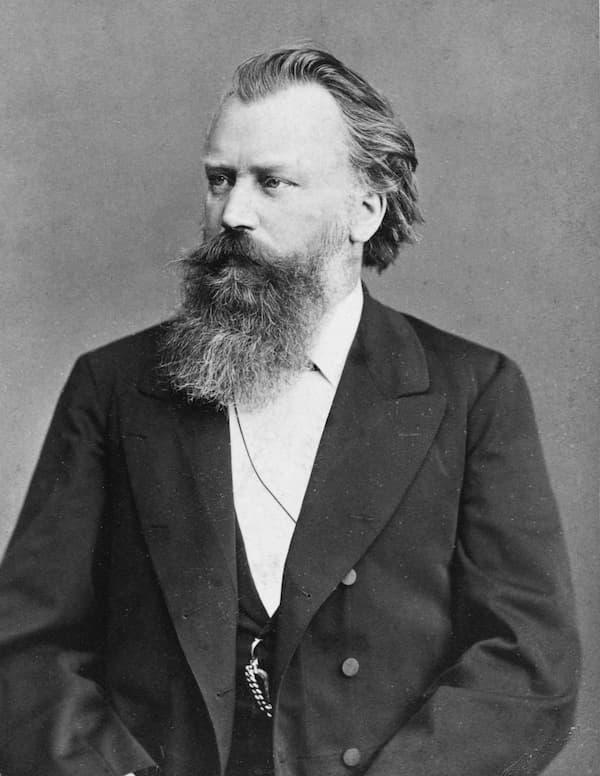
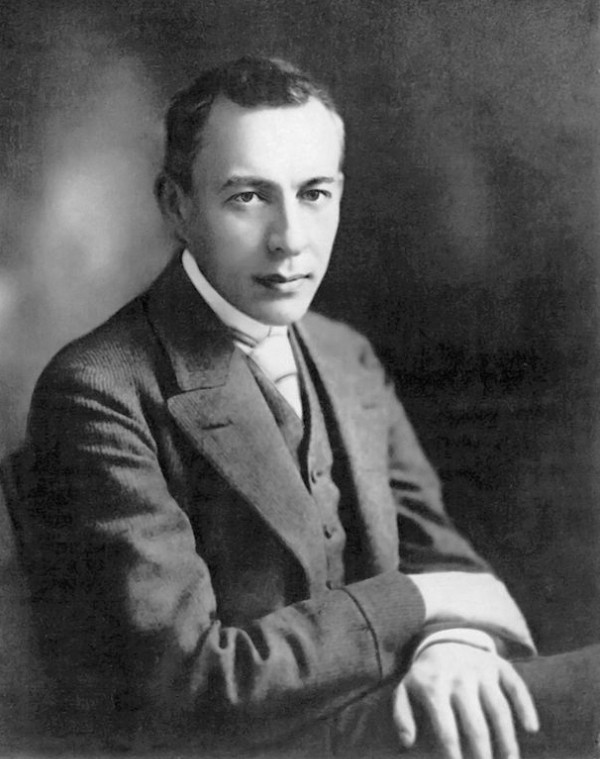
Johannes Brahms, c. 1885
In the spring of 1872, my mother told me that she was going to ask Brahms to give me lessons during the summer. She thought that the stimulating influence of a fresh teacher might incite me to a more eager pursuit of my studies.
Eugenie wasn’t particularly excited about this turn of events:
I felt very unhappy; Mamma could not be satisfied with my progress, and I thought that I had done my best. There was no one for whom I would have worked rather than for her.
However, despite her initial reluctance, she came to value Brahms not just as a family friend but as a teacher.
1. As a teacher, Brahms was punctual, kind, and patient.
Eugenie wrote:
Now, Brahms really did come twice a week. He entered the room punctually to the minute, and he was always kind, always patient, and adapted his teaching to my capabilities and the stage of my progress in quite a wonderful way.
2. Brahms valued scales and exercises.
Music teachers sometimes get into debates with each other about whether students should study specific etudes to learn technique or focus on isolating the technically challenging moments within their repertoire.
Brahms had no such compunction: he believed in scales and etudes.
…He took a great deal of trouble in the training of my fingers. He had thought about such training and about technique in general much more than my mother, who had surmounted all technical difficulties at an age when one is not yet conscious of them. He made me play a great many exercises, scales and arpeggios as a matter of course…
Later in the memoir, Eugenie writes:
Brahms, as well as my mother, was of the opinion that technique, more especially fingering, must be learnt through exercises, so that in the study of pieces, attention may be concentrated unhampered upon the spirit of the music.
3. Brahms was especially concerned with training the thumb.
The thumb can be an underappreciated element of piano playing. But as Eugenie wrote:
…He gave special attention to the training of the thumb, which, as many will remember, was given a very prominent part in his own playing.
When the thumb had to begin a passage, he flung it onto the key with the other fingers clenched. As he kept his wrist loose at the same time, the tone remained full and round even in a fortissimo.
Ugnius.Pianist on Youtube shares his thoughts on Brahms’s Exercises
4. Brahms trained students to play fast by having them play very simple studies, but quickly.
With regard to studies, Brahms said: Play easy ones, but play them as rapidly as possible.
That’s one way to build velocity!
5. Brahms used Clementi’s Gradus ad Parnassum.

Clementi’s method book Gradus ad Parnassum
© Peters Edition Ltd
He thought very highly of Clementi‘s ‘Gradus ad Parnassum,’ and made me play a great number of these.
We wrote an article discussing Clementi’s work (as well as other music inspired by the idea of Mount Parnassus): Gradus ad Parnassum – “On the steps to Mount Parnassus”
Exercises from Gradus ad Parnassum by Muzio Clementi
6. Brahms felt that rhythm was the paramount consideration when studying Bach.
Eugenie writes:
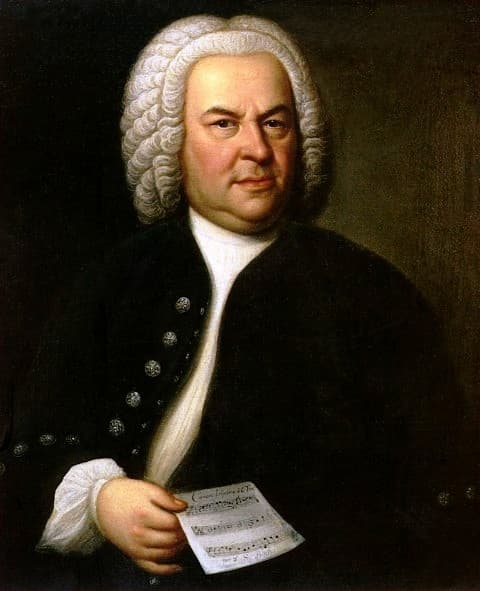
Elias Gottlob Haussmann: J.S. Bach, 2nd version, 1746 (Bach-Archiv Leipzig)
In the study of Bach‘s works, Brahms laid the greatest stress on rhythm, and gave me directions which, like seeds, took root and continued their growth throughout my musical life. They greatly increased my perception of the subtleties of rhythmic movement.
He made it one of the principal rules that in constantly recurring figures the accents should always be the same, and that they should be stressed not so much by strong attack as by greater pressure on the accentuated and more lightness of the non-accentuated notes.
7. Brahms valued syncopations and made sure his students valued their full length.
Brahms gave much attention to syncopations.
They had to be given their full value, and where they produced dissonances with the other parts, he made me listen to the syncopation in relation to each one of the dissonant notes.
He made the suspensions equally interesting to me; I could never play them emphatically enough to please him.
Britannica defines suspensions as “a means of creating tension by prolonging a consonant note while the underlying harmony changes, normally on a strong beat.” Brahms’s music is famous for these moments.
Sonata Secrets on YouTube looks at Brahms’s Intermezzo, Op. 118, No. 2, including suspensions
8. One of the pieces he used in his pedagogy was Bach’s French Suites.
Eugenie wrote:
Of all the works which I studied with Brahms, I enjoyed the French Suites most; it was pure joy to work at them in this way, and he made me see things which I had hitherto passed without noticing, and of which I never again lost sight.
Bach’s French Suites
Although she had started out disappointed to be assigned to Brahms instead of her mother, with time, Eugenie came to realise that Brahms had a great deal to teach her, too. Those lessons stayed with her for the rest of her long life.
For more of the best in classical music, sign up for our E-Newsletter