It’s one of the most famous stories about the life of Johannes Brahms: he played piano in brothels as a teenager, and the experience scarred him for the rest of his life.
However, is this mythology based on truth? Some modern historians disagree.
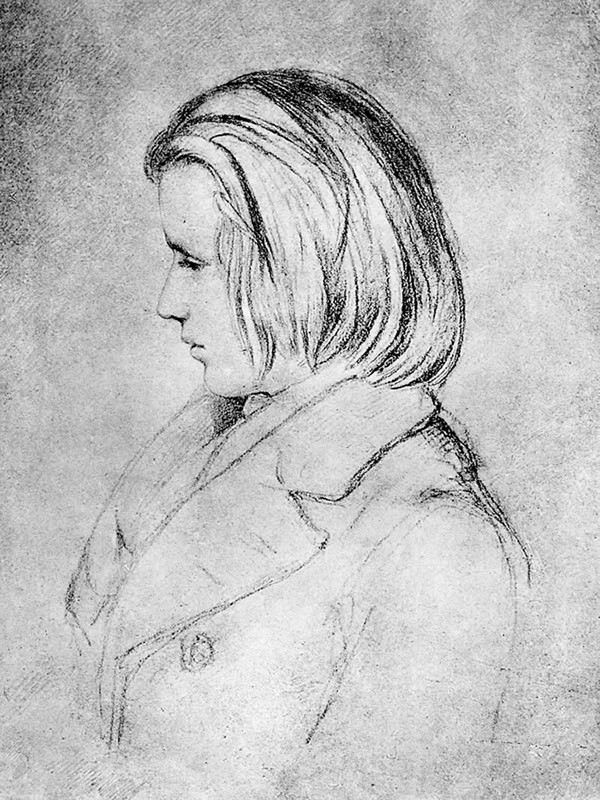
Johannes Brahms
Today, we’re looking at the evidence.
The Brahms Family’s Humble Hamburg Origins
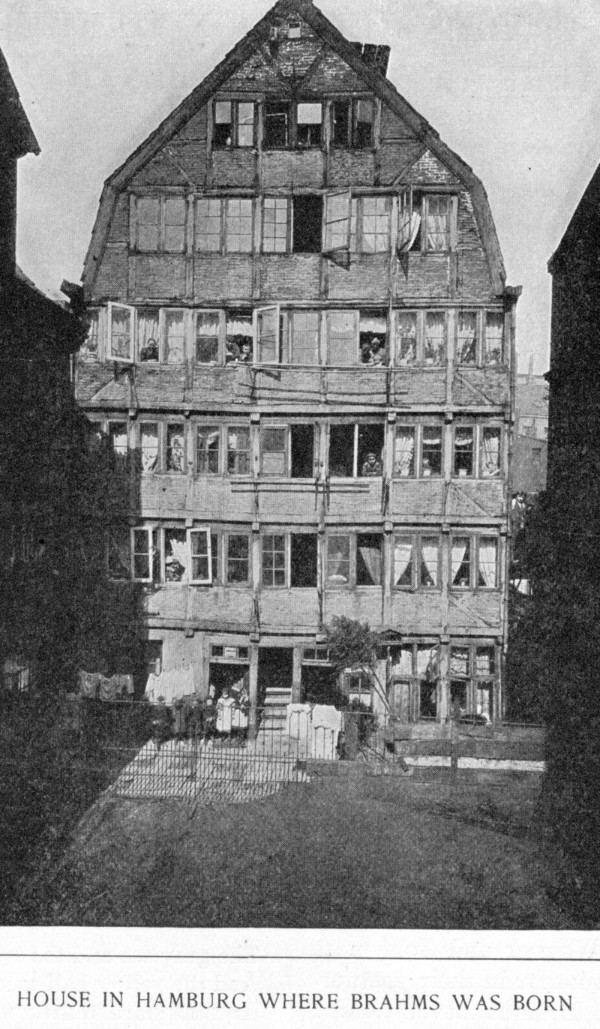
Brahms’ birthplace in Hamburg
Brahms’s parents – 24-year-old Johann Jakob and 41-year-old Christiane – were married in 1830 in Hamburg.
They had three children: Elise in 1831, Johannes in 1833, and Fritz in 1835. Learn more about their family: “Johannes Brahms and His Family”.
Johann Jakob was a freelance bass player. Depending on his income in any given year, the family vacillated between the lower class and the lower-middle class.
In 1833, when Johannes was born, they were living in a cramped area of Hamburg known as the Gängeviertel.
In the words of Brahms biographer Jan Swafford, the Gängeviertel was “an area of dark streets and passages, infested with sailors’ dance halls that doubled as brothels – hence the familiar Hamburg name for the place: ‘Adulterer’s Walk.’”
However, as Johannes got older and Johann Jakob began earning more money, the family moved to a more respectable neighbourhood. Just six months after his birth, they left the house where Johannes had been born.
The Geography of Hamburg
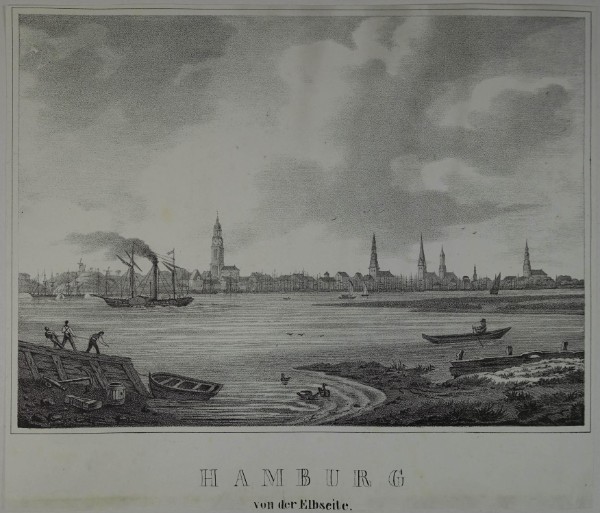
Hamburg
Hamburg sits on the Elbe River, with access to the North Sea. Today, the port there is the third largest in Europe. Historically, it has always been a center of commercial and industrial activity.
The economy of the city also relied on providing room, board, and entertainment to sailors and dockworkers.
One particular kind of nineteenth-century institution there, offered food, drink, entertainment…and maybe more.
Some of these local institutions were known as Animierlokale. Swafford translates the word as “stimulation pubs.” Other translations include “arousal pubs.” A more innocent one might be “nightclubs.”
The Story Goes Public
The first discussion in-print of what happened to Brahms in the Animierlokale appeared in the Viennese journal Das Vaterland in January 1864, when he was just thirty years old and the newly named leader of the Vienna Singakademie:
It must fill one with woe to consider the thoughtful, reflective child forced to play dances for his dear daily bread in places that one cannot mention in the presence of women’s ears.
But how it also testifies to a noble, indestructible germ in his nature, that Brahms emerges spotless from the battle with entirely common destitution!
In this telling, Brahms’s experiences at the Animierlokale aren’t portrayed as life-ruining traumas, but rather a trial testifying to his moral fiber.
Testimony from Brahms’s Friends
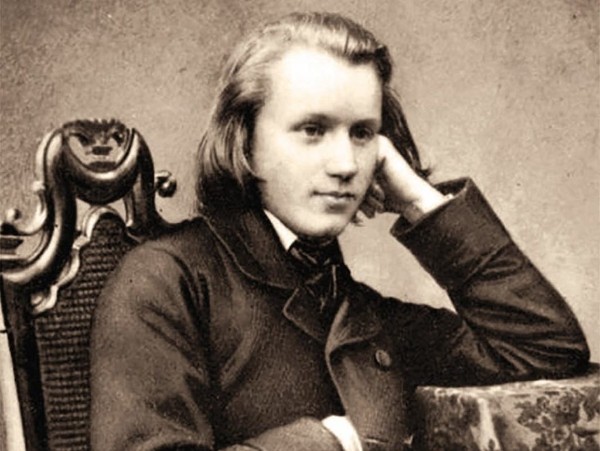
Johannes Brahms
But this framing of the story didn’t last long. Several of Brahms’s friends would later recall him describing working in brothels as a teenager, and how he felt scarred by the experience.
One time after a concert, Brahms was walking with a friend, music critic Max Graf, when he was recognized by a sex worker. She and her colleagues asked Brahms to come inside and play some music for them. He obliged.
Later, Brahms told Graf he used to play “dance music for drunken sailors and their girls” in such places “the whole night.”
Brahms apparently vented to another friend:
People always say I’m rude and tactless. So where am I supposed to have learned tact? In my youth, in order not to starve, I had to play in sailors’ saloons, and indeed one learns nothing good there.
In addition, Eugenie Schumann, the daughter of his dear friends Robert and Clara Schumann, wrote in her memoir in the 1920s:
[Brahms] himself told my mother that as a mere boy, he saw things and received impressions that left a deep shadow on his mind.
Brahms’s Waltzes, Op. 39
The Most Shocking Allegations Yet
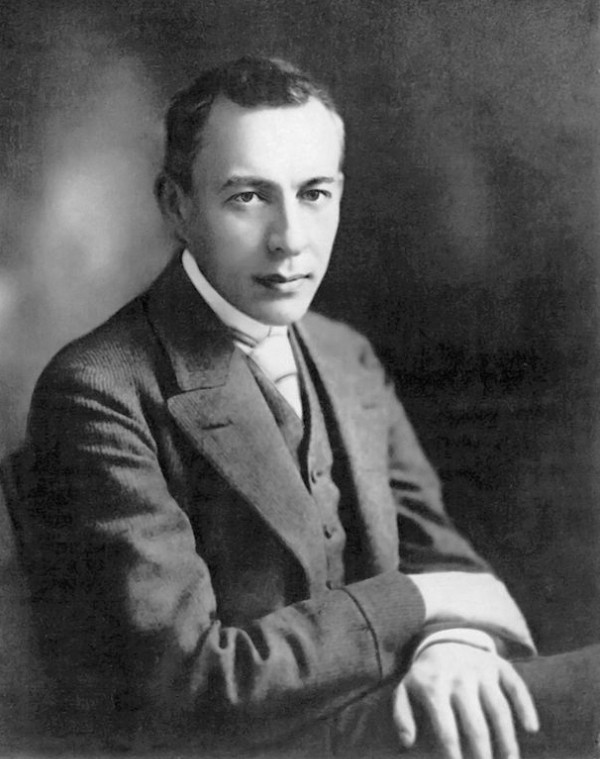
However, the most shocking description of these conversations comes from musicologist Max Friedländer, who spoke to Brahms biographer Robert Haven Schauffler.
In 1933, decades after the composer’s death, Schauffler published a controversial biography called The Unknown Brahms.
The Unknown Brahms includes an anecdote about a disastrous dinner party, at which Brahms used a derogatory term for women and horrified the guests. Without apologising, he left with Max Friedländer to take a walk and cool off.
Brahms apparently shouted at Friedländer:
You who have been reared in cotton wool; you who have been protected from everything coarse – you tell me I should have the same respect, the same exalted homage for women that you have! … You expect that of a man cursed with a childhood like mine!
Friedländer continued:
Then with bitter passion, he [Brahms] recounted his poverty-stricken youth in the wretched slums of Hamburg; how as a shaver of nine, he was already a fairly competent pianist; and how his father would drag him from bed to play for dancing and accompany obscene songs in the most depraved dives of the St. Pauli quarter.
“Do you know those places?” he asked.
“Only from the outside.”
“Then you can’t have the least idea of what they are really like. And in those days, they were still worse. They were filled with the lowest sort of public women – the so-called ‘Singing Girls.’ When the sailing ships made port after months of continuous voyaging, the sailors would rush out of them like beasts of prey, looking for women. And these half-clad girls, to make the men still wilder, used to take me on their laps between dances, kiss and caress and excite me. That was my first impression of the love of women. And you expect me to honour them as you do!”
It was long before his anger simmered down, and we left the park.
Brahms’s Tragic Overture
One Biographer Cements the Legend
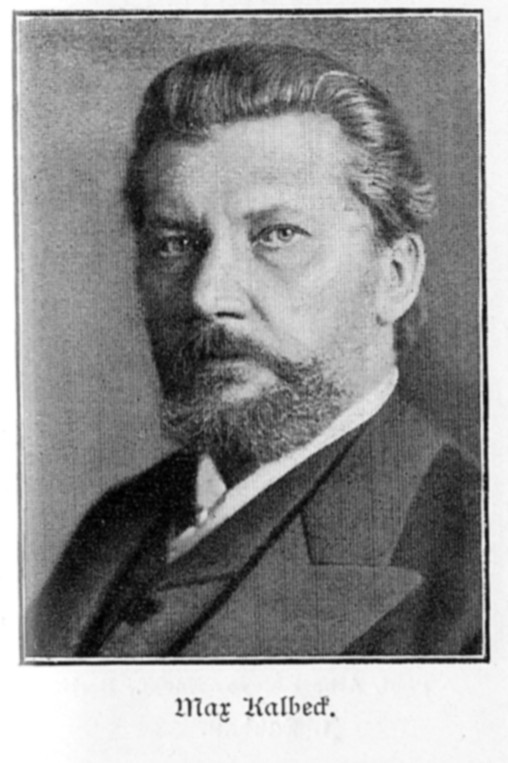
Max Kalbeck
Brahms died in the spring of 1897. Over the following decades, multiple biographers would take on the enormous task of sorting Brahmsian fact from fiction.
His first biographer, Max Kalbeck, wrote an eight-volume biography that was published between 1904 and 1914.
In it, Kalbeck reported that at thirteen, Brahms was sent out to play piano at the Animierlokale, reading Romantic poetry while letting his fingers go on autopilot, and pointedly ignoring the amorous activities happening around him.
Then in 1933, Schauffler published Friedländer’s shocking anecdote in The Unknown Brahms.
As a result, this striking image became a part of Brahmsian lore for much of the twentieth century.
Modern Reassessment
However, in his 1986 book Brahms und Hamburg, historian Kurt Hofmann began pushing back against the entire legend.
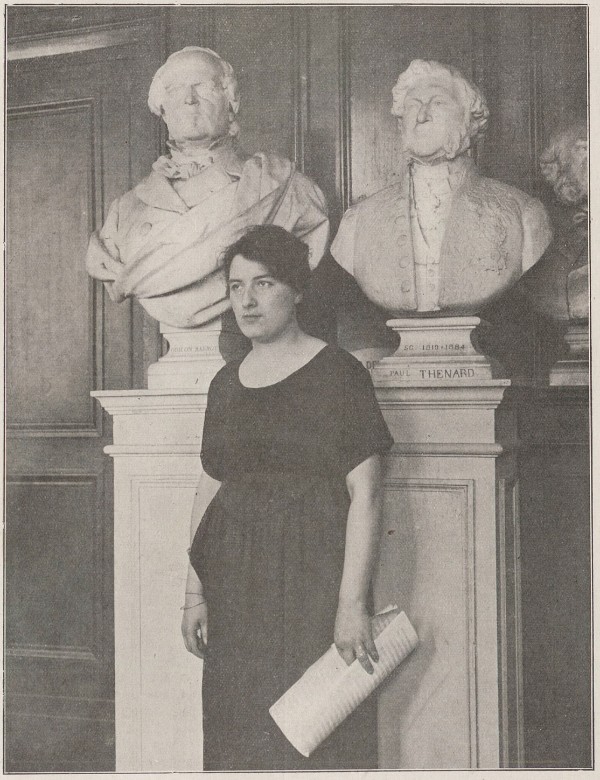
He pointed out that well-respected Brahms biographer Florence May, who published her own biography of the composer in 1905, reported that the wife of Brahms’s first piano teacher had never heard of him performing in such establishments.
Additionally, May reported that one of Johann Jakob’s close friends testified that the father would never force his son to do such a thing.
That said, May also comments when talking about these testimonies:
Two authentic sources of information, however, establish the fact that from the age of about thirteen, the boy regularly fulfilled engagements of the kind.
She doesn’t name her sources, so we’re left to guess at who they were and how reliable they might have been.
More Doubt
Johannes Brahms
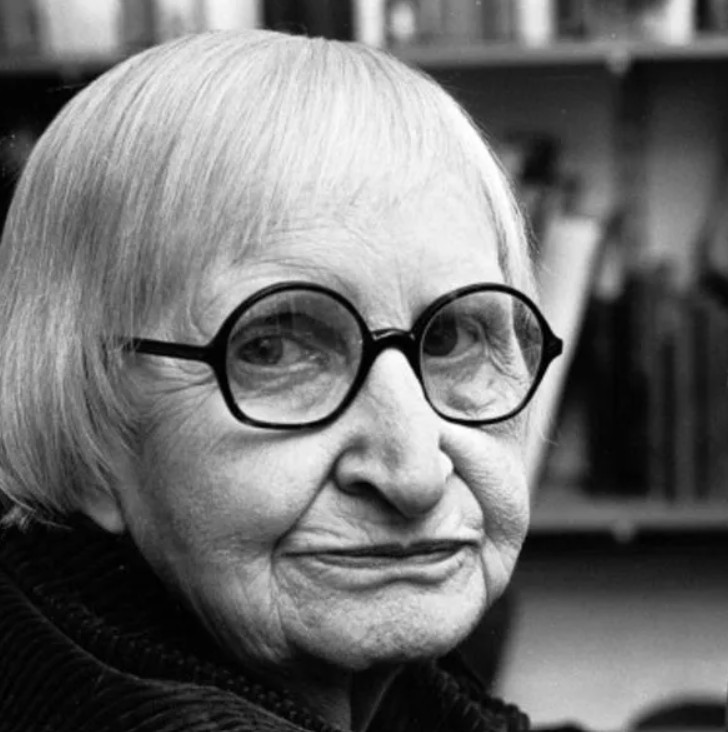
In her article “The Young Brahms: Biographical Data Reexamined”, which appeared in the spring 2001 edition of 19th Century Music, historian Styra Avins shares additional relevant historical facts.
In the city of Hamburg proper, licensure laws forbade the entry of anyone under twenty. Admitting people under the age of twenty could incur a prison sentence lasting anywhere from two weeks to eight months.
In addition, sex workers were not allowed to keep children with them over the age of ten…not even their own.
However, Avins posits that enforcement of those laws may have been strictly enforced in the suburbs.
She suggests that Brahms may indeed have played in bars…just maybe not the depraved ones that became a part of Brahmsian lore.
She also argues that modern scholarship has established that the Brahms family was more financially comfortable than historians once thought. Why, she asks, would Johannes have been forced to play at these kinds of locations in the middle of the night?
Others have disagreed with her, pointing out that Johann Jakob was not particularly good at managing money, and he may have run into intermittent financial troubles working as a freelance musician.
So What’s the Truth?
The true but unsatisfying answer is:
We don’t know.
Maybe none of these positions is totally accurate. Maybe the truth is somewhere in between: maybe traumatic events happened while he was in his mid- or late-teens, and he misremembered them later. Certainly, trauma can impact memories in profound ways.
It seems unlikely that Johannes Brahms’s adoring parents would have willingly subjected their son to such an ordeal. But at the same time, the idea that he’d ever lie about such a thing to multiple friends is also bizarre.
All that said, it’s important to note that none of the accounts about the Animierlokale come from Brahms’s own hand. And even if they had, there would doubtless be room to debate whether or not he was lying or exaggerating.
In the end, it seems unlikely that historians will ever come to a universal consensus on this particular Brahmsian question.
For more of the best in classical music, sign up for our E-Newsletter