During the last two years of his life, in a compressed timeframe between 1824 and 1826, Ludwig van Beethoven completed his final set of five string quartets. Fractured, deeply personal, and introspective, these works mirror the very essence of contemporaneity, their unbound structures reflecting a modern refusal to conform. Eliciting bewilderment and controversy among contemporary listeners, they simply refused to be pinned down.
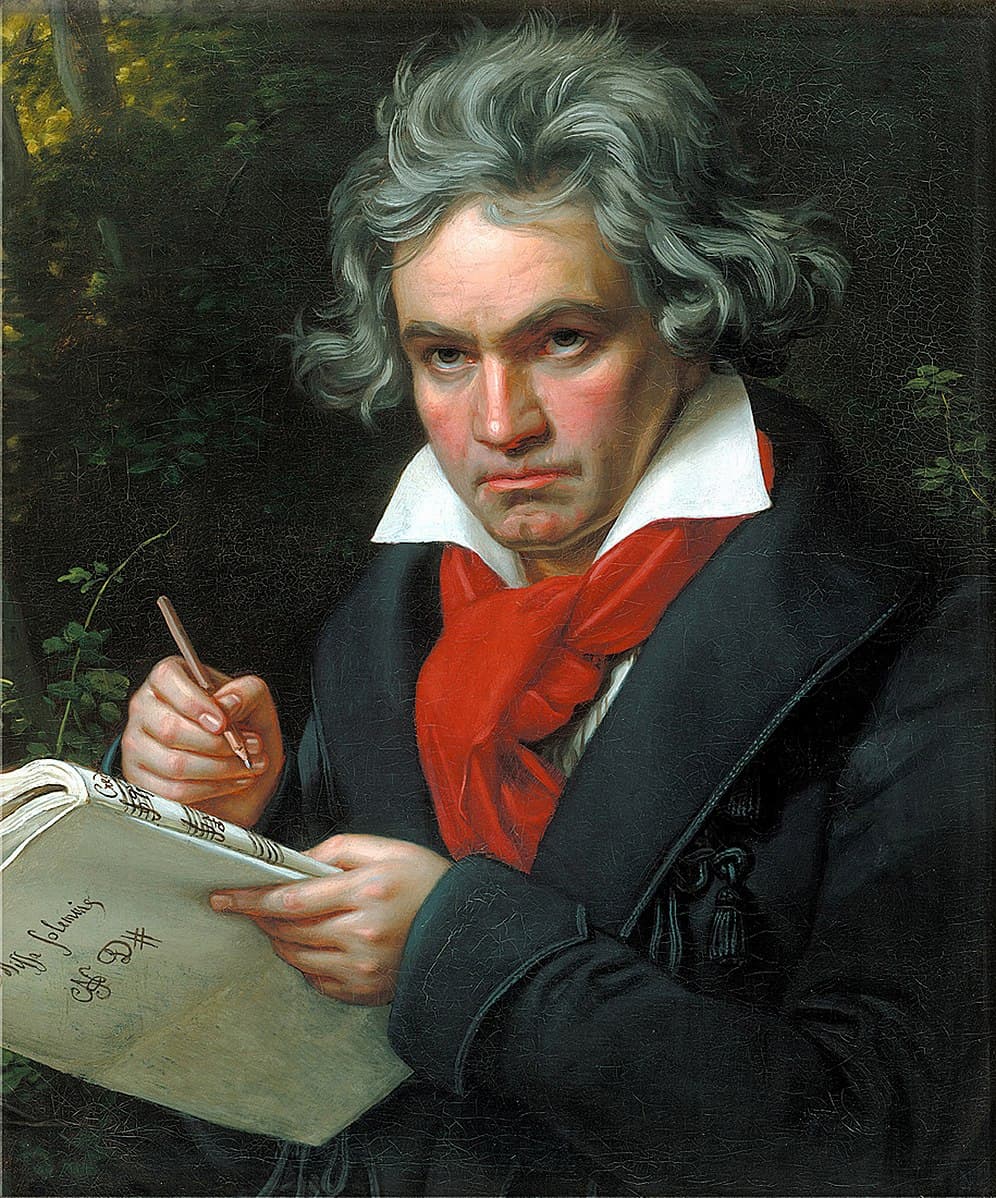
Portrait of Ludwig van Beethoven
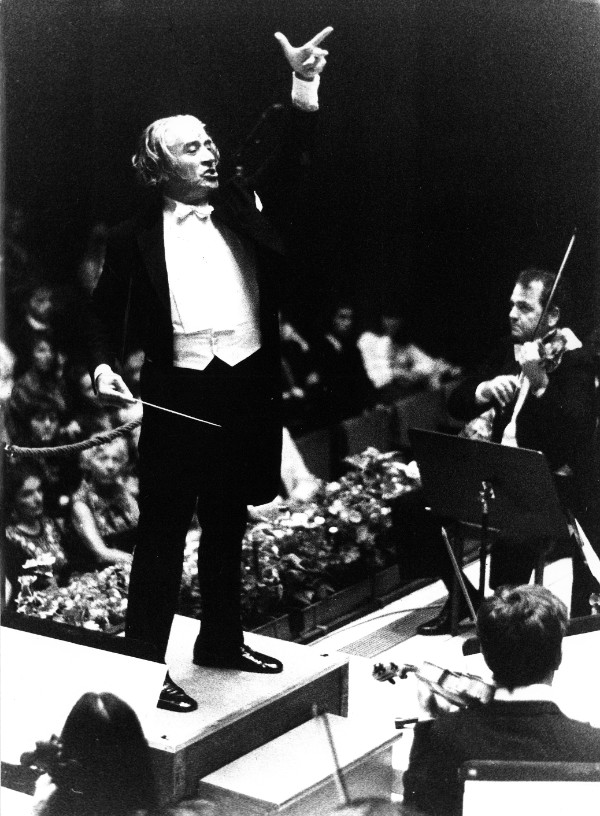
Nearly a century later, Igor Stravinsky would gaze upon these works not as a relic of Romantic excess, but as a living force. “It is,” Stravinsky declared with reference to the Grosse Fuge, “an absolutely contemporary piece of music that will be contemporary forever.”
This pronouncement, delivered with the composer’s characteristic blend of reverence and irreverence, captures a profound truth about Beethoven’s late period. These works endure by shapeshifting across eras. For Stravinsky, Beethoven’s late works were not nostalgic heirlooms but living provocations, eternally contemporary because they embody the tension between order and chaos, the very pulse of modernity.
Ludwig van Beethoven: Große Fuge, Op. 133
Timeless Music in Ancient Spaces
The contemporaneity of late Beethoven is not born of novelty but of depth, as it is music that anticipates the listener’s future selves. Theodore Adorno, in his philosophical dissection of Beethoven’s Late Style, called it “a rejection of the appearance of harmony, a deliberate incompleteness that echoes the human condition’s inherent rupture.”
The idea of timeless contemporaneity finds a vibrant echo in the rugged landscapes of Dartmoor and Exmoor, where the Two Moors Festival has woven itself into the cultural fabric of rural England for twenty-five years. Spanning the largest geographic area of any UK classical music event, it transforms remote villages, windswept barns, and ancient churches into stages for chamber music.
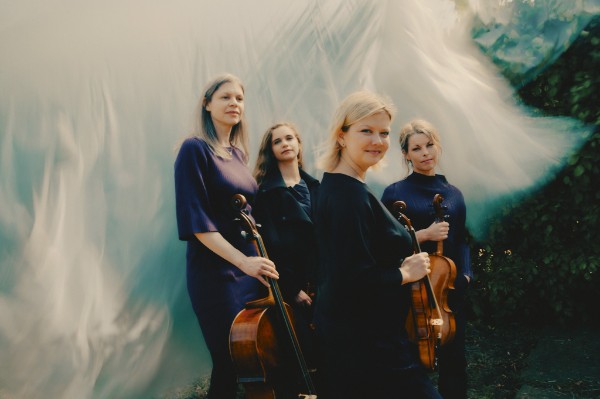
Chiaroscuro Quartet
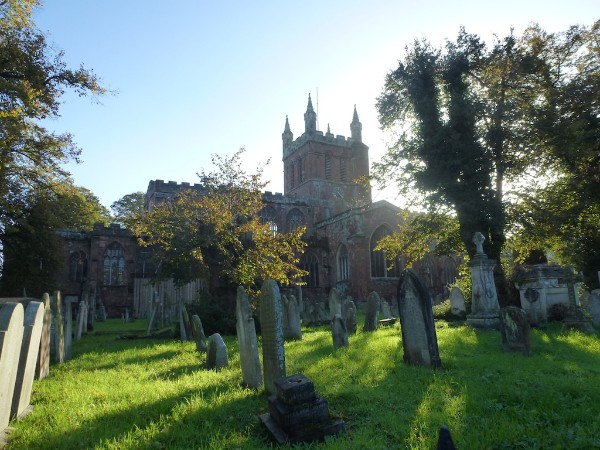
St. Andrew’s Church in Moretonhampstead will provide such a stage for the Chiaroscuro Quartet, concluding the festival with performances of the Beethoven String Quartet in C-sharp minor Op. 131, and the String Quartet in E-flat Major, Op. 127.
Ludwig van Beethoven: String Quartet No. 13 in B-Flat Major, Op. 130 – V. Cavatina: Adagio molto espressivo (Chiaroscuro Quartet, Ensemble)
Beethoven’s Light and Shadow
Chiaroscuro Quartet
In the realm of historical performance practice, where gut strings and period bows challenge the polished uniformity of modern instruments, the Chiaroscuro Quartet emerges as a luminous anomaly. After all, it is an ensemble whose very name evokes the dramatic interplay of light and darkness that defined Caravaggio’s canvas.
Founded in 2005 by violinist Alina Ibragimova, and presently featuring violinist Charlotte Saluste-Bridoux, violist Emilie Hörnlund, and cellist Claire Thirion, the Chiaroscuro is lauded for a “revelatory freshness that challenges listeners to hear late Beethoven anew by stripping it of all anachronistic sentimentality.”
Ludwig van Beethoven: String Quartet No. 13 in B-Flat Major, Op. 130 – I. Adagio ma non troppo – Allegro (Chiaroscuro Quartet, Ensemble)
Primal Audacity
This is no mere antiquarian exercise. It is a revelatory act of resurrection, wherein the sparse vibrato and natural decay of gut strings strip away the homogenising gloss of Romantic excess, unveiling Beethoven’s structural audacities in their primal, textural glory. Some critics have hailed their sound as “a shock to the ears of the best kind.”
In their hands, the late Beethoven quartets become a chiaroscuro canvas itself. Bold contrasts etched in sonorous ink, where silence speaks as volubly as the surge of a fugal chase. This incisive clarity illuminates the music’s fractured architecture, allowing each pause to resonate with unspoken questions. It is this interplay of sound and silence that transforms late Beethoven into a vivid dialogue, with the infinite looming in every unresolved cadence.
Ludwig van Beethoven: String Quartet No. 13 in B-Flat Major, Op. 130 – VI. Finale: Allegro (Chiaroscuro Quartet, Ensemble)
Timeless Companionship
The Two Moors Festival, like Beethoven’s late string quartets, resists commodification by demanding presence. In an era of streaming’s ephemera, where algorithms curate comfort, Two Moors insists on the haptic, and it is contemporary because it confronts social media isolation. As artistic director, Waley-Cohen notes, “the festival offers a thought-provoking escape in a hyper-mediated world.”
In the combination of Beethoven and the Two Moors Festival, we possibly see art’s ultimate triumph. It’s not a conquest of time, but companionship with it. Beethoven’s late works, dismissed then revered, teach that true innovation is excavation. It is part of the landscape, not as a monument, but as a space where eternity lingers.
Great art doesn’t date, but it dates us, urging confrontation with the now. The Two Moors Festival, in its quiet audacity, stands as proof. It is a contemporary fugue in rural ink that keeps on unfolding.
The Chiaroscuro Quartet will be performing at The Two Moors Festival on October 12th.
For more of the best in classical music, sign up for our E-Newsletter