Just as in his piano concertos, Wolfgang Amadeus Mozart (1756–1791) created a world in his five violin concertos where the solo instrument is in conversation with the orchestra, rather than fighting it. The violin is very much a part of the orchestra, rather than sitting aside from it. In earlier composers’ violin concertos, the orchestra is used to push the soloist forward and becomes a kind of background music. In Mozart’s hands, this relationship changes: the two performing forces work together through the piece.
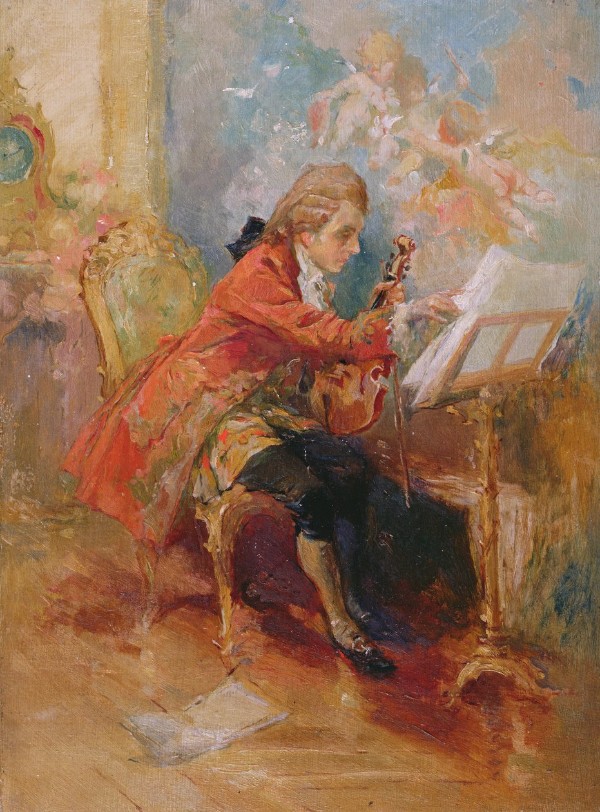
Jean Louis Ernest Meissonier: Mozart Playing the Viola
In the opening movement, the orchestra presents most of the themes, and the violin pushes this by introducing yet another theme. In the development section, these themes are subjected to changes in harmonies that the audience may have found surprising, but which to Mozart’s ears would be a direct outcome of the ideas he had planted earlier. Themes may get dropped in the development section, but then might come roaring back in the recapitulation to greater effect.
Mozart, himself a skilled violinist in addition to his piano skills, is thought to have composed many of the violin concertos for himself as a soloist. They were so admired, though, that other violinists sought them out, and they entered the repertoire.
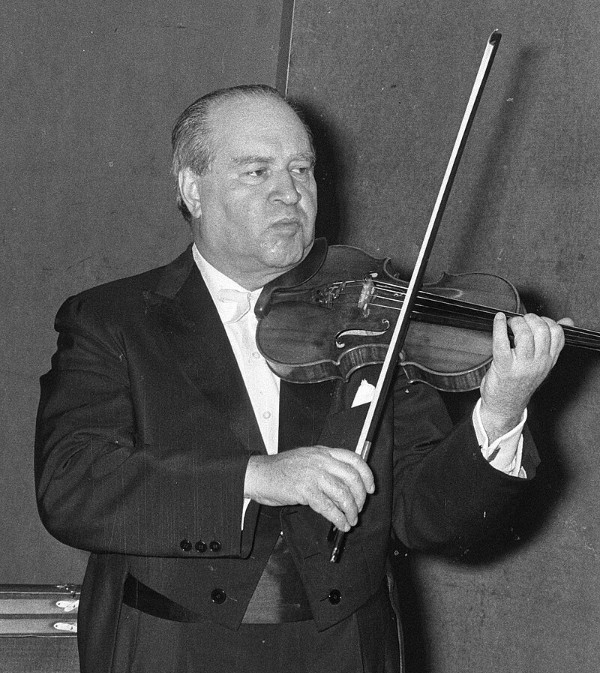
David Oistrakh, 1972
This recording was made in 1949 with violinist David Oistrakh performing with Nikolai Golovanov leading the Radio Symphony Orchestra of the USSR. David Oistrakh (1908–1974) was born in present-day Ukraine and studied from age 5 with Pyotr Stolyarsky on the violin and viola, meeting Pyotr Stolyarsky’s other students, including Nathan Milstein. He made his concert debut at age 6 and entered the Odessa Conservatory at age 15. In 1927, he played a concert in Kiev, performing Glazunov’s Violin Concerto with the composer conducting. Glazunov was so impressed with Oistrakh’s performance that he invited him to play the Tchaikovsky Violin Concerto in Leningrad in 1928.
Oistrakh had moved to Moscow in 1927 and from 1934 taught at the Moscow Conservatory, being made professor in 1939. During WWII, he played for soldiers on the front lines and workers in the factories, and was in Stalingrad in the winter of 1942, playing a concert while the city was under German bombardment. His performance of Tchaikovsky’s Violin Concerto was said never to have faltered. After the war, Oistrakh was permitted foreign travel and, after a tour of the Soviet bloc, performed first in Helsinki (1949), then Florence (1951), East Germany (1952), France (1953), the UK (1954), and, eventually, the US (1955). By the time of his 60th birthday, he was viewed as one of the greatest violinists of his day, joining his former schoolmate Nathan Milstein, Romania’s George Enescu, and Lithuanian-born Jascha Heifetz.
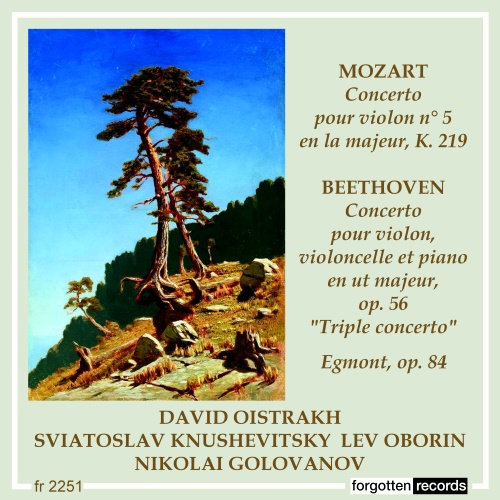
Performed by
David Oistrakh
Nikolai Golovanov
Radio Symphony Orchestra of the USSR
Recorded in
1951
Official Website
For more of the best in classical music, sign up for our E-Newsletter