If you look at playlists these days, you’ll find that lists of the “10 Best This” and the “10 Best That” have taken over. And did I mention that the “10 Happiest” and the “10 Saddest” are everywhere.
Don’t get me wrong, I do like compilations like that, and I have been guilty of putting together a number of them as well, but they always feel so subjective. Music evokes feelings, and feelings are very personal. The same piece of music certainly does not evoke the same feeling for everybody. It’s just much more complex.
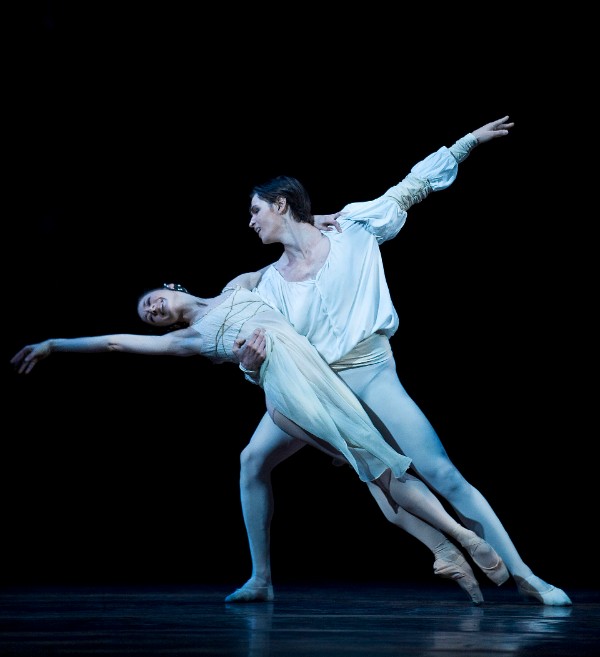
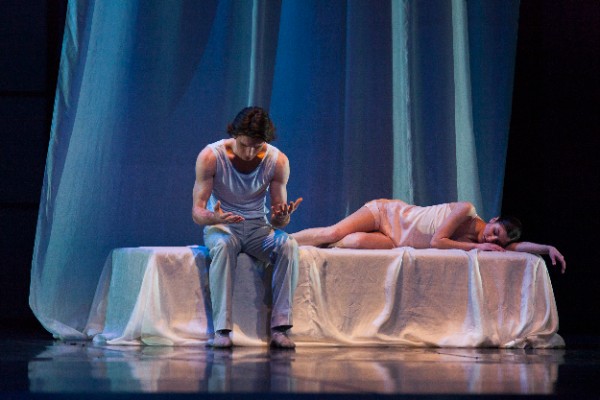
Nadja Sellrup and Pascal Jansson in a 2010 production of Romeo and Juliet at the Royal Swedish Opera
So, I’ve been thinking. Maybe composers, in some way, have actually told us what they consider to be the 10 Best Moments in any given composition? To test this little theory, let’s turn to Sergei Prokofiev and his ballet Romeo and Juliet.
Sergei Prokofiev: Ten Pieces from Romeo and Juliet, Op. 75 (Mercutio)
Back Story
The Kirov Theatre in Leningrad suggested to Sergei Prokofiev in 1934 that he compose a full-length ballet to Shakespeare’s Romeo and Juliet. But things got complicated in a hurry because Prokofiev wanted to give the story a non-dramatic ending.
Apparently, Prokofiev stated that living people can dance, but the dying cannot. In the end, the composer rejected the idea of happily ever after as a sacrilege to Shakespeare. After hearing the first version of the music, the Kirov company backed out of its arrangement.
As such, Prokofiev signed a contract with the Moscow Bolshoi company, but they declared it undanceable, citing artistic concerns and political pressures. And in 1937, the Leningrad School of Choreography also backed away from this project.
Sergey Prokofiev: 10 Pieces from Romeo and Juliet, Op. 75 – No. 1. Folk Dance (Bobby Chen, piano)
A Ballet Without a Stage
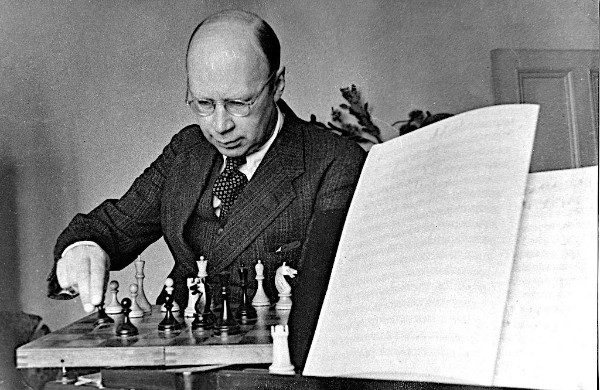
Sergei Prokofiev in 1937
At this point, Prokofiev could not yet know that his Romeo and Juliet would become his most popular composition. Since he couldn’t get it performed as a ballet originally, he produced a number of extracts for orchestra and a set of ten piano transcriptions.
These extracts had immediate popular and professional appeal, and some critics and audiences thought that it might be the salvation of modern music.
“Of all the modern composers,” a contemporary Chicago critic wrote, “this tall and boyish Russian has the most definite gift of melody, the most authentic contrapuntal technique, and he displays the subtlest and most imaginative use of dissonance.” It is indeed powerful and virtuosic music expertly drawn from the original ballet score.
Sergey Prokofiev: 10 Pieces from Romeo and Juliet, Op. 75 – No. 2. Scene: The Street Awakens (Bobby Chen, piano)
First Symphonic Portrait
In essence, Prokofiev extracted what he considered the best music from the ballet score in his Suite No. 1, Op. 64bis. This First Suite of 1936 was put together before the ballet achieved success, and it does not follow Shakespeare’s plot order.
In this Suite No. 1, we essentially get a concert sequence with plenty of public festivities and explosive tragedy. The seven selections open with the “Folk Dance,” suggesting the bustling street life of Verona, and it ends with the “Death of Tybalt,” a conglomerate of various parts from the ballet score.
Suite No. 1 from Romeo and Juliet, Op. 64bis
Folk Dance
Scene (the Street Awakens)
Madrigal
Minuet (the Arrival of the Guests)
Masks
Romeo and Juliet (Balcony Scene and Love Dance)
Death of Tybalt
Sergey Prokofiev: 10 Pieces from Romeo and Juliet, Op. 75 – No. 3. Minuet: Arrival of the Guests (Bobby Chen, piano)
Scenes of Conflict and Loss
The Suite No. 1 was a complete and resounding success. As such, Prokofiev put together a second suite in 1937. This compilation does not repeat music from the first, but feels more like a complement.
The music highlights different psychological and dramatic aspects of the score. It opens with probably the most famous number from the entire score, depicting the warring families and the brutal “Dance of the Knight.”
Also cast in seven sections, the suite concludes with the stark tragedy of “Romeo at Juliet’s Tomb.” Plenty of desolation and finality in this heart-wrenching musical statement.
Suite No. 2 from Romeo and Juliet, Op. 64ter
Montagues and Capulets (The Prince Gives His Order and Dance of the Knights)
Juliet as a Young Girl
Friar Laurence (Romeo at Friar Laurence’s)
Dance (Dance of the Five Couples)
Romeo and Juliet Before Parting
Dance of the Girls with Lilies
Romeo at Juliet’s Tomb (Juliet’s Grave)
Sergey Prokofiev: 10 Pieces from Romeo and Juliet, Op. 75 – No. 4. Juliet as a Young Girl (Bobby Chen, piano)
Lyrical Aftermath
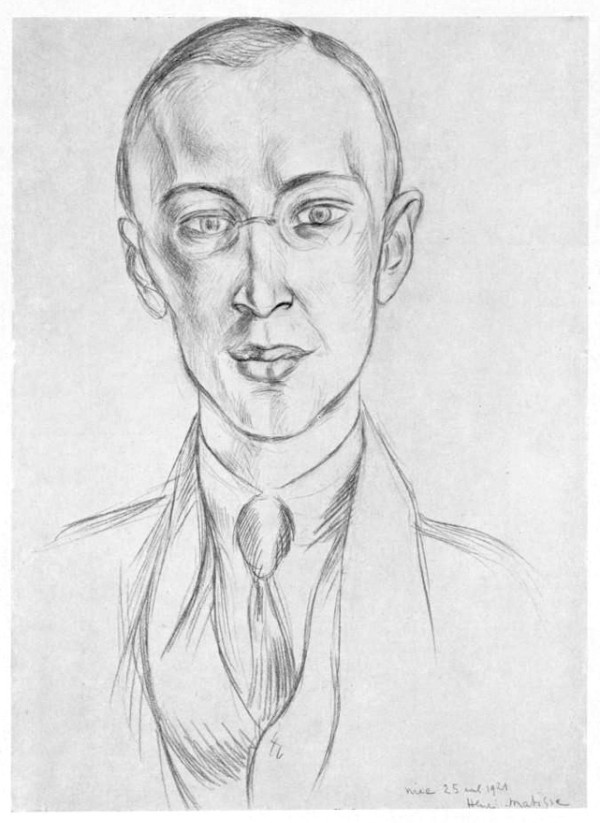
Prokofiev as drawn by Henri Matisse, 1921
By the time Prokofiev fashioned his third orchestral suite in 1946, Romeo and Juliet had triumphed on the stage. And his first two orchestral suites had continued to be highly popular. I suppose, Prokofiev still found plenty of good music in his original score.
This Third Suite goes a different way again. While we heard spectacle in the first and dramatic confrontation in the second, Suite No. 3 provides more of a characterisation and an intimate atmosphere.
Starting with “Romeo at the Fountain,” this suite ends with “The Death of Juliet.” There is none of the explosive violence we heard in “The Death of Tybalt,” but a devastatingly lyrical and intimate conclusion.
Suite No. 3 from Romeo and Juliet, Op. 101
Romeo at the Fountain (Introduction & Romeo)
Morning Dance
Juliet (Juliet’s Variation & Juliet at Friar Laurence’s)
The Nurse (Preparing for the Ball & The Nurse)
Aubade (Morning serenade)
The Death of Juliet
Sergei Prokofiev: Ten Pieces from Romeo and Juliet, Op. 75 (Masquers)
Sergey Prokofiev: 10 Pieces from Romeo and Juliet, Op. 75 – No. 5. Masquers (Bobby Chen, piano)
From Orchestra to Keyboard
If we consider all three Romeo and Juliet Suites, we find that Prokofiev extracted 20 excerpts from the score, all for a number of reasons. So here are the “20 Best Moments,” as selected by the composer.
I don’t want to call the Suite No. 3 an afterthought, but in 1936/37, Prokofiev also produced 10 Pieces for Piano, Op. 75. Apparently, while working on his first couple of suites, Prokofiev created a piano version.
The composer himself relates, “I made two symphonic suites from the ballet, each consisting of seven movements. They do not follow each other consecutively; both suites develop in parallel to each other…These two suites do not cover the entire music, and I shall perhaps be able to make a third. Besides the suites, I compiled a collection of ten pieces for piano, selecting the parts best suited for transcription.”
Sergey Prokofiev: 10 Pieces from Romeo and Juliet, Op. 75 – No. 6. Montagues and Capulets (Bobby Chen, piano)
10 Pianistic Scenes
If the orchestral suites brought the music into the symphonic context, this compilation brought it into the recital hall. The set overlaps with the first two orchestral suites, but there is no exact duplication. Several movements do correspond directly to famous orchestral numbers; other parallel movements are found primarily in Suite No. 1.
Prokofiev doesn’t simply reduce the orchestral score, but transforms it into genuinely pianistic compositions that preserve the dramatic character of the original. These piano adaptations, however, capture the spirit and the complexity of the original works.
Ten Pieces for Piano, Op. 75
Folk Dance
Scene: The Street Awakens
Minuet: Arrival of the Guests
Juliet as a Young Girl
Masquers
Montagues and Capulets
Friar Laurence
Mercutio
Dance of the Girls with Lilies
Romeo and Juliet before Parting
Sergey Prokofiev: 10 Pieces from Romeo and Juliet, Op. 75 – No. 7. Friar Laurence (Bobby Chen, piano)
Pianistic Mastery
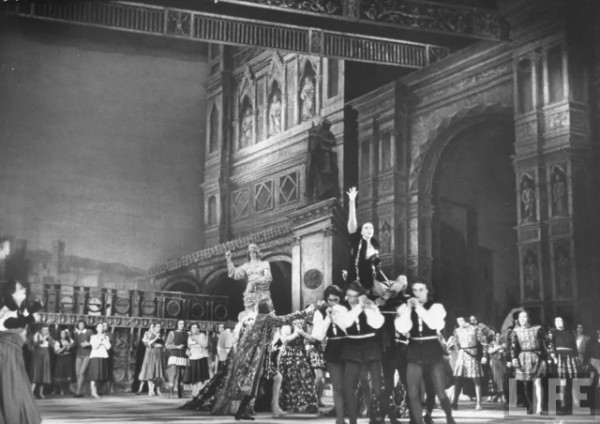
Prokofiev’s Romeo and Juliet performance
The 10 Pieces are brimming with vivid imagery and evocative melodies that depict the various scenes and characters from the play. You can hear sombre and melancholic tones in the “Folk Dance,” which contrasts with the explosive energy of the “Dance of the Knights.”
Every piece conveys the raw passion, the conflict, and the tenderness found within the original narrative. Prokofiev certainly creates a unique sonic experience through his characteristic use of dissonance and shifting harmonies, adding a distinct modernistic flair.
There is also an impressive economy of means, and his musical pictorialism is endlessly intriguing, with his musical footprints clearly recognisable. There is pure genius in transforming narrative-driven music into self-contained pianistic gems.
Sergey Prokofiev: 10 Pieces from Romeo and Juliet, Op. 75 – No. 9. Dance of the Girls with Lilies (Bobby Chen, piano)
Play by Play
We are introduced to the bustling streets of Verona in the opening “Folk Dance.” Can’t you just hear the village chatter and the morning laughter? But wait, there is some subtle melancholy that tells us of the drama to come.
As morning gradually unfolds in “The Street Awakens”, we sense a gentle anticipation. Some fog is drifting through the narrow streets as the city gradually comes to life.
It’s all ceremonial grace and courtyard elegance at the “Arrival of the Guests.” No surprise that Prokofiev cast this section as a “Minuet.” It’s a rather self-aware dance, with polite energy that suggests social rituals.
Delicate charm evoking a girl’s laughter emerges in “Juliet as a Young Girl.” It’s a miniature dance that hops and skips, and one that offers us a glimpse into youthful purity.
In “Masquers”, we find a carnival in full disguise, with all the percussive energy that such occasions bring. This movement is all about surprises and mischief.
Sergey Prokofiev: 10 Pieces from Romeo and Juliet, Op. 75 – No. 10. Romeo and Juliet before Parting (Bobby Chen, piano)
The Drama of Verona
Vladimir Yaroshenko and Maria Żuk as Romeo and Juliet, Polish National Ballet, Warsaw
Featuring the powerful “Dance of the Knights,” the serious family conflict emerges in “Montagues and Capulets.” It’s all rather menacing with all that rhythmic hammering of marching feet.
The section on “Friar Laurence” becomes more contemplative, with wisdom taking the centre stage. Everything slows, including time, to provide a calming space amid surrounding turmoil.
The unpredictable “Mercutio” is brash and witty, and he leaps across the piano in capricious gestures. Plenty of sparkling runs to convey humour and cunning.
Innocence and delicate purity unfold in the “Dance of the Girls with Lilies.” Everything is restrained with airy chords shimmering in the sunlight.
“Romeo and Juliet Before Parting” is the tender finale to this set. There is plenty of love and longing, but also the shadow of separation. However, there is no gruesome end as Prokofiev might still have toyed with a happy ending.
Personally, to find the “10 Best Moments” in Prokofiev’s Romeo and Juliet, we can simply look at his Ten Pieces for Piano, Op. 75. In this collection, the composer actually curated his own playlist. Unlike the symphonic suites, which I absolutely love, the piano simply distils humour, passion, conflict, and tenderness into ten miniatures. This is Prokofiev’s ultimate “top ten.”
For more of the best in classical music, sign up for our E-Newsletter