The summer’s last green leaves the trees, and the winds of autumn start to make their way through the branches. The leaves start to turn colours and, as the wind catches them, they tumble to the ground.
How can we regard these chill winds? A brusque reminder of the colder days to come or a crisp and satisfactory end to the lazy days of summer? A toning breeze or a dire warning?
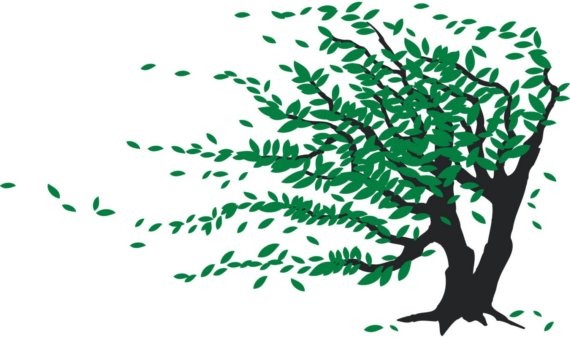
Wind Blowing Leaves
American composer Nicolas Flagello (1928–1994) saw them as a portent, and in the second movement of his Symphony No. 2, Symphony of the Winds, he imagines the Dark Winds of Lonely Contemplation, which starts with a gentle melody and gets increasingly sombre. At the end, we’re left hanging, unresolved, blown in the wind.
Nicolas Flagello: Symphony No. 2, Op. 63, “Symphony of the Winds” – II. Aria: Dark Winds of Lonely Contemplation (University of Houston Wind Ensemble, Ensemble; David Bertman, cond.)
Claude Baker (b. 1948) created a work in Awakening the Winds that seems to start at night, with a sound that comes from nowhere. The winds pick up, catch in the branches of the trees and the corner of the house and surround us, different speeds, different angles, and different degrees of coldness in every blow, gentle or otherwise. Eerie, blustery, but omnipresent.
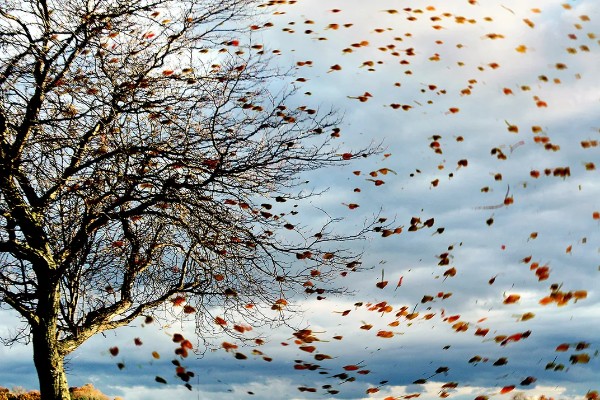
Gust of wind blowing leaves off a tree in autumn (photo © Peter Meade)
Claude Baker: Awaking the Winds (Saint Louis Symphony Orchestra; Leonard Slatkin, cond.)
An imagined journey in the landscape of New Mexico drove American composer Stephen Hartke (b. 1952) when he composed his string octet The Rose of the Winds in 1998. This wind, over the desert of the southwest, touches a single rose climbing to life under a clear, bright blue sky. There are other elements of nature involved: insects, birds, and the rain, but it’s the wind that sets everything continually in motion.

Tree bent by the wind (photo by mccready)
Stephen Hartke: The Rose of the Winds (IRIS Orchestra; Michael Stern, cond.)
There’s just a hint of rain in Alex Stolze’s Breeze.
Alex Stolze: Breeze (Alex Stolze, violin; Alex Stolze, piano; Alex Stolze, synthesizer; Ben Osborn, piano)
A poem by Walt Whitman from his Leaves of Grass collection from 1890, he asks the breeze at the end of his life to cool him, refresh him and bring him news of the world outside his sickroom: the sky, the lakes, the ocean, the forest, and even the feeling of Earth whirling through space. Swedish composer Tommie Haglund (b. 1959) took that inspiration to an ensemble of guitar, harp, and string quartet to create a work that captures Whitman’s vision. What starts as a sick poet in a stultifying room is refreshed by the cool evening breeze to feel the world around him. If we use the metaphor of autumn as the closing of a life, this fits beautifully in our look at chill winds. Underneath that comforting vision of the world, there’s still the frozen knowledge that tomorrow will be very different from today.
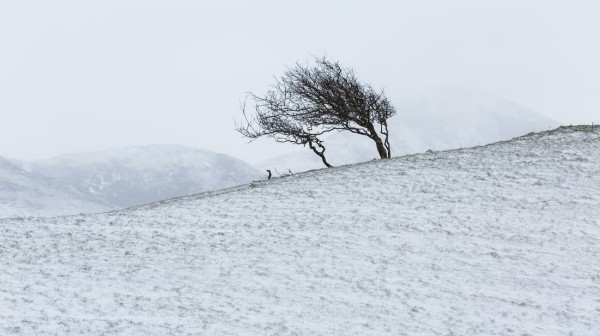
Chill Winds
Tommie Haglund: To the Sunset Breeze (John Mills, guitar; Stephen Fitzpatrick, harp; Lysell String Quartet, Ensemble)
The winds of autumn can bring the chill foreknowledge of the approaching winter, or they can cause us to think again about the cycle of life: our green trees of today will raise their skeletal branches to the sky in just a few weeks. Life and death, and then the pause of winter before the cycle begins again.
For more of the best in classical music, sign up for our E-Newsletter