Some musicians live comfortably within the boundaries of the modern concert grand. Others, like Lebanese-born pianist and scholar Ziad Kreidy, spend their careers questioning those boundaries, searching instead for the forgotten voices of the past and the hidden colours of the keyboard. His path has been anything but ordinary: a journey that stretches from Lebanon to Paris, from Chopin’s Ballades to Toru Takemitsu’s soundscapes, and from the luminous world of modern concert halls to the intimate timbres of century-old upright pianos.
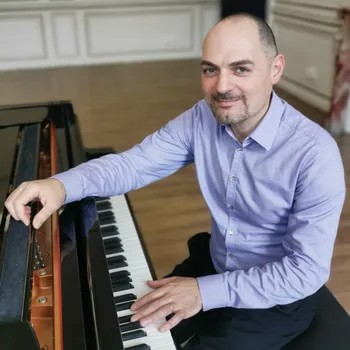
Ziad Kreidy
“I grew up in Lebanon and began my piano studies at the Kaslik School of Music,” he recalls. “After high school, I moved to France on a government scholarship to pursue my musical education in Paris.” Once there, he immersed himself in every aspect of music, studying not only piano and chamber music but also fortepiano, clavichord, and the intricacies of music theory. His academic achievements reflect this dual passion: a Master’s degree devoted to Chopin’s Ballades and a PhD on the music of Japanese composer Toru Takemitsu. Today, his career blends performance, research, and teaching in equal measure. “Being both an artist and a scholar is at the heart of everything I do,” Kreidy says.
This balance comes into sharp focus with his latest recording, Edvard Grieg: Lyric Pieces, Opp. 65, 68 & 71. For Kreidy, the project represents not just another album but the closing chapter of a long artistic dialogue. Having already recorded Grieg’s earlier Lyric Pieces on historical pianos, he felt compelled to explore the composer’s final three collections. “These last opuses are uniquely poetic and introspective,” he explains. “After performing them often in concert, I wanted to capture their voice on instruments that evoke the sound world Grieg himself would have known. Hearing the piano respond in its original colours gave me new insights into the music’s subtlety and charm.”
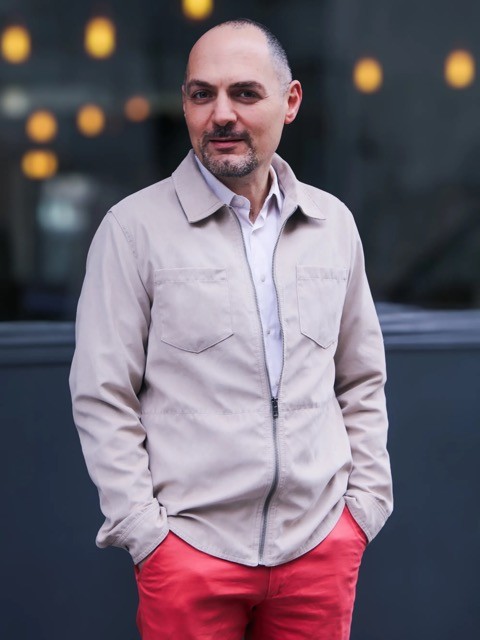
Ziad Kreidy
To realise this vision, Kreidy turned to three upright pianos from Baudry Pianos in France: a Rönisch from 1915 for Op. 65, a Feurich from 1918 for Op. 68, and a Steinway from 1924 for Op. 71. For many listeners, these instruments are a revelation. “Before WWII, pianos were remarkably diverse,” Kreidy notes. “In Grieg’s time, upright pianos were composers’ intimate companions, each with its own personality. I am drawn to instruments that no one records but which are part of the history of the piano.”
The upright was once the piano of salons and households, central to composers’ daily creative lives. Intimate and familiar, it offered a different kind of poetry than the concert grand, and Kreidy’s recording restores that context. By giving each opus to a different instrument, he allows the three sets of Lyric Pieces to unfold as distinct sound worlds, each shaped by the personality of the piano itself.
This project also reflects Kreidy’s boldly independent spirit. Working solo, he produced the album entirely on his own terms, managing both the artistic and technical aspects. Recorded at the Pianos Baudry workshop near Paris, the sessions followed a purist philosophy: the same placement of pianos and microphones, a natural and distant setup, and no post-production edits. The result is a sound image of striking authenticity, capturing the presence and acoustics of each instrument as if the listener were standing in the room.
Equally significant is Kreidy’s use of unequal temperament. Specifically, he employs the Neidhardt temperament “für eine große Stadt,” a system designed for a large city. “Modern equal temperament smooths everything out,” he explains. “But in the past, every modulation carried a shift in colour. It profoundly affects the tactile experience under the fingers and makes the piano sing differently, closer to what composers like Grieg would have expected.” Tuned this way, each key comes alive with its own unique hue, adding new depth to Grieg’s music.
This fascination with historical instruments does not mean Kreidy rejects the modern grand. On the contrary, he relishes the contrast. “Modern grand pianos are engineered for power, uniformity, and brilliance, perfect for large concert halls,” he says. “Historical pianos, by contrast, are full of surprises and individuality. Each one has its own character, making you listen differently, adapt your technique, and rediscover the music as if it were new. For me, it is about exploring the rich variety of the piano’s past to create something fresh and insightful for today’s audiences.” His explorations on period instruments, in fact, continually reshape the way he approaches modern piano performance.
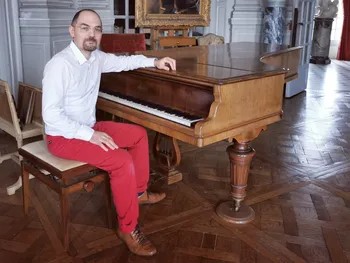
Ziad Kreidy
The repertoire itself also gains new resonance in Kreidy’s hands. Inspired by Norwegian landscapes, folklore, and legends, Grieg’s Lyric Pieces are poetic miniatures that seem simple on the surface yet carry great emotional depth. Heard on these upright pianos, their intimacy is heightened, their colours shaped by timbre and tuning, and their character enriched by sonorities that feel drawn from the fjords, forests, and folk songs of Grieg’s homeland.
Beyond this project, Kreidy continues to explore new directions. He is preparing a reimagining of Mussorgsky’s Pictures at an Exhibition on a romantic fortepiano tuned in unequal temperament, seeking to reveal hidden colours in the score. He is also composing works that weave together his Lebanese heritage with Western traditions, creating a personal and distinctive fusion of styles.
Kreidy’s talent goes beyond performing on stage. As the author of Les avatars du piano and La facture du piano et ses métamorphoses, he is recognised for providing new insights into well-known pieces. Teaching is also a key aspect of his work; at the Versailles Conservatory and through international masterclasses, he emphasises working with students as a means of shared exploration and growth.
Ziad Kreidy’s performances, scholarship, and teaching reimagine the piano as a living history shaped by curiosity and imagination. His Grieg album shows how music can be both historically rooted and vividly alive when approached with independence and imagination today.
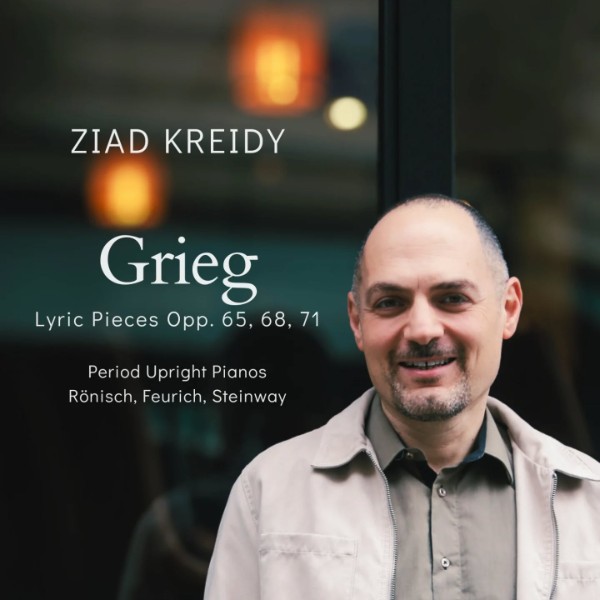
Edvard Grieg: Lyric Pieces, Opp. 65, 68 & 71
Performed by Ziad Kreidy
Digital Release Date: November 14, 2025
For more of the best in classical music, sign up for our E-Newsletter