An Irrational Pianist
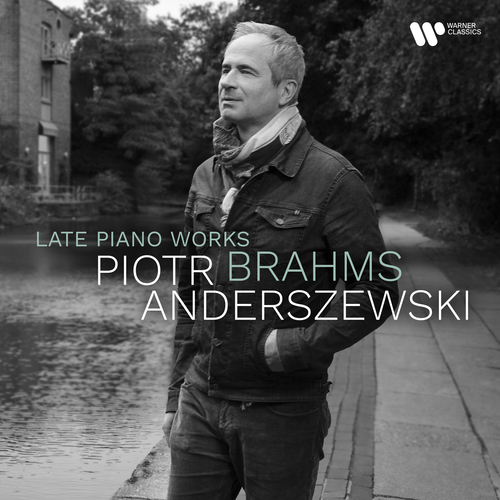
Polish pianist Piotr Anderszewski is a notorious perfectionist. Early in his career, he famously abandoned the stage mid-performance at the Leeds Piano Competition, dissatisfied with his own playing. Over the decades, his pace of expanding repertoire has remained strikingly slow. This January, the pianist finally released a much-anticipated recording of twelve late Brahms pieces—works he had been refining in performance for several years—which I discussed with him during his Asia tour in late 2025.
Piotr Anderszewski – J.S. Bach: Well-Tempered Clavier, Book 2: Prelude and Fugue No. 12 in F Minor
As with Bach’s Well-Tempered Clavier, Anderszewski performs the twelve Brahms pieces in a highly personal sequence, connecting them in a way that forms a kind of “suite.” Before our interview, I spent days analysing the tonal and structural relationships between the works; yet when I asked Anderszewski why he ordered them this way, his somewhat capricious answer left me at a loss. “I don’t know. Sometimes it’s the character, the key, the mood, or what I wanted to hear next. It wasn’t a rational choice.” He paused, then added: “I’m not a rational person.”
Such capriciousness might easily serve as a universal excuse; yet in other respects, Anderszewski approaches musical performance with an almost forensic rationality. As my initial analytical line of questioning faltered, I turned instead to performance details, pointing out his particular sensitivity to the spaces between notes. The pianist agreed. “I think more and more of the question of ‘timing’ – after playing one note, when to play the second and the third? The way you play the first note dictates how and when you play the second. In the end, it’s about the relation between dynamics and time, or harmony and rhythm. Rhythm – not how to play with a machine-like exactness, but how to manage irregularities. Harmony – to decide which note belongs to which, especially in the undemocratic tonal system, where some notes carry more weight and space than others.”
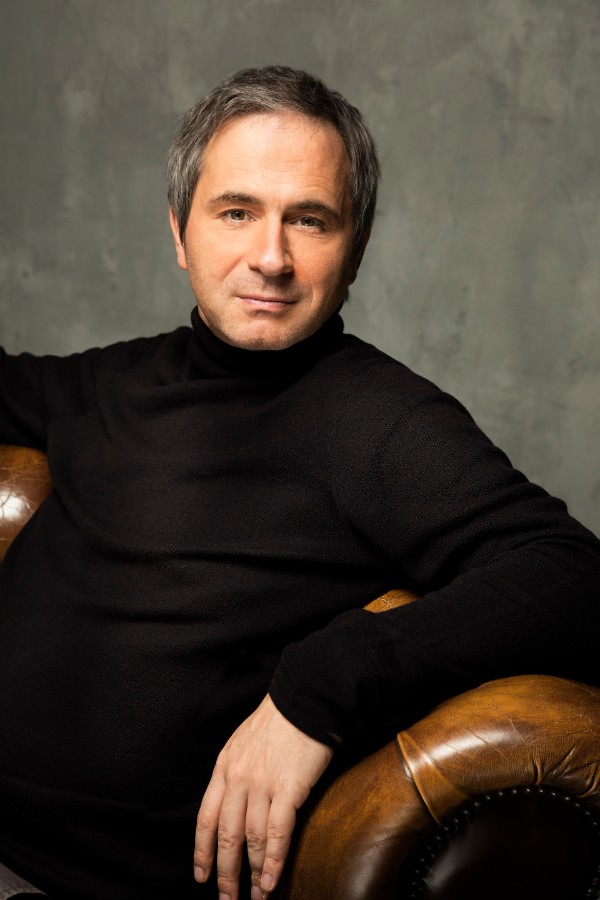
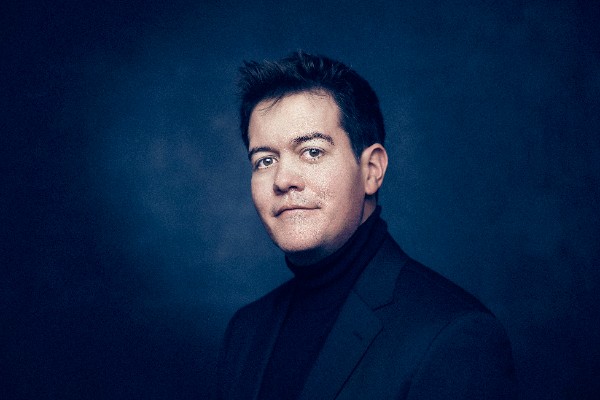
Piotr Anderszewski © Simon Fowler
By adjusting the weight and space of individual notes, Anderszewski exerts profound control over musical structure. “When playing a block chord, if you do not play all the notes simultaneously but slightly delay one of them, the balance of the sound is hugely changed — but almost no one would notice.” This insight extends to his approach to Bach: “Playing different voices in polyphony is, of course, about dynamics, but more or less also about timing. If you play certain notes a bit later, they will sound like a different voice.” He joked that the piano is an instrument for “cheaters,” capable of creating musical illusions—cantabile singing on a percussive instrument, or two independent voices played with one hand. But these “illusions,” he stressed, are experiences “learned through time, and mistakes.”
Dynamics and timing are expressive parameters that a pianist can shape through rational thought and muscular discipline; yet, how to proportion them in order to shape the music – is where irrationality intervenes. “The score is unlike a recipe with precise proportions for seasoning. We must cook in our own way, and it takes time. Of course, knowledge of the ‘style’ is needed.” I noted that while Anderszewski had spoken at length about dynamics and timing, the pianist had not yet addressed another fundamental element: timbre, or what he simply calls “sound.” “Sound is very hard to talk about,” he said with emotion. “I may be overly sensitive to sound. It is really the deepest image of who you are. You cannot cheat with sound. Don’t you think? It touches the deepest layers, which are completely uncontrollable.”
Indeed, for any performer, timbre is far more difficult to control technically than dynamics or timing: different instruments, venues, or even weather conditions produce radically different sounds. Anderszewski could not help exclaiming, “Totally out of control!” Here, the uncertainty of live performance converges with the irrationality of artistic expression. His response to this uncertainty, however, is paradoxically one of conviction. “When playing the first measure, you need to anticipate the last measure in mind, and somehow integrate the piece. Whatever you play, the music must happen in your mind first, just as a conductor always beats ahead.” He continued in a measured, almost analytical tone: “I feel more and more that one must define as precisely as possible what one would like to achieve. Reality changes unpredictably every second, so one must be clear about their goal and adjust at all times. In the end, piano playing is very simple – somewhat irrational, a bit inventive and flexible.”
Johannes Brahms: 7 Fantasien, Op. 116 (excerpts) – No. 4. Intermezzo in E Major (Piotr Anderszewski, piano)
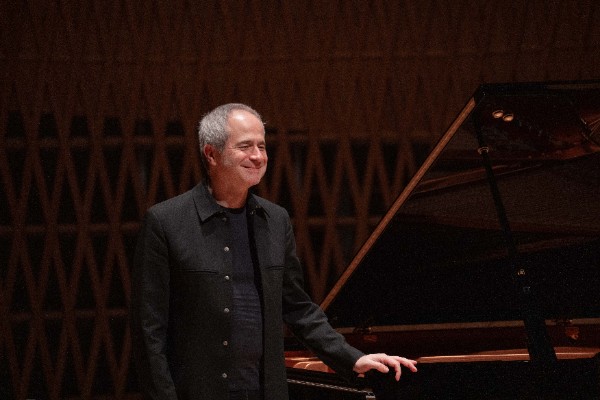
Piotr Anderszewski © Binxin He
This blend of rational control and expressive ambiguity draws Anderszewski particularly close to certain composers, Brahms in recent years. “People’s expectation of this man’s music is one that’s very ‘German’, extremely organised, with grand structures. Not at all.” He remarked that pieces such as the Intermezzo in E major (Op. 116 No. 4) posed particular challenges: its structure is rather free, and its sense of tonal direction is rather ambiguous, as in many of Brahms’s late works. Anderszewski played the Intermezzo for me, offering a reading that vividly captured its shifting harmonic colours and elusive form. “Also, for example, the middle section of the Intermezzo in A minor (Op. 116 No. 2) is just improvisation, going absolutely nowhere.”
Johannes Brahms: 7 Fantasien, Op. 116 (excerpts) – No. 2. Intermezzo in A Minor (Piotr Anderszewski, piano)
In contrast to Brahms, Anderszewski described Schumann as more “structured”—a claim that may seem surprising. He played the opening of Fantasiestücke, describing it as “limpid,” a quality he believes Brahms lacks. He attributed this difference to the evolution of piano craftsmanship: the characteristics of early pianos, particularly Viennese fortepianos, encouraged music that emphasised rhetorical shifts in figuration, fostering a sense of speech. Later developments—especially the prevalence of English Broadwood and French Pleyel instruments—enabled greater exploration of timbral nuance, prompting a fundamental shift in compositional thinking. “Even though more crazy, Schumann’s language is still deeply rooted in the 18th century, whereas Brahms’ is all about sound and colour.”
Where Schumann is direct—he “has no skin,” as Anderszewski put it—Brahms speaks a notably “pudique” language. “We always have to guess why he wants to hide everything?” Anderszewski cited an unverified anecdote: Brahms reportedly excised large portions of his Second Violin Sonata because they felt too personal, too revealing, and was pleased with the revised version. “The expression in Brahms’s late works is very understated, very restrained, often marked ‘non troppo’, which has annoyed many performers, including myself in the past. Why not just say it! Life is too short! But that’s the beauty of playing Brahms—the curiosity of what’s behind.” He concluded with a telling contrast: “We have an interesting opposite—Chopin, who is maybe the most reserved and discreet person, but his music, in the end, is fire, not holding back at all.”
For more of the best in classical music, sign up for our E-Newsletter