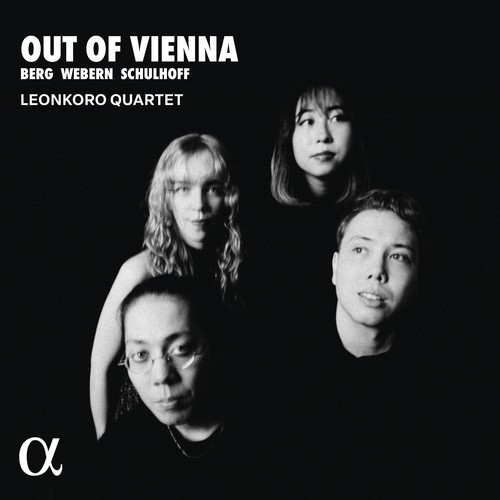
Founded in 2019, the Leonkoro Quartet is perhaps one of the most dazzling rising stars among today’s string quartets. In 2022, they won the prestigious Wigmore Hall International String Quartet Competition, sweeping nine special prizes and emerging as the youngest ensemble of that edition. After their first recording with the Mirare label, they signed with Alpha and released their debut album Out of Vienna in early 2026, featuring works by Berg, Schulhoff, and Webern.
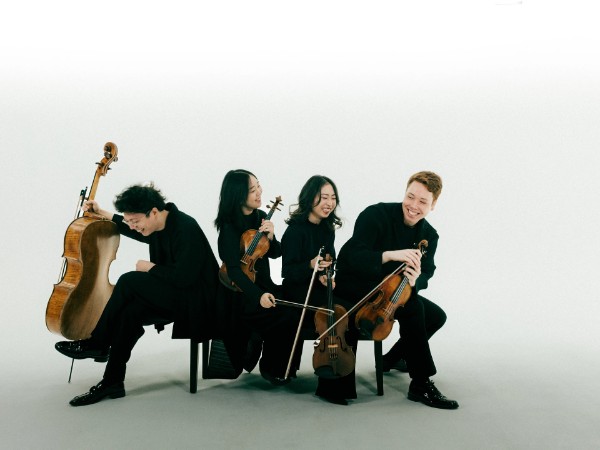
Leonkoro Quartet © Co Merz
Choosing the Second Viennese School for a debut recording undoubtedly requires both courage and conviction. Departing from tonality, these works are structurally complex, meticulously notated, and charged with profound emotional intensity. They are neither immediately ingratiating nor easy to perform, posing a formidable challenge, especially for young musicians.
Perhaps embracing this challenge to the fullest, the album opens with Berg’s Lyric Suite, the most expansive and intricate work on the programme. Written after the groundbreaking Wozzeck, it finds the composer at full maturity in both technique and idiom. Here, Berg demonstrates his increasingly refined command of twelve-tone technique—the composer himself noted that the final movement adheres strictly to the tone row. Yet beneath this new idiom lies a deeply “Tristanesque” Romanticism. This “instrumental opera” distils Berg’s most intimate and vulnerable emotions, pouring his secret love for Hanna Fuchs-Robettin into the music.
Berg’s score is extraordinarily detailed, regulating dynamics, tempo, balance, articulation, phrasing, colour, and expression with near-obsessive precision, all in pursuit of a sound world rich in tension and nuance. The young quartet responds with a full, focused tone and frenzied energy, conveying the slightly neurotic intensity of Berg’s emotional landscape. In the delirando fifth movement, charged with feverish longing, the cumulative crescendo towards the close is given a compelling sense of inevitability and force. In the desolato final movement, the quartet draws precipitous contrasts between ppp and fff, rendering the emotional shifts dramatically extreme.
Alban Berg: Lyric Suite – V. Presto delirando (Leonkoro Quartet, Ensemble)
Alban Berg: Lyric Suite – VI. Largo desolato (Leonkoro Quartet, Ensemble)
At the same time, Berg frequently marks instructions such as non strascinato (“not dragging”) and senza cresc. ed accel. (“without crescendo or acceleration”), tempering expressive excess. The quartet tends to heighten the drama through tempo and dynamic contrasts; for some tastes, not every nuance requires such intensity. Moments of restraint—even suppression—are nevertheless preserved. In the second movement, which Berg considered the most beautiful music he had written, their restrained use of portamento and vibrato lends a sense of innocence and melancholy. The third movement, depicting the encounter of the composer and his mistress, achieves the requisite air of misterioso lightness.
Alban Berg: Lyric Suite – II. Andante amoroso (Leonkoro Quartet, Ensemble)
Alban Berg: Lyric Suite – III. Allegro misterioso (Leonkoro Quartet, Ensemble)
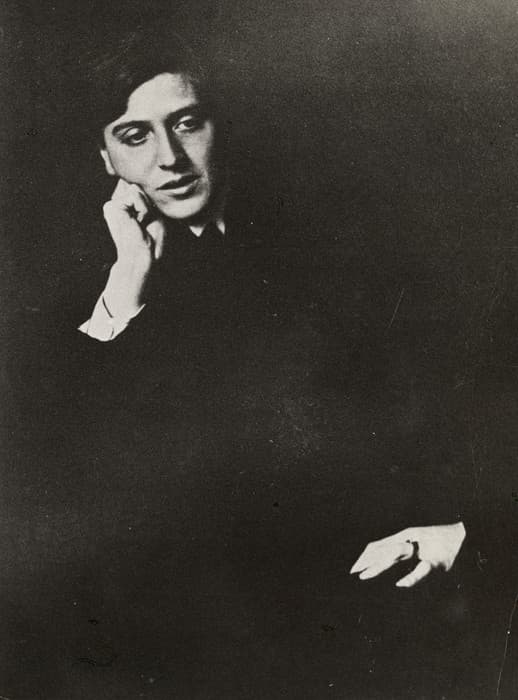
Alban Berg, 1920s
Among the composers of the Second Viennese School, Berg may be the most inherently lyrical and sensuous, and the quartet brings out striking details in their interpretation. The cello’s long sixteenth-note phrase in the opening movement blooms with vivid colour, and the ensemble’s coordination in acceleration is impressively precise. In contrast to the more impassioned passages, the fading layers of voices in the final movement are rendered with a cool detachment; the viola’s near-bridge whimper at the close is particularly effective. The often-underestimated second violin plays a crucial role in the Lyric Suite, and Leonkoro’s second violinist, Amelie Wallner, proves especially compelling. In the fourth movement, where Berg quotes Zemlinsky’s melody “Du bist mein eigen” (“You are mine”), she delivers the recitative-like passage with a controlled yet deeply expressive intensity. In the solo passage following the climax of the final movement, her tone gradually transforms the music from the grainy, bow-heavy deciso into a dolce lament, evoking a penetrating sense of sorrow.
Alban Berg: Lyric Suite – IV. Adagio appassionato (Leonkoro Quartet, Ensemble)
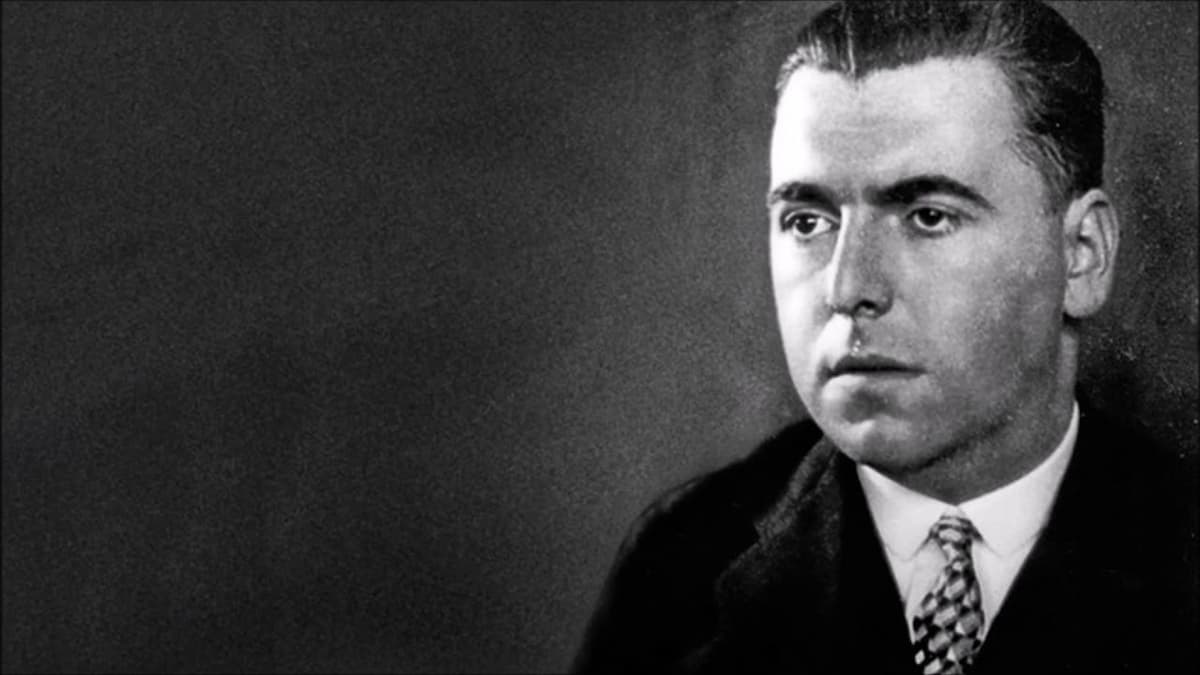
Erwin Schulhoff
The quartet also performs two five-movement works for string quartet: Schulhoff’s Five Pieces and Webern’s Five Movements. They deliver these distinctive twentieth-century miniatures with remarkable polish. Schulhoff’s work presents five folk dances in a modern idiom, and the quartet brings them vividly to life with a flamboyant palette of sound, shaping striking tonal colours through meticulous control of bowing and contact point.
Erwin Schulhoff: 5 Pieces for String Quartet – No. 1. Alla Valse Viennese (Leonkoro Quartet, Ensemble)
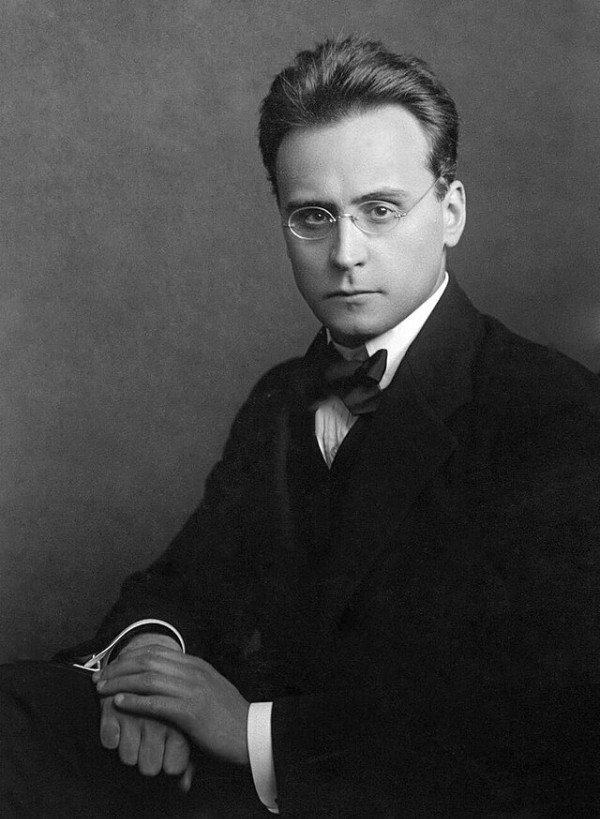
Anton Webern in Stettin, October 1912
Webern, a fellow pupil of Berg, likewise employs highly detailed notation. His musical language is more concise and direct, allowing the quartet to showcase their technical strengths to greater effect. In the first movement—almost a compressed sonata form—the sharp contrasts of musical ideas are vividly projected. In the slower movements, the ensemble sensitively shapes the sighing, lyrical phrases that resonate deeply—after all, this is a work written in memory of Webern’s mother. In the darkest final movement, the quartet captures the music’s shifting emotional undercurrents with remarkable precision.
Anton Webern: 5 Movements, Op. 5 – I. Heftig bewegt (Leonkoro Quartet, Ensemble)
Anton Webern: 5 Movements, Op. 5 – V. In zarter Bewegung (Leonkoro Quartet, Ensemble)
The album concludes with Webern’s early Langsamer Satz, a late-Romantic work that, like the Lyric Suite, functions as a musical “love letter.” As in their performance of Berg, the quartet emphasises drama and intensity. Even in the absence of explicit markings, they employ a flexible tempo to shape musical tension. At the climax of the thematic development, for instance, the triplet crescendo is driven forward with a sharply etched acceleration that releases pent-up emotion, followed by tremolo passages played near the bridge that create an eerie stillness. Such freedom perhaps suits the young, romantic Webern. In contrast, the tender moments become all the more affecting: when the marking zögernd (“hesitating”) first appears, and the music turns towards C major, the use of portamento and a soft, near-fingerboard tone renders the passage exquisitely intimate; this vulnerable, veiled beauty also defines the moving coda.
For more of the best in classical music, sign up for our E-Newsletter
Anton Webern: Langsamer Satz (Leonkoro Quartet, Ensemble)