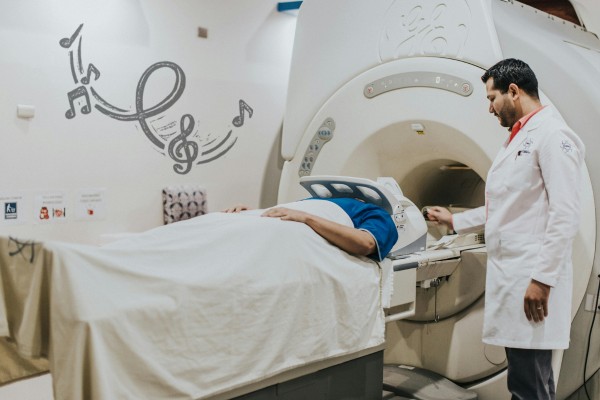
You know how it goes – you’re placed on the sliding gurney, the restrainer is put on top so you don’t wiggle, and you slide into the noisy tunnel. It’s a bit loud to fall asleep, and they want to protect your hearing, so there’s a helpful pair of headphones available. If you note, they’re like the old airplane one – just a hollow tube, rather than anything metallic, since you have to keep all metal away from the magnets.
Now, what to listen to. On my first MRI visit, they loaded me up with 90 minutes of well, shall we say, music from the last century…from a star of Perth Amboy, New Jersey….and it was an unending vision of Jon Bon Jovi.
So, next time, I’ll know I can have a choice. But what? It all depends on what you’re familiar with.
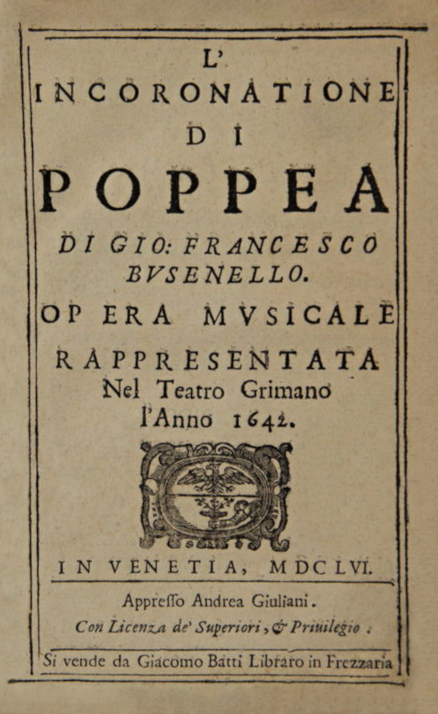
Operas are always good – lots of people in action, with recitatives where they talk about what they’re going to and arias where they tell you how they feel about it. If you’re an aficionado of the wonders of the da capo aria, then this is an ideal time. There’s nothing to distract you, and you can revel in the extra material added when the first section returns.
A da capo aria (da capo means ‘return to the beginning’) has an A-B-A form: The main theme of the A is sung, there’s an intervening B section, and then A returns but with extra flourishes and filigrees. In the 18th century, the whole point was to show off the stylistic additions of the singer – adding runs, adding trills, adding and adding as an exhibition of the singer’s skill. Think of it as a kind of cadenza for singers.
George Frideric Handel: Ottone, re di Germania, HWV 15 – Act I Scene 5: Aria: Ritorna, o dolce amore, conforta questo sen (Ottone) (Max Emanuel Cenčić, counter-tenor; Il Pomo d’Oro; George Petrou, cond.)
An aria may be only 4 lines long, but with the additions at the repeat, it can become very extended indeed!
If you have a favourite opera, you could have them put that up on your listening list.
So, you don’t like vocal music, operas are a bit too long, and you want to look at the libretto, which isn’t possible when you’re stuck in the MRI machine. What else could be of help?
Symphonies are always good because each movement is a different tempo, with one of them generally being in triple meter. Now’s your time to listen to all those Beethoven symphonies you never hear: when’s the last time you heard Beethoven Symphony No. 2? This is the first symphony where he switches out the old-fashioned Menuetto for the more flexible Scherzo, and you can hear his fun with it!
Ludwig van Beethoven: Symphony No. 2 in D Major, Op. 36 – III. Scherzo: Allegro (Stuttgart Radio Symphony Orchestra; Roger Norrington, cond.)
Compare this with what Bruckner did with the Scherzo in the 1894 Symphony No. 9, and you can hear how Beethoven freed the composers who followed him.
Anton Bruckner: Symphony No. 9 in D Minor, WAB 109 (original 1894 version, ed. L. Nowak) – II. Scherzo: Bewegt, lebhaft (Linz Bruckner Orchestra; Markus Poschner, cond.)
Put together a playlist of first movements, or dance movements, or final movements, and you’ll have a playlist that will engage your mind and let you learn something while you lie there.
For more of the best in classical music, sign up for our E-Newsletter