The German polymath genius Johann Kuhnau was born on 6 April 1660 in Geising, in the Erzgebirge. His family, fleeing the Counter-Reformation, originated in Bohemia and settled in the area known as Saxon Switzerland.
Kuhnau was a major figure in German music of the late Baroque, and also active as a novelist, translator, lawyer, and music theorist. George J. Buelow writes, “Kuhnau was greatly esteemed, displaying an element of medieval universality and mastered music, law, theology, rhetoric, poetry, mathematics, and foreign languages.” (Buelow, Grove Music Online, 2001)
Leipzig Cantor and Biblical Storyteller
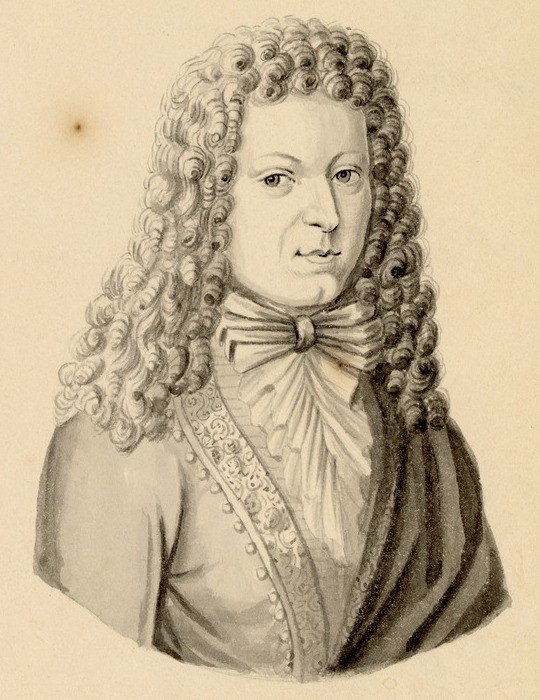
Johann Kuhnau
Kuhnau was the immediate predecessor of Johann Sebastian Bach as Kantor at the Thomasschule in Leipzig, and he composed primarily keyboard and sacred music. However, the majority of his cantatas remain unpublished, and his secular vocal works are all lost.
Kuhnau is probably best known for four collections of music for keyboard, which he published between 1689 and 1700. Of special interest is the last volume, popularly known as the “Biblical Sonatas.”
To mark Kuhnau’s birth, let us celebrate by sampling this set of sonatas, as each outlines a biblical story in several contrasting sections.
Johann Kuhnau: Musicalische Vorstellung einiger biblischer Historien, “Biblical Sonatas”: Sonata No. 1, “Fight between David and Goliath” (Aniko Horvath, harpsichord)
Artistic Purpose
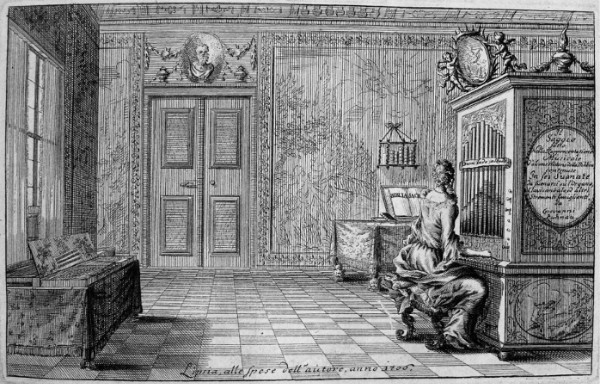
Johann Kuhnau’s Biblical Sonatas frontispiece
The Kuhnau expert George J. Buelow writes, “Kuhnau’s purpose was to demonstrate, among other things, how keyboard music, without the benefit of a poetic text, could capture the emotional states emanating from an action or the description of a character. The various sections of each sonata bear Italian subtitles as clues to the particular emotional state or action being described by the music.” (Buelow, Grove Music Online, 2001)
In his 1st Sonata, Kuhnau describes Goliath as a terrifying giant in armour with a massive spear, and the heavily dotted rhythms give us a musical portrait of the giant. Prayerful pleading in the style of a chorale-prelude also portrays David’s defiance and childlike trust in God.
David’s Triumph
Challenging words are exchanged between David and Goliath, and we quickly move to the fight itself, which includes the slinging of the stone. A rapid ascending scale depicts the stone’s flight, and the short descending chromatic passage depicts Goliath’s fall.
The Philistines are chased by the Israelites in fugitive passages that suggest a chaotic pursuit, and there is much rejoicing and general happiness in the final celebratory dance. In essence, Kuhnau has provided programme notes to go along with the score.
Johann Kuhnau: Musicalische Vorstellung einiger biblischer Historien, “Biblical Sonatas”: Sonata No. 2, “Saul malinconico e tratullato per mezzo della Musica” (Gustav Leonhardt, narrator; Gustav Leonhardt, harpsichord)
David’s Gentle Harp
While the First Sonata unfolded freely from section to section, Sonata No. 2 is structured in three main parts. This “Biblical Sonata” illustrates the story of King Saul being tormented by an evil spirit.
Saul falls into a deep melancholy and occasional fits of rage or madness. It is finally suggested that a skilled harpist should be found, and young David is brought to court. His beautiful playing finally soothes Saul’s troubled soul, and once the evil spirit is driven away, calm and order are restored.
“The sadness and the rage of the King” is musically rendered in a slow and expressive section that is followed by fugal passages to depict Saul’s tormented state. If you listen closely, you will hear plenty of dissonances and mad-dash interjections.
Unsurprisingly, the central section depicts David’s harp music. It features a gentler rhythm and clear melodic lines to contrast with the preceding turmoil.
“Saul’s restored calm” is a bright and settled finale in a lively yet contented style. There is a great sense of contentment and joy, and all the earlier dissonances are peacefully resolved. These sonatas feature rather simple melodies and basic harmonies. Yet, the stories are sustained by a wide variety of rhythms and especially textures.
Johann Kuhnau: Musicalische Vorstellung einiger biblischer Historien, “Biblical Sonatas”: Sonata No. 3, “Il Maritaggio di Giacomo” (Aniko Horvath, harpsichord)
Jacob’s Wedding
As in his other “Biblical Sonatas,” Kuhnau includes a prose preface outlining the basic story, and he uses descriptive Italian subtitles to mark the narrative progression. His Third Sonata subtitled “Jacob’s Wedding,” references a story taken from Genesis.
When Jacob arrives at his uncle’s house, he falls in love with Rachel and agrees to work seven years for her hand. However, his uncle tricks him into marrying the older Leah first. Jacob then works another seven years for Rachel.
This sonata has received praise for its charming and human portrayal of love, labour, deception, and domestic celebration. In essence, the music focuses on the contrast between joyful and celebratory music and more reflective or deceptive moments.
Although Kuhnau called these works “sonatas,” they don’t follow specific structural principles. It is not a question of architecture, but of the music following the story. Each subtitle marks a new picture or scene with the music changing in tempo and meter, chordal rejoicing versus imitation, and register and harmony.
Grief, Lament, and Consolation
For the concluding “Biblical Sonata”, Johann Kuhnau accessed the biblical events from Genesis 49-50, specifically the death of the patriarch Jacob. The narrative describes Jacob giving final blessings to his sons, the mourning family, and the journey of his body back to Canaan.
Jacob is buried in the cave of Machpelah, and we hear the funeral rites and the eventual consolation of the survivors. The musical sections basically follow the story chronologically in a series of connected programmatic pictures or affective scenes.
The subtitles dictate the basic progression as the music shifts in character, tempo, texture, and mood to match each part of the narrative. Once again, the form is driven entirely by the biblical storyline.
The grief at the deathbed features chromatic lines with dissonant harmonies that gradually give way to stable passages for the paternal blessing. More introspective and hesitant melodic lines progress to the actual journey, marching rhythms included.
Kuhnau saves his most dramatic music for the burial and lament, drawing on conventional Baroque devices to depict the grieving. This sonata does have a gentler resolution as the harmonies get brighter and more serene. There is a sense of calm returning, providing emotional closure.
Kuhnau as Polymath
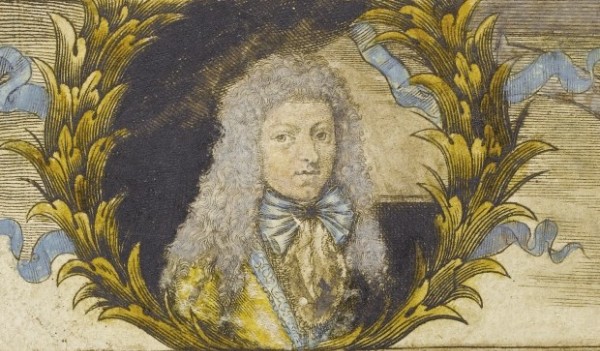
Johann Kuhnau
In these exceptional sonatas, Kuhnau employs all the musical techniques available to him at the time. Massive chords often feature in both hands, and the motivic interplay unfolds in the manner of the style brisé. We also find poignant dissonances, rapid toccata-like passages, and fugal sections.
Kuhnau also wrote a highly amusing novel, in which the main character is an ill-trained musical charlatan in 17th-century Germany. Kuhnau, by means of satire, pokes fun at faulty text underlay, over-elaborate thoroughbass realisations, the questionable art of the castrato, and the general ignorance of singers and musical institutions.
Kuhnau certainly had a quick mind, and contemporary voices put him alongside Handel, Keiser and Telemann as one of the major German composers of his time. The composer and theorist Johann Matteson claimed: “never to have known his like as composer, organist, chorus director, and scholar.”
For more of the best in classical music, sign up for our E-Newsletter
Johann Kuhnau: Musicalische Vorstellung einiger biblischer Historien, “Biblical Sonatas”: Sonata No. 6, “La Tomba di Giacob” (Gustav Leonhardt, harpsichord)