One of the problems with reviewing recordings of sacred music is the underlying fear that the work is being recorded for its musical value rather than its value in the larger realm of sacred belief. It probably happens more with sacred music than with other genres, such as, perhaps, opera.
In this new recording of Handel’s Chandos Anthems Nos. 6 and 10, the group Musica Gloria takes on these pieces with authority and art.
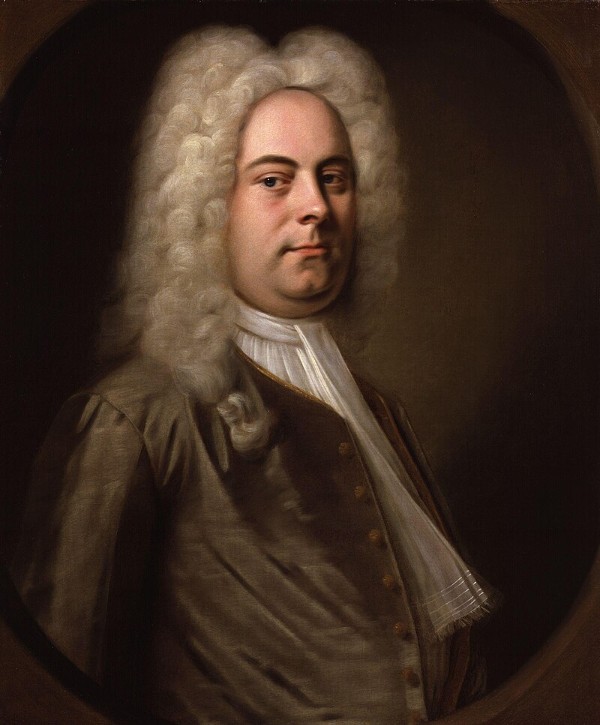
Balthasar Denner: George Frideric Handel, ca 1726–1728 (London: National Portrait Gallery)
The group was founded in 2006 in Bruges by then–12–year–old Beniamino Paganini, who sought a venue for young performers to play Baroque music.
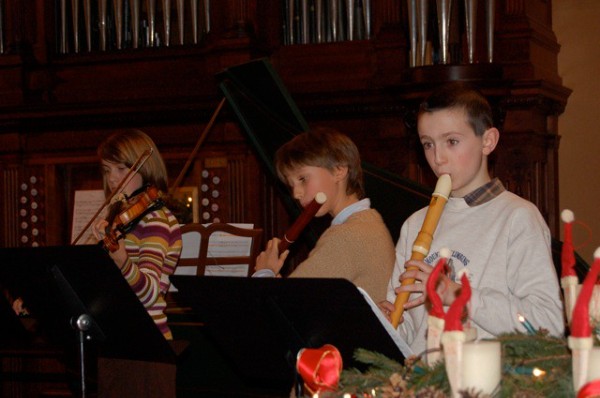
Beniamino Paganini, 2006
The initial gathering evolved into a professional ensemble in 2016. An ensemble and choir are now led by Beniamino Paganini (traverso, baroque keyboards, cembalo, and musicology) and Nele Vertommen (baroque oboe, recorder and artistic research).
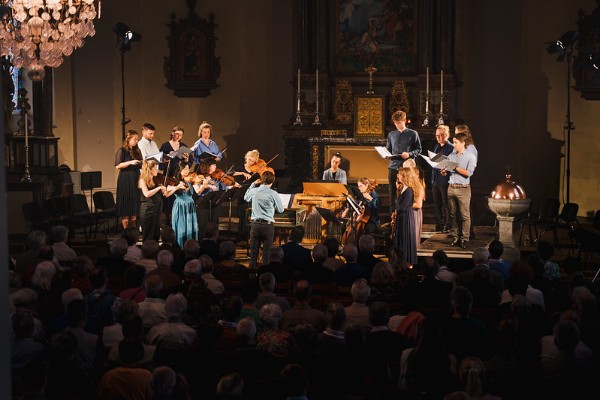
Musica Gloria
George Friedrich Handel arrived in London in 1713 after a 3-year stay in Italy and a short period in Hanover as Kapellmeister. He brought his interest in Italian opera to London and quickly became the leading composer in the city. Private commissions came his way, including one from Lord Henry James Brydges (1674–1744), for whom Handel wrote eleven English anthems in 1717 and 1718. These were written for Sunday services to be held in the church on his estate. Handel created works for a small ensemble of players and singers. The works take their name from Lord Brydges becoming the Duke of Chandos in 1719. Daniel Defoe, writing his A Tour through the Whole Island of Great Britain in 1725, said of the Duke: ‘No nobleman in England, and very few in Europe, lives in greater splendour, or maintains a grandeur and magnificence, equal to the Duke of Chandos’. Handel was writing for the most prestigious patron in England.
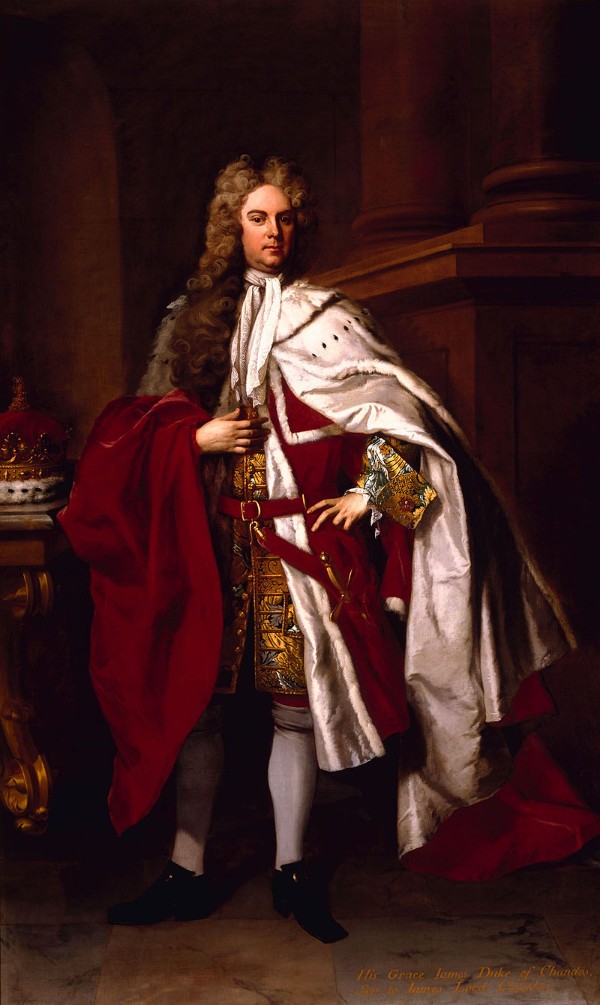
Michael Dahl: Portrait of James Brydges, 1st Duke of Chandos, ca 1719
The Chandos Anthems seem to have come from Handel’s informal position as ‘composer in residence’ at the Brydges estate in 1717 and 1718. He wrote for the forces at hand, and the limitations of the ensemble are revealed when we note that the first of the anthems did not include violas or altos in the score. Hence, Anthems 1-6 are only for a 3-part chorus (STB) while 7 through 11 are written for a 4-part choir (STTB or SATB). The instrumental ensemble included violins (but no violas), cello, oboe, bassoon, with a pair of recorders added for anthems 8 and 10. They are constructed based on an alternation of solo or choral movements and seem to have a more leisurely back-and-forth than we’re used to in other performances.
The text for Chandos Anthem No. 6, As pants the hart, had already been set by Handel in 1712, as a verse anthem for the Chapel Royal. He wrote it for a 4-part choir (SATB), with each voice having small solos and with only an organ for accompaniment. When he re-wrote it in 1717, he made changes that included transposing and opening the middle choruses, reducing the chorus to 3 parts, as mentioned above, and supplementing the missing middle voice with the additional instruments. He adds a new final movement (Put thy trust in God) that highlights a soaring tenor with various instrumental reactions.
Handel continued to use this, his first masterpiece, as the source for other adaptations for the next 20 years. This wasn’t unusual, and modern scholars have to check their desire for originality in all things at the door. Music was written, rewritten, transposed, moved to other works, and had its own long lives.
Chandos Anthem No. 10, The Lord is my light, HWV 255, augments the usual ensemble with the addition of 2 recorders. In one movement, One thing I have desired, the two recorders and the organ are the only accompaniment. In the movement For Who is God but the Lord, the entire ensemble comes together to create a typical operatic storm scene. Lightning flashes, thunder sounds, and even the ground moves beneath your feet, ‘as the earth trembles before the fearful power of God’.
One of the most interesting things about this recording was the care taken with the language. It’s clear that Handel understood the English-language text setting. Accordingly, Musica Gloria has worked with Professor David Crystal on producing ‘OP’ (Original Pronunciation) text. We know that languages change over time (y’know, whatever), and Crystal uses evidence within the texts to tease out what the world of Handel would have sounded like. When rhymed poetry no longer rhymes, we have a clue to some of the changes. A work such as John Walker’s Critical Pronouncing Dictionary of 1791 was also helpful. The question comes up about the letter ‘r’ after a vowel. Nowadays, this is generally dropped in Received Pronunciation. Around London, a word such as ‘heart’ comes out as ‘haht’ and ‘Lord’ is softened to be more like ‘Lawd’. This softening of the pronunciation started in the late 18th century. In this recording, however, all ‘r’s after vowels are sounded: LoRd is everywhere throughout and contributes to the strong level of declamation. When you start comparing recordings, this crisp edge of pronunciation becomes even more evident, providing an unexpected clarity in the vocal lines.
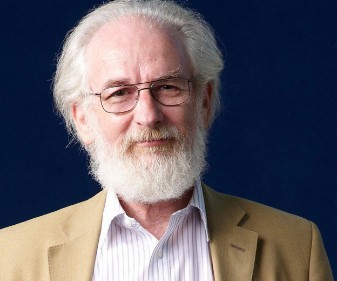
David Crystal
The two Anthems are separated by a Concerto for oboe, strings, and continuo in B flat major, HWV 302a. This work was another of Handel’s examples of the reuse of material. Some material is from other Chandos anthems; sometimes the oboe isn’t the soloist but merely doubles the violin. The oboe truly emerges as a soloist in the slow third movement Andante, where it plays music based on a violin sonata from 1707. We don’t look to music of this period for its continuous originality but rather for its ability to be adapted by the composer to the necessary situation, and in that Handel performed perfectly.
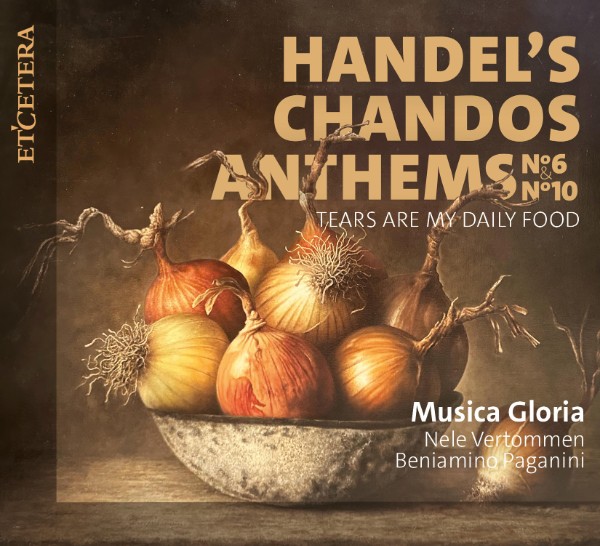
It’s unexpected that a non-English group (Musica Gloria is based in Bruges) would take over such an English genre as Handel’s anthems with such authority. On the other hand, they can approach them as few English might, by looking into all details of performance, starting with the text itself. It’s an outstanding performance that should make us re-examine what we think about Handel’s anthems.
For more of the best in classical music, sign up for our E-Newsletter