British composer George Lloyd had one of the most striking biographies of any classical musician of the twentieth century.
He began his career as a promising up-and-coming English composer. But when Britain went to war in 1939, Lloyd put that career on hold to enlist in the military.
During the war, he survived a catastrophic attack on his ship. Doctors believed he’d never recover from the trauma, but after a long stint farming carnations in the Dorset countryside, he made an unforgettable musical comeback.
Today, we’re looking at the life and career of George Lloyd.
George Lloyd’s Childhood
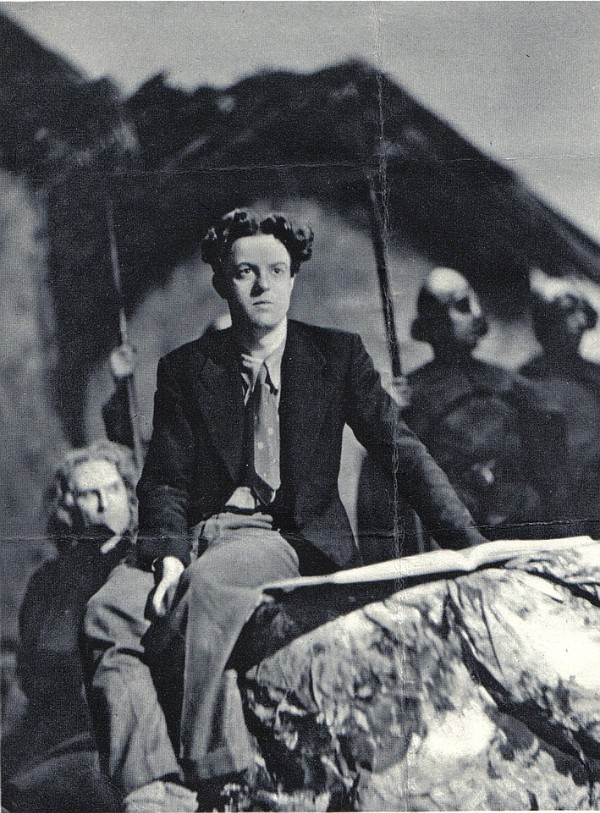
George Lloyd
George Lloyd was born on 28 June 1913 in the remote seaside village of St. Ives, Cornwall.
Both of his parents were amateur musicians. His father played the flute and had a passion for Italian opera of the eighteenth and nineteenth centuries. His mother played violin, viola, and piano.
The Lloyds lived in a house overlooking the Bay of Cornwall. The property had once been owned by an artist and boasted an artist’s studio.
The Lloyds turned the room into a music room and hosted frequent chamber music gatherings there. Those would be George’s first introduction to music.
As a child, George suffered from rheumatic fever. His health was so poor that he was mainly educated at home. Often bedbound, he entertained himself by watching the ocean from his window.
He began playing the violin at the age of five and composing at ten. At fourteen, he declared his intention to become a composer. Over the next decade, he would write three symphonies.
Lloyd’s Symphony No. 1
Lloyd’s Love of Opera
Opera soon became an all-encompassing passion for him. As a boy, he carried around a score of Verdi’s Otello like a Bible.
His father began choosing scenes from English plays and assigning them to George to set.
When George was fifteen, the Lloyds moved to London so he could study at Trinity College.
In London, he began attending opera performances religiously. Sometimes he went to see the same opera three times in one week!
Lloyd’s Operas Iernin and The Surf
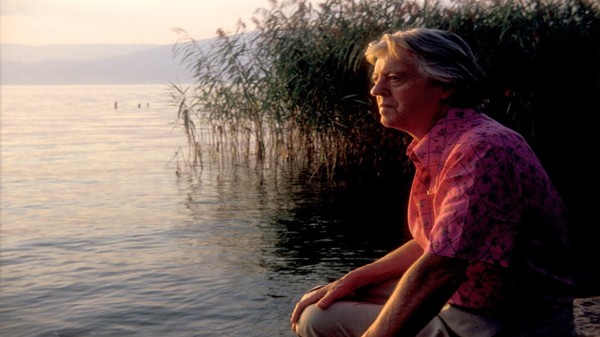
George Lloyd
His first opera, Iernin, featured a libretto written by his father. It was an adaptation of a Cornish legend and a musical love letter to the sea and moors. Lloyd later remembered, “I lived and breathed this opera.”
It premiered in November 1934, when he was 21. Lloyd conducted. Iernin was later produced in London, where it received rave reviews.
His personal life was going swimmingly, too. In 1937, he married a woman named Nancy Juvet, whom he had met during a trip to Switzerland.
His next opera, The Surf, also featured a libretto by his father. It premiered in London in 1938, when he was 25.
Reviews were generally warm, but conductor Albert Coates was ill during the performance, and Lloyd was dissatisfied with the production.
Nevertheless, it was clear that his career was on the upswing and that George Lloyd was an important up-and-coming voice in English music.
World War II
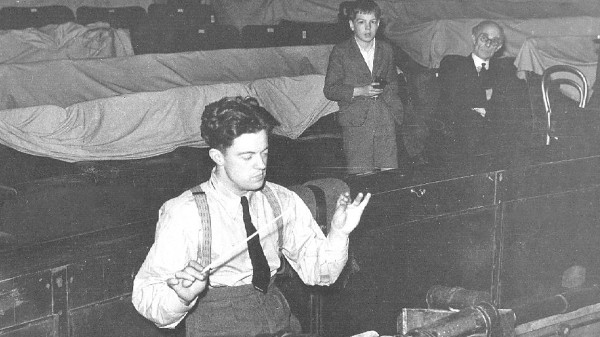
George Lloyd
World War II threatened all that. When Germany invaded Poland on 1 September 1939, Britain went to war against the Nazis.
Lloyd enlisted in the Royal Marine School of Music to play the cornet. He was assigned to the crew of the warship HMS Trinidad and commissioned to write a march in honour of the ship.
The Trinidad was assigned to patrol the stormy, freezing Arctic. They became a target of dive bombers and submarines as they escorted vital supply convoys. It was said that if a person fell into the icy water, they would only last thirty seconds before dying of shock.
One day, disaster struck. “There was a bit of a scrap,” the understated Lloyd later said.
He remembered:
“On one side of our position was the magazine, and on the other side […] the oil tanks, and the oil tanks were broken, and down came all this oil. And most of the people were just drowned in horrible, sick black oil. But I was a lucky one, and somehow or other I survived. We had to climb up these ladders with all this oil coming down, and I think the exertion of that or something had just burnt out my nervous system.”
Recuperation from the War
Lloyd was sent to a Scottish military hospital to recuperate. His lungs had been poisoned by the oil, and he was suffering from what we’d now describe as PTSD (Post-Traumatic Stress Disorder).
He was also experiencing uncontrollable tremors and convulsions, especially when reminded of the disaster. He described himself as “a lump of jello.”
Doctors were unable to find a way to treat him. They recommended lifelong institutionalisation.
His wife Nancy refused to follow that advice. Instead, the couple traveled together to Switzerland to live with her family in a quiet rural environment. She would oversee his treatment (and eventual recovery).
It took him years, but he did eventually improve and began composing again.
His first major work after the war was his fourth symphony. That was soon followed by his fifth, a surprisingly sunny work reflecting the beauty of the Swiss lake that he and Nancy were living on.
George Lloyd’s Symphony No. 4, “Arctic”
John Socman
In 1951, he was commissioned to write his first postwar opera: John Socman, the story of an ex-soldier named Richard who returns from war, only to find out that his lover is being pursued by a man named John Socman. Once again, his father provided the libretto.
Lloyd later remembered:
“Everything went wrong with that… For a thousand different reasons, everybody was fighting everybody. My health was still very bad at that time, but I managed to produce the score, and I was totally completely exhausted.”
The opera was well-received by audiences, but due to financial reasons, encore productions were never mounted.
Worse, Lloyd’s father – his lifelong teacher, cheerleader, and creative partner – died, leaving him feeling adrift.
Leaving Music and Taking Up Farming
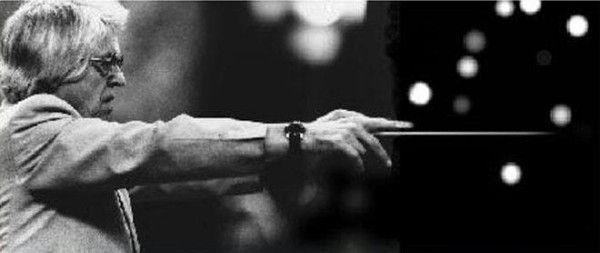
George Lloyd
The grief and exhaustion took a major toll on Lloyd’s health.
He and Nancy moved to a cottage in Dorset, where he decided to become a small-scale farmer. He eventually specialized in growing carnations.
He continued composing, but the only thing he did to market himself was sending scores to the BBC. (They were returned to him.)
He kept composing anyway, waking up early in the morning to write before going out to work in his garden.
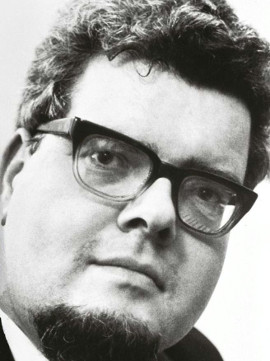
John Ogdon
In the 1960s, he struck up a friendship with pianist John Ogdon. He began writing works for him, and Ogdon in turn began advocating for Lloyd at the BBC.
George Lloyd’s Piano Concerto No. 1
Moving to London
In 1973, George and Nancy sold their garden and cottage and moved to London to make another go of composing. They also paid to have his symphonies recorded.
Lloyd remembered:
“Then all of a sudden people’s attitude changed completely: ‘he had a symphony recorded! he’s had two symphonies recorded! Three symphonies recorded!’ And after that, it sort of snowballed.”
Soon, he began fielding international commissions.
George Lloyd’s Symphony No. 6, Proms premiere
Final Works
One of his last major works was the 1980s cantata Pervigilium Veneris (The Vigil of Venus), a setting of a Latin poem dating from somewhere between the second and fifth centuries. It was written for soprano, tenor, chorus, and orchestra.
He also wrote an eleventh symphony for the Albany Symphony in New York. By the end of his life, he had written twelve.
Three weeks before he died, he dedicated his last work, a Requiem, to the memory of Princess Diana.
He died on 3 July 1998. He was eighty-five years old.
George Lloyd’s Symphonic Mass: Kyrie
George Lloyd’s Legacy
George Lloyd once remarked:
“So many people have no religion, no spiritual outlet, so they go for music. They’re desperately searching for something to feed their souls. I often get letters from people who tell me they’ve had trouble, even tragedy, in their lives, and that they hear my music and feel better.”
In the end, thanks to the power of music, the unspeakable tragedy that George Lloyd survived, coupled with his drive to survive and create, helped him to provide comfort to his listeners for decades.
For more of the best in classical music, sign up for our E-Newsletter