Claudio Arrau (1903–1991) stands among the towering figures of 20th-century pianism. Celebrated for an expansive repertoire and deeply philosophical approach, Arrau’s name is inexorably linked to the piano sonatas of Ludwig van Beethoven.
Arrau’s journey through these works, especially his 1960s Philips studio cycle offers a compelling example of his technical mastery, and his way of deeply engaging with the score’s internal voice.

Claudio Arrau
His interpretations have been admired for their intellectual depth, tonal richness, and structural gravity, and they have elicited both profound praise and measured criticism from critics, scholars, and listeners alike.
As we celebrate his birthday on 6 February, let us revisit Arrau’s Beethoven cycle. These recordings never claim to provide definitive answers and instead invite us into a world of reflective and expressive insight.
Claudio Arrau performs Beethoven: Piano Sonata No. 14 in C-sharp minor, Op. 27, No. 2
Beyond Bravura
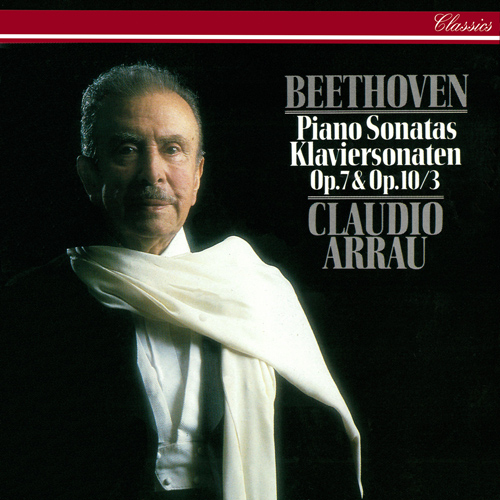
Claudio Arrau was not a pianist of flashy gesture or superficial brilliance. Instead, he pursued depth, gravity, and existential weight. In his recordings, he often emphasised stability of tempo, introspective phrasing, and architectural clarity.
Critics and contemporaries frequently noted these qualities. He was described as a pianist of most exceptional equipment with unfailing taste. (Downes, NYT, 1991) This comment reflects a broader perception of Arrau’s playing, disclosing a fusion of Romantic depth and Classical restraint rooted in a deep engagement with the score.
Arrau’s own reflections on Beethoven suggest that he saw the sonatas as vessels of spiritual and philosophical profundity. He wrote and spoke about Beethoven in terms that transcend technical concerns, suggesting that the composer’s music embodies a titanic struggle of the human spirit. (Matthew-Walker, Arrau at 85)
Ludwig van Beethoven: Piano Sonata No. 7 in D Major, Op. 10, No. 3 (Claudio Arrau, piano)
From Notes to Narrative
By the early 1960s, Arrau had devoted himself to recording the complete Beethoven sonatas for Philips. These recordings became his most widely disseminated statement on the cycle and remain a central point of reference for listeners and critics alike.
Jonathan Summers, writing liner notes for later releases of this cycle, praised Arrau’s readings for transporting listeners to another world, driven by a musician deeply thoughtful and focused on elemental musical truths rather than technical display. (Summers, Arrau plays Beethoven)
In the late sonatas, such as Op. 110 and Op. 111, Arrau’s interpretations are not mere textbook recitals, but rather profound artistic journeys. In Op. 57 (the Appassionata), for example, Arrau treats the work as an existential conflict between life and death, rather than a mere showcase of pianistic bravura.
The idea that Beethoven’s works are psychological landscapes of struggle and renewal is one of Arrau’s defining interpretive paths. In a good many sonatas, his performance takes slightly broader tempos that emphasise structural clarity over superficial excitement. For Arrau, Beethoven sees music as internal drama rather than purely external spectacle.
Claudio Arrau plays Beethoven: Piano Sonata No. 23 in F minor, “Appassionata”
Seriousness and Structure
Among those who esteem Arrau’s recordings, several common threads emerge in critical commentary. Arrau’s Beethoven is praised for embodying the seriousness of purpose. Rather than indulging in flashy technique, his readings underscore the sonatas’ architectural coherence and philosophical depth.
This quality, appreciated by many listeners, particularly suits Beethoven’s middle and late works, movements where reflection and organic development are paramount. Many commentators also note Arrau’s tonal richness and gravitas as defining elements of his recordings.
These qualities allow him to project large musical forms with clear architecture and resonant tone, qualities particularly welcome in the dense textures of Beethoven’s late sonatas. Such structural intelligence aligns with a conservative but deeply respectful approach to Beethoven’s score.
Arrau was also involved in editorial work on the Urtext edition of Beethoven’s sonatas, showing his immersion as a performer and scholar. This dual identity speaks to his seriousness of approach and may help explain the depth of his interpretations on record.
Ludwig van Beethoven: Piano Sonata No. 26 in E-Flat Major, Op. 81a, “Les adieux” (Claudio Arrau, piano)
Reverence and Reservation
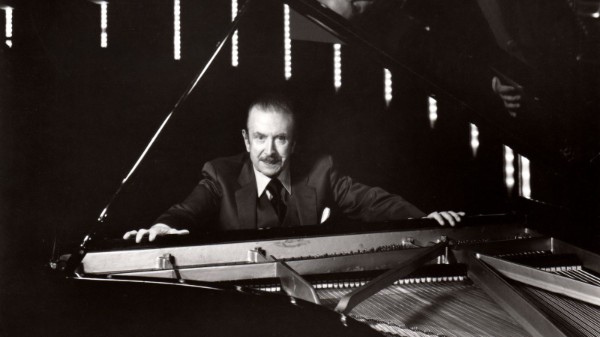
Claudio Arrau
Despite the admiration he inspired, Arrau’s Beethoven is not beyond critique. Critics and listeners who favour more assertive or extraverted readings sometimes find his performances reserved, heavy, or too slow. Some detractors argue that his introspective approach can verge on over-intellectualisation, at the cost of rhythmic propulsion or emotional urgency.
Historical critical voices, such as found in mid-20th-century journals, occasionally saw his playing as less engaging or surprisingly ponderous. Though these critiques are scattered and subjective, they are important reminders that interpretations of Beethoven’s sonatas are not universally accepted, but part of an ongoing dialogue among performers, critics, and audiences.
Examples from community discussions reflect this divergence. Some listeners perceive Arrau’s broad tempos and serious demeanour as detached or introverted, in contrast to interpretations that prioritise kinetic energy or dramatic contrast. Others appreciate these same qualities as hallmarks of interpretative profundity. (Listener Forums)
This duality, reverence from some and reservation from others, captures the essence of Beethoven’s performance criticism. No single interpretation can satisfy all aesthetic preferences. The Beethoven sonatas invite countless readings, each revealing different facets of their complexity.
Claudio Arrau performs Beethoven: Piano Sonata No. 21 in C Major, Op. 53 “Waldstein”
Evolving Appreciation
In critical histories of Beethoven sonata recordings, Arrau’s cycle frequently appears alongside those by Alfred Brendel, Wilhelm Kempff, and Artur Schnabel. Arrau’s cycle, made in the early stereo era, contrasts in sound and style with earlier mono recordings by Schnabel, and differs in expressive emphasis from Brendel’s later multiple cycles.
While Schnabel’s Beethoven is often described as seminal and philosophically intense, though technically uneven, and Brendel’s as crystalline and analytical, Arrau’s interpretations tend toward depth combined with measured Romantic warmth.
By the later decades of the 20th century, Beethoven performance practice had diversified significantly, with historical performance movements, new recording technologies, and fresh aesthetic priorities reshaping expectations. Within this landscape, Arrau remains a touchstone for listeners who value seriousness, structural integrity, and philosophical depth.
His recordings, once prized but sometimes overshadowed by newer cycles, have seen renewed interest, including recent reissues and live recital releases that emphasise the continued relevance of his artistry. The enduring appeal of these recordings underscores the critical truth that great interpretations are not static but evolve in meaning as audiences and styles shift over time.
Ludwig van Beethoven: Piano Sonata No. 17 in D Minor, Op. 31, No. 2, “Tempest” (Claudio Arrau, piano)
A Lasting Dialogue
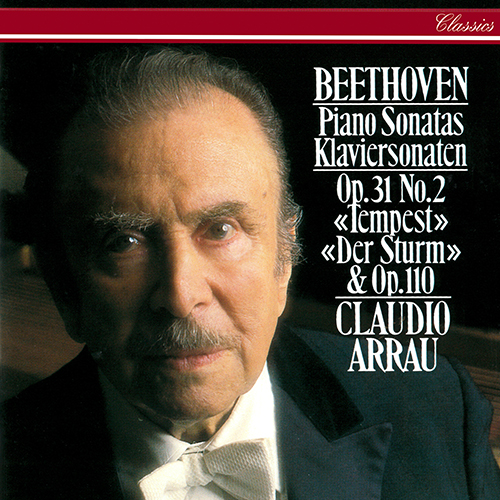
Claudio Arrau’s recordings of Beethoven’s piano sonatas occupy a unique place in the recorded heritage of these works. His approach, characterised by tonal richness, philosophical depth, and structural clarity, offers listeners a Beethoven intimately engaged with the score’s internal voice rather than external bravura.
Critically, Arrau has inspired admiration for the intellectual gravity of his readings and respect for his disciplined musical thought. Yet, his interpretations also evoke debate, as they embody a particular aesthetic that may not mirror every listener’s ideal of Beethoven performance.
Ultimately, Arrau’s Beethoven cycle endures as an invitation to explore what Beethoven’s music can reveal when approached with depth, reflection, and unwavering expressive integrity, rather than as a source of definitive interpretations.
For more of the best in classical music, sign up for our E-Newsletter