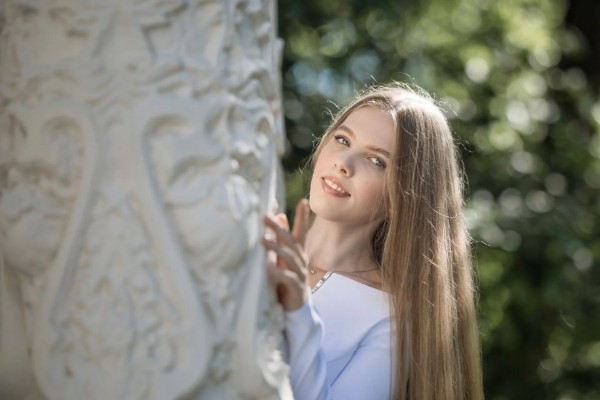
Flautist Elizaveta Ivanova makes her Hong Kong debut this month, performing Reinecke’s Flute Concerto with the Hong Kong Sinfonietta. Born in Estonia, Elizaveta first studied at St Petersburg’s Lyceum and State Conservatory, then moved to Basel’s Academy of Music and finally to Frankfurt, where she has been Associate Principal Flute of the Frankfurt Opera and Museum Orchestra since 2022.
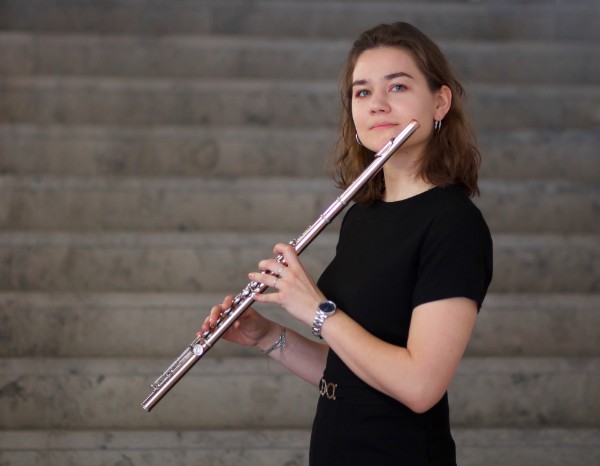
Elizaveta Ivanova © elizaveta-ivanova.com
Elizaveta is a BBC New Generation Artist and won first prize in the prestigious Concours de Genève in 2023. Nowadays, Elizaveta balances her orchestral work in Frankfurt alongside a busy schedule of solo and chamber music engagements. I chat to Elizaveta about how she found her way to the flute, living and working at the Opera in Frankfurt, and a year-long challenge related to her favourite hobby…
77th Concours de Genève – Elizaveta Ivanova, 1st Prize Flute 2023
Do you come from a musical family? Was there a lot of music around you growing up?
My mum is a musician, and we are five kids in the family, all musicians. I’m the fourth one, so I always remember having music in the house. We played and sang together. It was a very musical household!
We had mostly wind instruments – trumpet, clarinet, organ, and trombone – so not very well mixed!
What attracted you to the flute specifically?
There were a few moments when I was thinking about it, but I started when I was 12, I think, which is quite late for the flute. Most of my classmates were already quite advanced by this age, but with wind instruments, I think it’s fine to start later.
When I was around five years old, I was given a recorder, and I didn’t really have a teacher. I had perfect pitch, so it was quite easy to teach myself some songs that I was listening to at home.
At that time, we were living in Estonia, and the famous conductor Evgeny Mravinsky had his dacha, his summer place there. His late wife was a famous flautist in Russia, and we visited her one time. I think I was five or six – I don’t remember this so much, but my parents do!
At that time, she said to my parents that I could be a flautist. I didn’t start until seven years later, by accident. When I was twelve, I had a classmate who played the flute, and I thought the instrument looked beautiful, so I thought, ‘Why not!’
I’d tried the violin, I’d played the piano, I’d sung in the choir, but with the flute it felt right.
Did it always feel like something you wanted to do professionally?
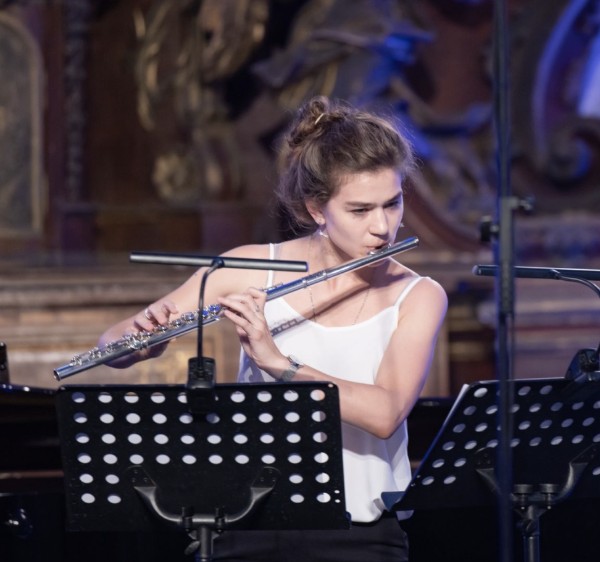
Elizaveta Ivanova © elizaveta-ivanova.com
I honestly don’t have many memories of being a teenager who was constantly thinking that I wanted to be a flautist. I studied in a special music school, and I was really lucky with the flute teacher I had. He was really dedicated to teaching music and teaching the flute. I trusted him and my parents trusted him, and when I was 17, I remember saying to myself, ‘Ok, I’m going to go and study at the conservatory now.’ It felt natural, but I don’t remember dreaming about it.
Flute Ivanova Elizaveta Salvador Espasa “Argos” for flute solo.
And now you’re Associate Principal Flute of the Frankfurt Opera and Museum Orchestra! How is it working there?
I feel really lucky. Almost every day when I come to work I really feel so lucky. I didn’t think that was possible. It’s an amazing orchestra. I love opera, I find myself loving opera so much in a way that I even didn’t expect. I’ve already been in the orchestra for four years, and I’m really so grateful to be there.
They’re amazing people, it’s an amazing atmosphere, it’s a really international orchestra, we have various repertoire from modern to baroque, and of course all the opera masterpieces. I find it really rewarding.
Do you have a particularly memorable project you’ve done so far?
I’ve definitely discovered the German romantic operas in Frankfurt that I’ve never played before, like those by Richard Strauss. My first project I did in Frankfurt is still one of the most memorable, and one of my absolute favourite operas: Strauss’ Die Frau ohne Schatten. And of course all the Wagner operas – there’s something special about those.
This orchestra is historically the one that plays Strauss and Wagner, this German tradition, and it always feels special, both from the orchestra and the audience. I discovered this music here. A lot of musicians roll their eyes at Wagner, or say that Strauss is so difficult – especially for wind players, who can have so many notes – and yes it’s challenging, but I love it, this special sound of the orchestra. When you’re there inside the sound it feels so special.
It must be special for the audience knowing there’s that tradition there?
Yes, but also for the orchestra. It feels very special when we have the premiere of a big Strauss or Wagner opera. There’s always a bit of tension, people are a bit nervous, but it gives you this amazing feeling that something big is happening.
You’re making your Hong Kong debut this month, playing the Reinecke concerto. How are you feeling ahead of your trip?
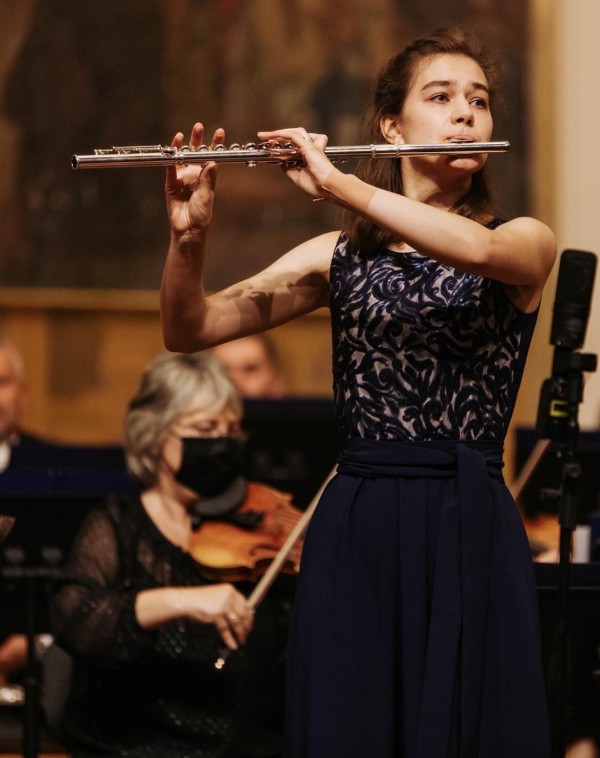
Elizaveta Ivanova © elizaveta-ivanova.com
It’s both my debut in Hong Kong and with the Reinecke. It’s a big repertoire piece for flautists, but somehow I skipped it in my student years, so I’m really looking forward to it.
How is it visiting such a well-known work in the repertoire for the first time, having not studied it as a student?
When I take a piece that maybe I’ve played already, often I think it’s a pity that I did it when I was 15 or 16 or whenever, still not having all the tools to study it right. You have this concept of the piece that is not from you: it’s from your teacher or from so many recordings or something.
Now, I’m definitely enjoying discovering Reinecke by myself. I’ve tried not to listen to so many recordings – I’ve had to work with students on this piece in masterclasses already, but for myself I’m trying to build some distance and give it some time.
I started to read the piece a few months ago and gave my brain time to process everything. Maybe it’s related to my opera life, but I only started to enjoy romantic music just in the last couple of years.
When I was a student, I really didn’t like romantic music. The romantic flute sonatas, romantic orchestral pieces like Tchaikovsky’s Violin Concerto, I really didn’t like it. Now, I find I understand it better and can enjoy it better. That’s why I’m happy that I’m discovering this concerto now, kind of from scratch, without this baggage from my student years!
How is your orchestral work in Frankfurt helping with this?
I find it easier with these long phrases. When I was younger, I found all these passages, as well as things with a lot of virtuosity, a bit pointless. Now I really enjoy it. It gives you the possibility to show off a bit, but also to dive deeply into this romantic beauty.
Gabriel Fauré – Fantaisie for Flute and Piano, Op.79 (1898)
What do you do in your spare time?
I’m reading a lot. I love books, maybe too much. I spend too much money on books. I love the feeling of books in general, the feeling of the paper. I read books about books, about bookmaking and all that kind of stuff.
I also do scrapbooking, which is kind of related to books, and paper. Otherwise, when I don’t play opera, I try to listen to opera with my colleagues. In Frankfurt, we are quite lucky that all the best orchestras come to Frankfurt. German orchestras often start their tours in Frankfurt, so you have the possibility to go and listen to them. I love that.
We’re really lucky that we have this great concert hall, the Alte Oper. I’ve already listened to so many great orchestras there, and it also helps put things in perspective.
I like to travel, of course, but lately I travel mostly for work, not pleasure. I love to be at home, and sometimes I feel like I would just like to stay at home for a week, and not go anywhere, but it’s life, and I do enjoy travelling.
The flights, everything related to travel, can be hard, but still, I can’t complain.
Do you have any on-the-road routines that help during periods of intense travel?
I always have to have a book with me. If I don’t have a book, then I feel empty, I feel bored. But if I have a good book, then I don’t see the time go by.
I also like to have my paper scores with me. I tried to work with an iPad, but it just doesn’t work for me. I feel like now, for example, with the Reinecke, I am building the piece and I kind of need to know the route, the geography of the piece. With iPads, you are just turning pages, and I can’t build the whole image.
I was playing the Weinberg concerto in the UK one time, and there was no way I was going to play it from memory, so I used an iPad. One minute before I was supposed to go onstage, something happened, and it didn’t work; I couldn’t open the scores. It was such a panic, and the performance was delayed!
What are you reading right now?
For this year, I took a kind of challenge for myself, that I would read all the books of all the prizewinners of the Nobel Prize for literature. At the minute I’m reading John Steinbeck’s East of Eden, and I’m really enjoying it. I checked the other day, and there are about 125 books to read, and I’ve already read some of them, so it’s not that many. I travel a lot – I have a big flight to Hong Kong coming up!
Details of Elizaveta’s concert with the Hong Kong Sinfonietta can be found here.
For more of the best in classical music, sign up for our E-Newsletter