Constantin Brâncuși (1876-1957), the world-famous artist who basically founded modern sculpture, did not sit around writing essays about music. He did not annotate scores or lecture on counterpoint. He did not, heaven forbid, issue pronouncements about “sculptural sonata form.”
And yet, classical music was one of the great unseen companions of his work. It hummed through his studio, slipped between his aphorisms, and quietly shaped the way he thought about form, rhythm, repetition, and joy. His sculptures do not describe music, but they behave like it.
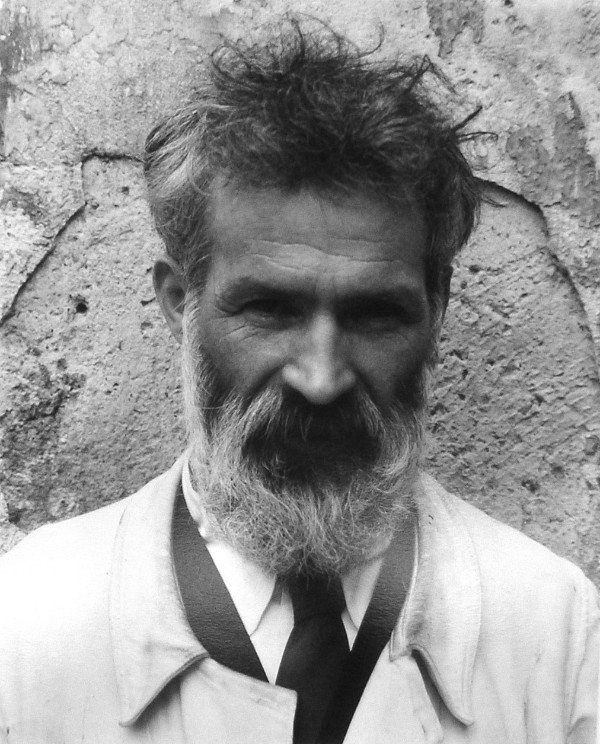
Constantin Brâncuși
Brâncuși spotted the magic trick early. Music shows nothing, represents nothing, illustrates nothing, yet still says everything. For a sculptor itching to escape the gravitational pull of realism, this was electrifying. Music proved that you could be abstract, compressed, and emotionally direct without apologising to the visible world.
In honour of his birthday on 19 February 1876, let’s eavesdrop on what Brâncuși said about music, and then happily speculate on how it worked its way into his sculptures.
Johann Sebastian Bach: Toccata and Fugue in D minor, BWV 565
A Fugue for the Eye
Healthy scepticism was one of Brâncuși’s hallmarks. There are remarkably few rock-solid quotations in which he speaks directly about classical music. He did love a good aphorism, and that love has caused all sorts of trouble.
Over the years, remarks have been paraphrased, polished, cheerfully embellished, or lovingly “remembered” by friends until they sparkle a little more than the evidence allows. To get started, let’s stick to the good stuff only.
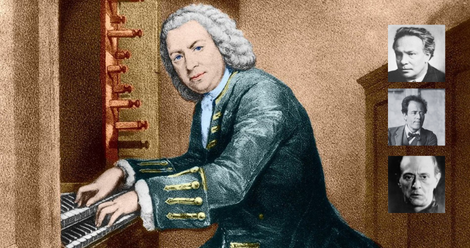
There is one composer who turns up again and again, unmistakably and without much argument, and that’s Johann Sebastian Bach. Brâncuși is consistently and credibly linked to Bach in primary and secondary sources alike, and by visitors who spent time in his studio. (Giedion-Welcker, 1959)
“When you listen to Bach, you see God,” is a saying widely attributed to Brâncuși, and it is generally accepted as true. And it tells us a great deal. Not about music as decoration or as background, but about music as revelation, structure, and sheer, exhilarated clarity.
Johann Sebastian Bach: St. Matthew Passion, “Erbarme dich mein Gott”
Sculpture in Time
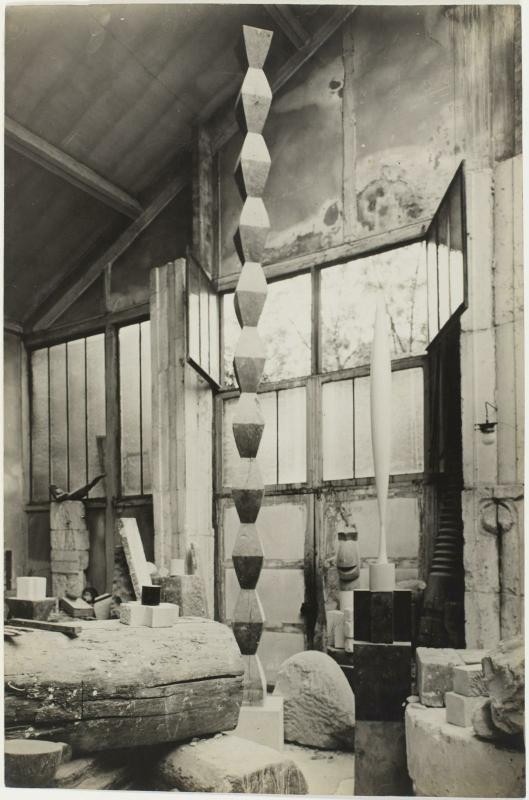
Constantin Brâncuși’s studio
The line about Bach is so interesting because it collapses categories. Hearing becomes seeing, sound becomes structure, and time becomes form. And that’s exactly what Brâncuși’s sculptures do. They invite the eye to listen and the body to pay attention.
And this is where Brâncuși and classical music really start twirling together. Music never tries to be anything other than itself. A fugue doesn’t look like a cathedral, even if it feels like one. A sonata doesn’t imitate a landscape, even when it carries you on a journey. Music is movement, pulse, proportion, and energy.
Brâncuși noticed that sculpture could do the same. It could stop pretending to be things and start being things. It’s so liberating, as he could leave the heavy baggage of likeness behind and let form do the talking.
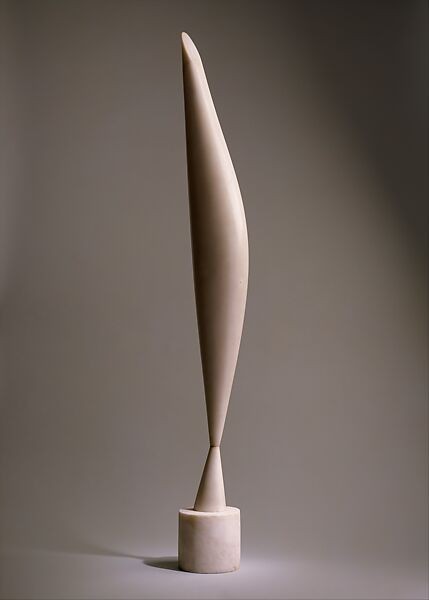
Constantin Brâncuși’s “Bird in Space” series
“A Bird in Space” is not a bird. It’s a whoosh. A surge. A held breath. It doesn’t wait politely to be identified. Like a musical phrase, it only fully reveals itself as you move around it. You don’t “recognise” it, you actually experience it.
Johann Sebastian Bach: Brandenburg Concerto No. 3 in G Major, BWV 1048
Variation is the Spice of Form
Classical music adores repetition, but many times it is repetition with a grin. Themes return shifted, stretched, tilted, intensified. Brâncuși did the same. He returned again and again to a handful of motifs, including heads, birds, columns, and kisses, but they are never quite the same.
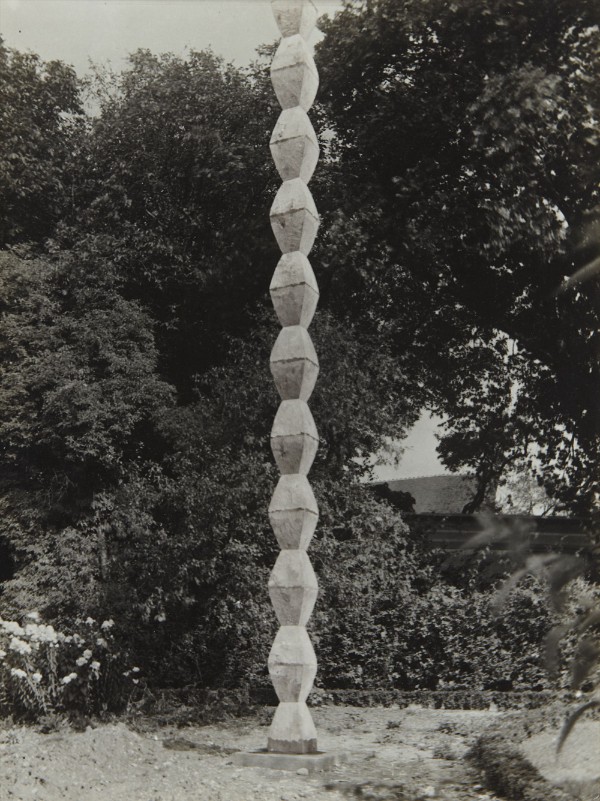
Constantin Brâncuși’s Endless Column
The “Endless Column” practically hums. Module after module climbs upward, no climax, no narrative, no destination. It behaves like a musical sequence that refuses to resolve. It doesn’t tell a story, it just keeps going, and somehow, improbably and joyfully, that’s enough. Pattern plus variation equals delight, in music and sculpture.
Music absolutely needs silence, as without it, sound collapses into noise. Brâncuși grasped this intuitively. His sculptures are not chatty. They don’t overexplain. They hover, pause, and wait for you to tune in.
His pursuit of simplicity has a musical flavour. Think of a late Beethoven slow movement, or a stripped-down Bach sarabande. There is nothing missing, nothing to add, everything counts. His polished surfaces amplify this effect. They reflect the world without describing it, catching light the way music catches silence.
Johann Sebastian Bach: Art of the Fugue, “Contrapunctus I-IV”
Music in the Air
Brâncuși grew up in a Romanian farming village close to the Carpathian Mountains. It was an area known for its rich tradition of folk crafts, particularly woodcarving. And he grew up with Romanian folk music, full of repetition, ritual, and hypnotic modes.
This was earthy and communal music that left a permanent imprint. It became clear that art could be simple without being simple-minded, and repetitive without being dull. Maybe that’s why his work feels at once ancient and modern, playful and profound.
It’s tempting to picture Brâncuși as solemn, mystical, carved from the same marble as his sculptures. In reality, he laughed, joked, and sang, and music was part of that joy. People who worked in his studio recalled that he quietly played music while working, particularly classical pieces.
Yet classical music was not a museum piece for him. It was alive, sensuous, and occasionally intoxicating. His sculptures share this spirit, as they are refined but never pompous. Brâncuși never tried to sculpt a specific piece of music, nor did he endorse symbolic readings of his forms. His connection to music was not translation, but affinity.
Johann Sebastian Bach: Cello Suite No. 1 in G Major, BWV 1007 “Sarabande”
Where Bach Meets Marble
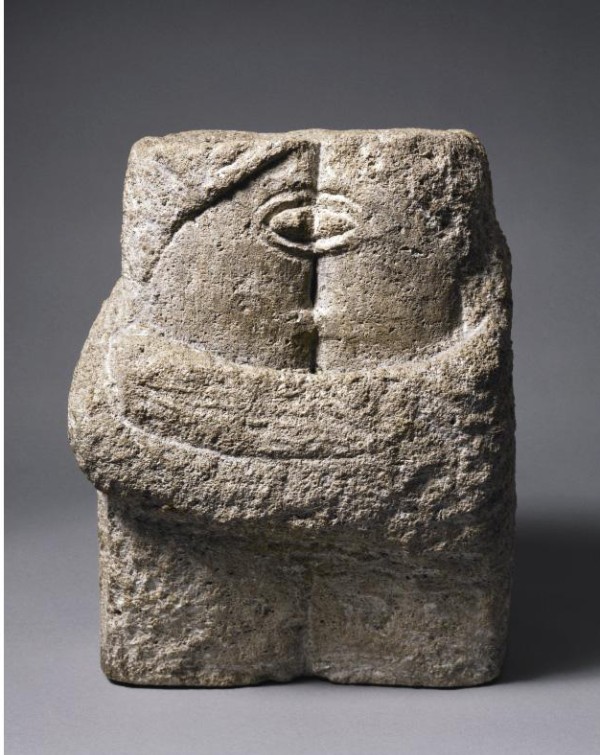
Constantin Brâncuși’s The Kiss
There are moments when music and sculpture seem to speak the same language, and in the world of Constantin Brâncuși, this was no mere metaphor. The sculptor, a master of distilled forms and pure lines, was trying to translate the invisible order of the universe into perceivable form.
Returning to his quote about Bach’s music, we learn about simplicity concealing depth, repetition that unfolds like a meditative mantra, and structure that feels inevitable yet alive. As his quiet and contemplative studio often resonated with music, Bach was a companion, guide, and inspiration.
To hear Bach, Brâncuși suggests, is to glimpse the divine rhythm behind all things. To see God in music is to recognise that art and spirit are inseparable. Purity, proportion, and resonance are not only aesthetic qualities but also ethical and cosmic ones.
In this vision, a sculpture is like a note frozen in space, a fugue rendered in stone, a hymn for the eyes. Brâncuși’s insight reminds us that music can illuminate form just as form can echo music.
For more of the best in classical music, sign up for our E-Newsletter