The love story between novelist George Sand and composer Frédéric Chopin has fascinated music lovers for generations.
Their relationship has been the inspiration for multiple films and television shows.
One of the more recent attempts is the 2002 Polish film Chopin: Desire for Love, written and directed by Jerzy Antczak.
2002 Chopin: Desire For Love Trailer
Antczak employed Polish actors and shot two versions of his film: one in Polish and one in English.
Antczak worked on the screenplay for over two decades, then spent six years raising money to film it. Clearly, it was a passion project, so it feels mean to dissect it too critically.
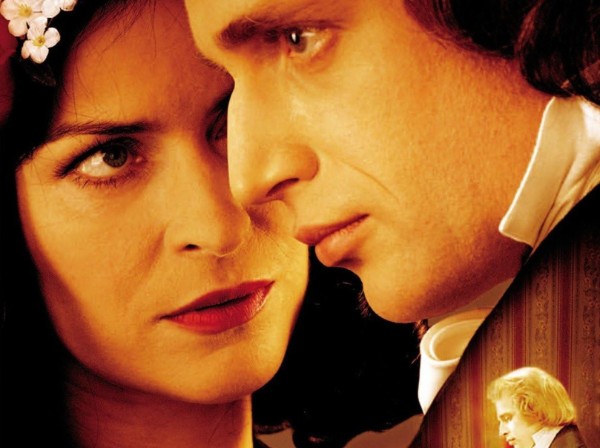
However, there are many biopics out there that classical music lovers could watch, so the question has to be asked: Is Chopin: Desire for Love worth watching?
The answer is a yes – with asterisks. Here’s why.
The film contains themes about political oppression and romantic heartbreak…but they never intertwine in any meaningful way.
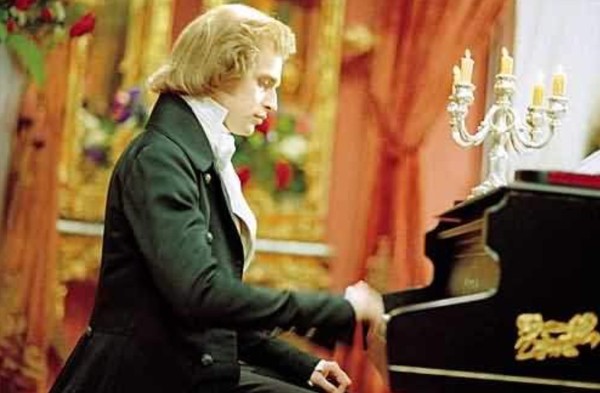
This film delves into political tensions from its first moments, when Chopin is summoned to play for the cruel Grand Duke Konstantin Pavlovich of Russia, brother to the tsar and tyrannical ruler of Poland.
Soon afterwards, the duke’s soldiers are shown looting the Chopin family home and destroying the family piano during the Polish people’s November Uprising.
In the film, just as he did in real life, Chopin flees the turmoil to make a career in Paris.
However, not long after Chopin arrives in France, the film moves on to his romantic relationship with George Sand.
We don’t really return to themes of politics or national identity until toward the end of the movie, when Chopin makes his famous request to have his heart buried back in Poland.
Historically, however, George Sand was very interested in politics and revolutionary causes. It would have been fascinating to explore how Polish revolutionary politics and George Sand’s politics intertwined.
It’s nice to see a portrayal of Chopin’s wider support system. On the other hand, this one is incomplete.
In the movie, Antczak includes a scene of Franz Liszt performing Chopin’s music. It’s a treat to see not just their friendship dramatised, but the professional support that they gave each other.
Franz Liszt plays Chopin’s Revolutionary Étude – Chopin: Desire for Love
It’s also nice to see Chopin’s supportive family featured in the film.
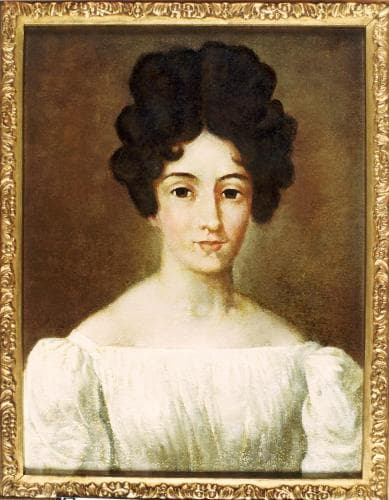
Ludwika Chopin Jędrzejewicz
Toward the end, we meet his sister Ludwika, who travels to be with him during his final illness in Paris.
However, Ludwika doesn’t appear in any kind of prominent role in the early part of the film, despite the fact that she and her brother were close during that time.
It’s a somewhat puzzling creative choice, given that even a brief early appearance by Ludwika would have lent the narrative more cohesion and that finale a kind of pathos.
It’s great to see portrayals of women and children in a classical music movie. However…
Much of this film centers around author George Sand, her son Maurice Dudevant, and her daughter Solange Dudevant.
Unfortunately, the drama of Maurice and Solange threatens to swamp the last quarter of the film.
Antczak was aware of this potential pitfall going into the movie. He told the Houston Chronicle, “It was a difficult movie to make. It was hard to see how to orchestrate the story, to squeeze it, to make it two hours.”
It’s safe to say that not many viewers are coming to this film interested in seeing the Sand siblings fighting, Maurice’s professional insecurities, or the teenage Solange’s rebellious attempts at seducing older men.
It’s also tough to relate to Sand’s children because we never learn much about where they came from. We don’t hear about Maurice feeling abandoned by his father until very late in the story, or explore why he’s so obsessed with painting. There’s also a very jarring transition when Solange goes from being a child to a young adult, and the switch in actresses makes her feel even more unfamiliar and unknowable than she already was.
It’s tough to understand why Chopin and George Sand got together – or stayed together.
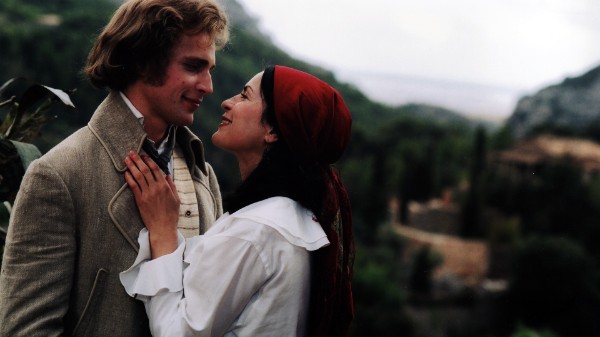
Throughout the film, I kept asking myself, why are these two characters still together? Then I wondered, why did they even get together in the first place?
This part of the Chopin/Sand love story is often skimmed over, possibly because even historians have trouble justifying why these two seemingly ill-suited titans of the Romantic Era became an item, aside from the old adage “opposites attract.”
In addition, their relationship wasn’t a traditional one. They never married, and although their relationship was physical in its earlier days, it ultimately evolved into something more akin to an intense romantic and creative friendship.
This kind of complicated, unconventional connection can be difficult to portray within the limited run-time of a film.
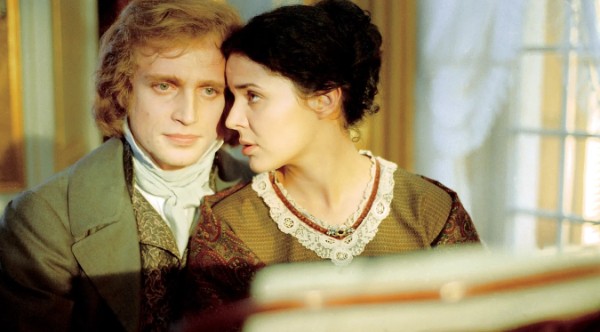
But after the couple’s tenth screaming match, when it’s so obvious that they’d be better apart than together, it becomes difficult to stay emotionally invested in the outcome of their relationship.
There are some strange narrative choices.
The film is rife with unconventional, uncomfortable storytelling choices.
One occurs when Chopin and Sand are in bed together during a thunderstorm, and the teenage Maurice walks in on them. He is completely traumatised by what he witnesses and runs out into the rain.
The scene would be strange enough on its own, but it keeps being referenced for the rest of the film. Maurice is constantly lurking around corners, watching his mother and Chopin kiss. There’s a distinct Oedipal undercurrent here that’s never fully hashed out or adequately explained.
Solange also has clear issues when it comes to her mother’s relationship. As a teenager, Solange starts trying to seduce Chopin, convincing herself she’s in love with him.
However, we don’t know Solange well; we don’t know what exactly is driving her on a psychological level to seek such a transgressive connection with her mother’s lover. As a result, the main feeling the relationship evokes is discomfort.
There is surely movie-worthy material here to mine, but the film just doesn’t have the time, focus, or point of view to do so.
So should you watch?
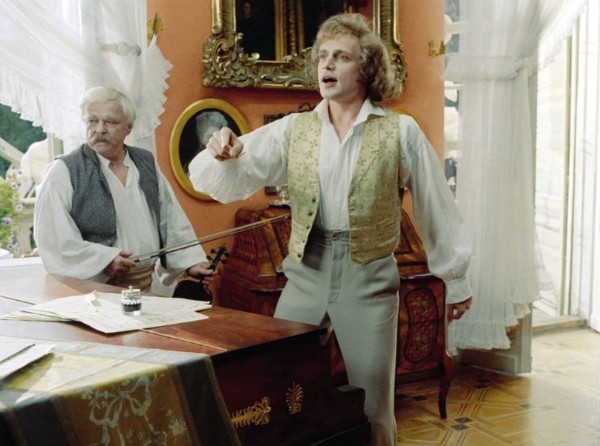
Like I said, Chopin: Desire for Love is clearly a passion project. It’s fascinating to see some of Chopin’s life experiences dramatised, especially his and Sand’s ill-fated travels to the gorgeous island of Majorca.
And it’s wonderful to see a composer’s friends and family being shown when telling his life story, instead of seeing him as an untouchable, inhuman genius who emerged fully-formed and alone.
That said, go into it with your eyes open. There are some genuinely odd moments here, a lot of melodramatic arguing, and a frequently debilitating lack of focus.
The good news is, the story of Chopin and Sand is so compelling that in the coming years, filmmakers will doubtless return to it again and again. There are many other versions of this story to watch if this one doesn’t land with you, and I’m sure there will be even more in the years to come.
For more of the best in classical music, sign up for our E-Newsletter