Did you know that Johann Sebastian Bach actually has two birthdays? I think that’s just wonderful, as it gives us the opportunity to celebrate the music of the greatest of all composers twice.
There is an explanation, of course. When Bach was born on 21 March 1685, his birth was first recorded using the Julian calendar. That calendar was adopted by Julius Caesar in 45 B.C for use throughout the vast Roman Empire.
However, when Bach died in 1750, most of Europe had switched to the Gregorian calendar, but Bach’s hometown of Eisenach was still using the Julian calendar. But there is another twist.
Johann Sebastian Bach: 2-Part Inventions, No. 1 in C Major, BWV 772
Two Dates, One Genius
It turns out that the Julian calendar had miscalculated the length of a year by approximately 11 days. Once the Gregorian calendar was adopted, Bach’s birthday jumped from 21 March to 31 March.
While some people are still arguing about Bach’s rightful birthday, let us celebrate both! For 21 March, we thank Bach for fifteen inventive excuses to smile at the keyboard, while we raise another cheer with 15 Sinfonias on 31 March.
Johann Sebastian Bach: 2-Part Inventions, No. 2 in C minor, BWV 773
Composed for Wilhelm Friedemann
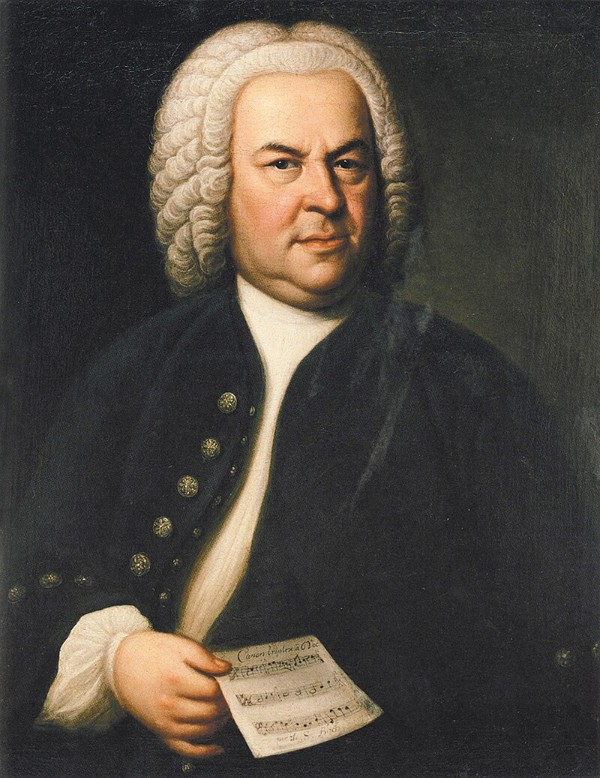
Johann Sebastian Bach
If you are a pianist, you already know what I am talking about. The 15 Two-Part Inventions and the complementary 15 Three-Part Inventions, or Sinfonias, were written around 1720, when Bach was conductor of the orchestra in Köthen.
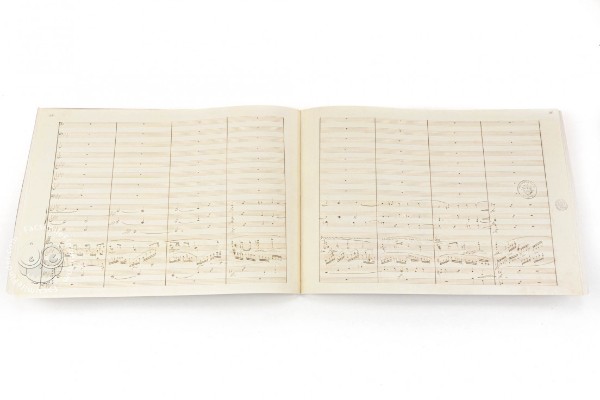
Specifically, they were composed for his eldest son, Wilhelm Friedemann Bach, who would have been around 9 or 10 years of age. Bach notated them as exercises in the Klavierbüchlein (Little Keyboard Book).
Johann Nikolaus Forkel, the first Bach biographer, tells us a little bit more about these particular exercises. He writes, “the first thing Bach did was to teach his students his particular mode of touching the instrument. For this purpose, he made them practice, for months together, nothing but isolated exercises for all the fingers.”
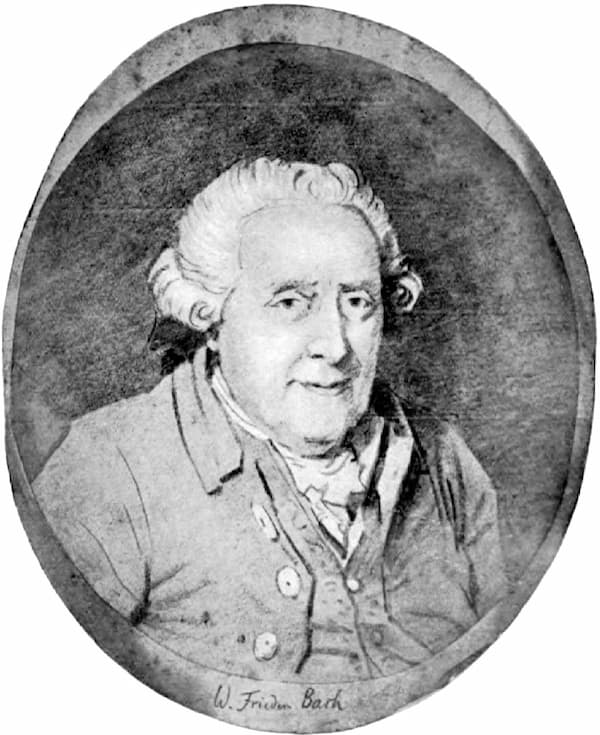
Wilhelm Friedemann Bach
Johann Sebastian Bach: 2-Part Inventions, BWV 772-786: Invention No. 3 in D Major, BWV 774 (Glenn Gould, piano)
Bach’s Pedagogy
For some months, none could get excused from these exercises… But if he found that anyone began to lose patience, he was so obliging as to write little connected pieces. Of his kind are the fifteen Two-Part Inventions.
But what’s even better is the fact that in his 1723 manuscript, Bach provides a famous preface explaining their purpose. It’s all no-nonsense and fascinating to read.
“Straightforward instruction, wherewith lovers of the clavier, especially those desirous of learning, are shown in a clear way not only (1) to learn to play two voices clearly, but also after further progress (2) to deal correctly and well with three obbligato parts, moreover at the same time to obtain not only good ideas (inventions), but also to carry them out well, but most of all to achieve a cantabile style of playing, and thereby to acquire a strong foretaste of composition.”
Johann Sebastian Bach: 2-Part Inventions, BWV 772-786 – Invention No. 4 in D Minor, BWV 775 (Dina Ugorskaja, piano)
Building Independence
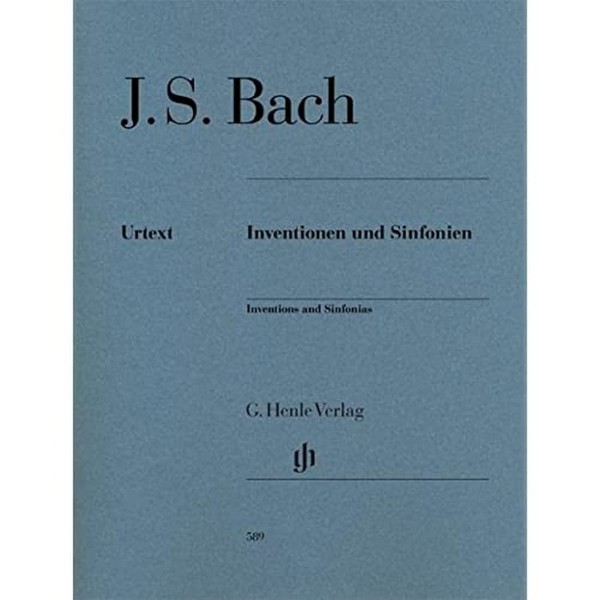
J.S. Bach’s Inventions and Sinfonias
It seems that these miniature gems were intended as studies to improve performance and composition. In the Two-Part Inventions, the focus is on playing two independent voices clearly and expressively. I suppose Bach refers to a cantabile style of playing that develops independence of both hands, evenness, and phrasing.
Every piece is built from a single short musical idea, possibly the “Invention,” which he then develops through imitation, inversions, sequences and modulation to related keys. In terms of keys, the Inventions are arranged in chromatic order.
However, the chromatic order is not complete. Because equal temperament had not yet been introduced, keys with too many sharps and flats were omitted. Specifically, none of the pieces exceeds four sharps or four flats.
Johann Sebastian Bach: 2-Part Inventions, BWV 772-786 – Invention No. 5 in E-Flat Major, BWV 776 (Masako Nakai, piano)
Boundless Variety
In terms of style, the 15 Inventions blend keyboard pedagogy with compositional artistry. As a scholar writes, “only an infinitely fertile mind could venture to write a little piece of the same style and the same compass, and without the least effort, make each of them absolutely different from the rest.”
They are not just dry finger exercises, but miniature contrapuntal gems. They are highly musical, expressive, and expertly crafted. Bach packs a huge variety into these tiny little forms, and each has its own character or personality.
Johann Sebastian Bach: 2-Part Inventions Nos. 1-15, BWV 772-786 – Invention No. 6 in E Major, BWV 777
Opening with Sunshine
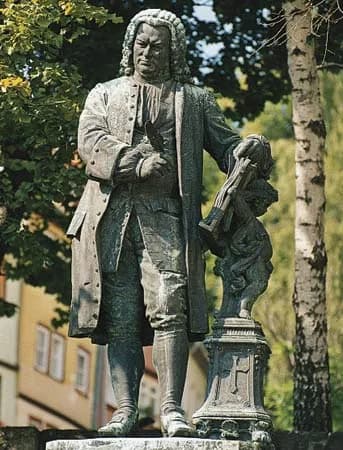
Monument of J.S. Bach in Eisenach, Germany
Bach opens with one of the set’s most straightforward and joyful inventions. Cast in the pure sunshine of C major, it’s such a simple little motif. It weaves together a rising step, a turn, and a scale fragment, which Bach then flips around and inverts. This opening Invention is perfect for learning basic imitation and a singing touch, all while happily and effortlessly skipping like a child.
The parallel C-minor is much more sombre in expression. It starts as a perfect canon with the imitation entering two measures later. The character has been described as passionate and eager, while others call it composed and contemplative.
Johann Sebastian Bach: 2-Part Inventions, BWV 772-786 – Invention No. 7 in E Minor, BWV 778 (Hikari Fukuda, piano)
Marching Boldly, Lamenting Softly
Like a proud march or confident declaration, No. 3 in D major unfolds as a three-part song form because the beginning eventually returns. I suppose the striking feature of the opening motif is the rebound of tones within the fifth. This always twisted my fingers into a knot.
Don’t you just love the striking leap of a diminished seventh surrounded by stepwise movement in the D minor Invention? If you need to practice legato phrasing and subtle dynamic shading, this is the piece for you. It has been described as “gloomy” in nature, and as having “sad colours of grey and lavender.”
Johann Sebastian Bach: 2-Part Inventions, BWV 772-786 – Invention No. 8 in F Major, BWV 779 (Paulina Zamora, piano)
Dignity and Mischief
Apparently, the Invention No. 5 in E-flat Major opens with a joy motive and ends with a step of confidence. Here Bach creates a little conflict between hands, as the upward striving of one theme is combatted by the downward strength of another. In the end, it is a series of repetitions of the motive, accompanied by a distinct counter-motive. This piece has been described as being full of grace and dignity.
The subtle rhythmic shifts between lines are almost courtly in character in the E Major Invention. There is plenty of syncopation and embellishment, and its character is described as being “full of roguish fun.” I like the picture of two dancers coming together, but they quickly shift positions and move apart again.
Johann Sebastian Bach: 2-Part Inventions, BWV 772-786 – Invention No. 9 in F Minor, BWV 780 (Karin Kei Nagano, piano)
Lament and Laughter
We might well describe No. 7 in E minor as a gently flowing lament. The smooth motif emphasises a cantabile singing style, and its character expresses heaviness of spirit. Mournful it may well be, but it still has extraordinary melodic beauty.
For a playful and bouncy Invention with plenty of good humour, we turn to No. 8 in F Major. It is a perfect canon with the hands imitating each other like in a musical round. Eventually, the canon becomes less strict, and it is probably the most popular of all the Inventions. It has been described as “delightful” and “full of happy and innocent contentment.”
Johann Sebastian Bach: 2-Part Inventions, BWV 772-786 – Invention No. 10 in G Major, BWV 781 (Ramin Bahrami, piano)
Deep Sorrow and Gentle Joy
With No. 9, we move into the deeply expressive key of F minor. The emotional intensity is created by mild chromaticism and plenty of syncopations. The melodic beauty is haunting, even as the piece is “full of impassioned strains of sadness.” Bach wanted to ensure his son understood pathos and declamation, so he added many slurs to aid articulation.
The cheerful invention in G major has an almost pastoral character. Described as a fugue whose main subject consists of broken chords, “it flits to and fro, now in imitation, and now in episodic extensions.” Basically, No. 10 is a gigue, expressing the idea of placid happiness.
Johann Sebastian Bach: 2-Part Inventions, BWV 772-786 – Invention No. 11 in G Minor, BWV 782 (Angela Hewitt, piano)
Turmoil and Banter
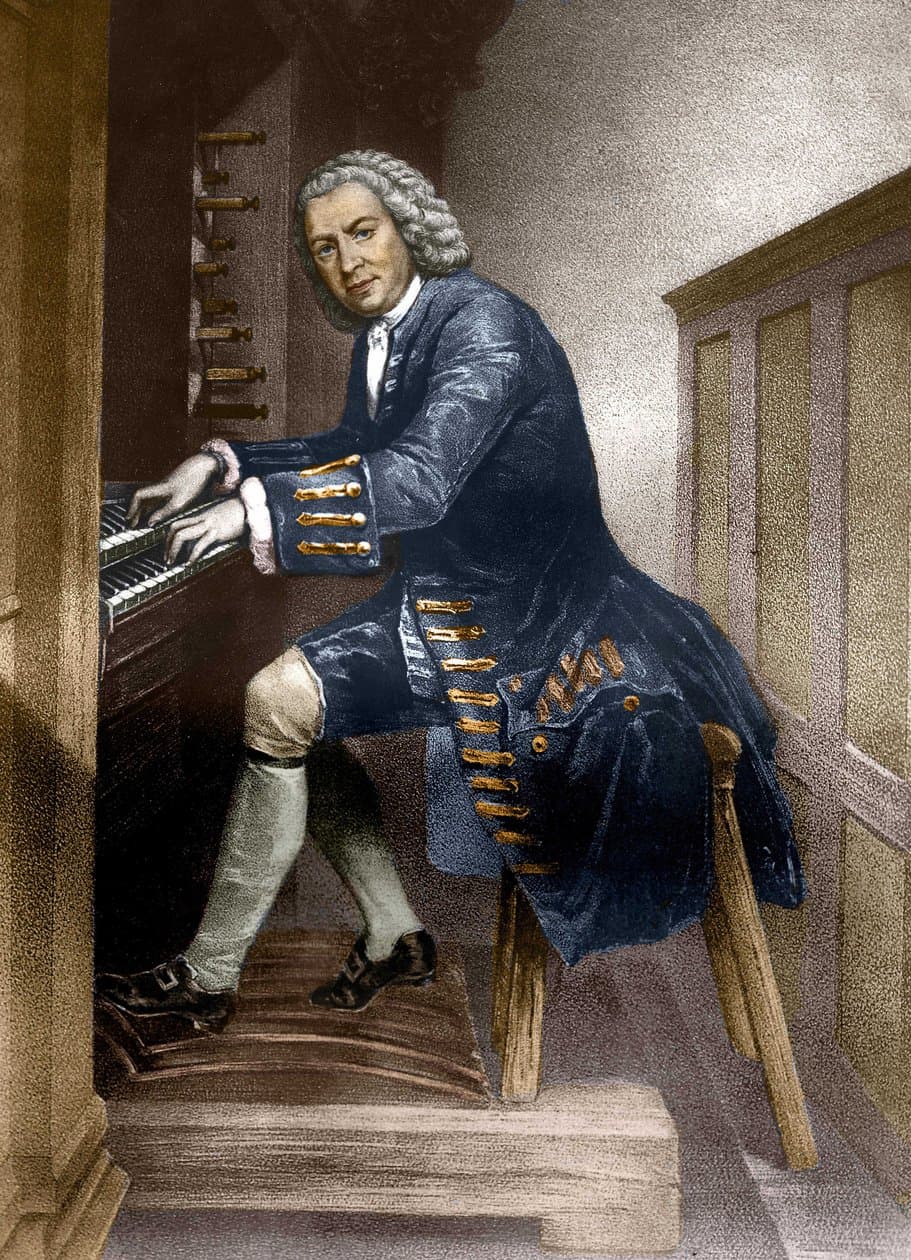
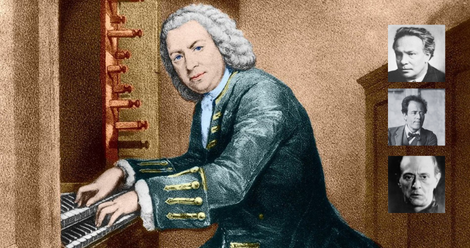
Johann Sebastian Bach playing the organ, c. 1881
Dramatic and intensely sorrowful, No. 11 in G minor has the character of tormented restlessness. Syncopated rhythms and a highly chromatic counter-subject heighten the poignancy. It is absolutely amazing how Bach manages to evoke such powerful emotions in a short and compact piece.
Sophisticated playfulness emerges in the A-major Invention No. 12. All the material of this piece is derived from the winding nature of the beginning and a motive that basically outlines the harmony of the dominant chord. We also find plenty of ornaments, suggesting musical banter with underlying cleverness.
Johann Sebastian Bach: 2-Part Inventions, BWV 772-786 – Invention No. 12 in A Major, BWV 783 (Peter Serkin, piano)
Excitement and Elegance
Restless, energetic, and slightly dramatic, No. 13 in A minor is one of the more virtuosic Inventions. It is another example of Bach’s frequent use of the simple triad as subject matter, with fast runs and tense sequences building excitement. You need plenty of stamina and crisp articulation to make this piece work.
With all the material derived from the motive and countermotif, No. 14 in B-flat major presents a song-like melody tastefully ornamented by trills and mordents. It has the character of a prelude because the subject and its continuation move almost exclusively through harmonic passages.
Johann Sebastian Bach: 2-Part Inventions, BWV 772-786 – Invention No. 13 in A Minor, BWV 784 (Aldo Ciccolini, piano)
Dramatic Close and Learning Curve
The concluding Invention in B minor is a passionate and stormy affair. It has a sense of inner turmoil and dramatic resolve, yet it is not without a certain dignified grace. It’s basically of fugal design alternating with episodic interludes. Unusually, perhaps, is the fact that the theme is not introduced alone but supported by short notes in the bass. To me, this is probably the most technically challenging piece of the set.
Almost everybody agrees that the Two-Part Inventions are a wonderful preparation for the Partitas, and then the French and English Suites. However, some authors suggest that there is no greater pedagogical mistake than to begin the study of Bach with the Inventions. To the untrained musical mind, they are considered “stern and forbidding.” Would some Suite movements work better?
Johann Sebastian Bach: 2-Part Inventions, BWV 772-786: Invention No. 14 in B-Flat Major, BWV 785 (Craig Sheppard, piano)
Timeless Gems
The Inventions are probably the best possible preparation for the larger works of Bach. But I think we should not underestimate their intrinsic value. They are part of Bach’s genius that easily outlasts passing tastes.
A number of high-profile pianists have recorded the Two-Part Inventions, including Glenn Gould. He treats these pieces as serious concert music, and not just pedagogical drills. His famous detached articulation emphasises structural transparency and rhythmic vitality.
Johann Sebastian Bach: 2-Part Inventions, BWV 772-786 – Invention No. 15 in B Minor, BWV 786 (Christoph Eschenbach, piano)
Profound in Simplicity
Angela Hewitt views the Inventions as music in their own right, not simply as the invaluable exercises they are. As always, she assigns individual characters to each piece by paying close attention to phrasing, touch, and expressivity.
András Schiff has spoken extensively about Bach’s pedagogical works, including the Inventions. He describes them as essential for understanding counterpoint and sees them as timeless pieces suitable for the modern piano.
Although the inventions are deceptively simple, their musical content is wonderfully profound. They are a great way of introducing students to what the greatest music can be.
Once you have mastered the Two-Part Inventions and managed to produce music, you are ready to tackle the 15 wonderful Sinfonias. Can you make three voices sing together? Find out in our next episode.
For more of the best in classical music, sign up for our E-Newsletter