British composer Christopher Gunning (1944–2023) wrote concert music but is probably most widely known for his music for films and television. But, at the same time, do we really look out for the names of the composers of film and television music?
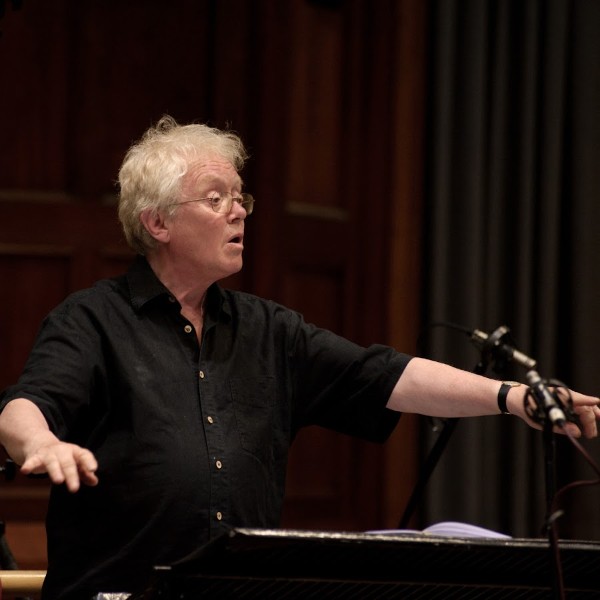
Christopher Gunning
From its start on ITV on 8 January 1989 to its final show on 13 November 2013, Agatha Christie’s Poirot was groundbreaking television. Over 70 episodes in 13 series, the man with the ‘little grey cells’ continued to find the guilty party amidst all the red herrings.
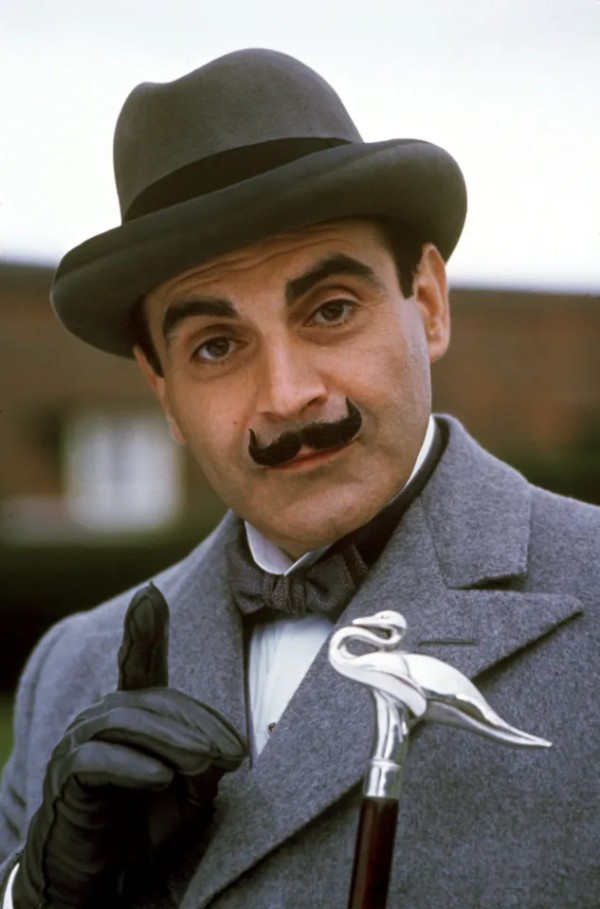
David Suchet as Poirot
Over the opening titles, designed by Pat Gavin, came that definitive saxophone line, against a 1930s style collage in an Art Deco–Cubist style. A moustache, a man’s profile, a smoking Battersea power station, a streamline-style train, a biplane, a magnifying glass, a pistol, and Poirot himself in a train window all flash past. Finally, in a set of spotlights (as if he would be anywhere but in the centre of them), Poirot departs, with his hat, his cane, and his distinctive way of walking. Anytime he’s shown in the credits by himself, his face is obscured by an upside-down triangle, as if we might be observing him but will never know him.
Poirot – Opening Sequence
Each episode of Poirot used the basic theme music, but it was changed as necessary to fit the situation. If the episode was set in the Middle East or in Argentina, at a Victory Ball or in a darkened room, on a train or on a country weekend, the music was made to fit the situation.
Gunning said that melody was crucial to his thinking as a film composer, and ‘I have always strived to embody the essence of a film by using themes or motifs which then go on to accompany the various characters and plot developments’.
In compiling a selection of his music for a 2010 Chandos recording, Gunning put together the many different varieties of Poirot music he had written over the years to create the Poirot Variants. And, like a true follower of Agatha Christie’s memorable character, he waits until the end to give us the theme. Gunning wrote this about the work:
First there is a short orchestral introduction in which we might imagine Poirot creeping about in a darkened room, and then, when the solo saxophone enters, we are suddenly in Argentina with a tango. The next section, Pursuit, depicts Poirot chasing a criminal, and this is followed by a slow waltz – Poirot is in love! Our detective then embarks on an excursion, bright and perky for the most part, but becoming increasingly dramatic – does he catch the criminal? Maybe, because now we hear the theme in its more usual guise, with a triumphant ending.
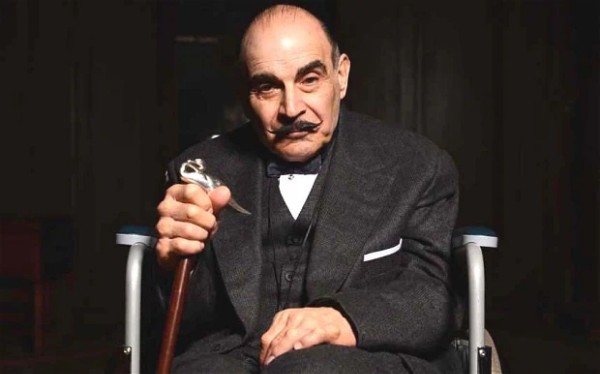
David Suchet as Hercule Poirot in Curtain, the last Poirot episode
Christopher Gunning: Agatha Christie’s Poirot: Poirot Variants (Martin Robertson, alto saxophone; BBC Philharmonic Orchestra; Rumon Gamba, cond.)
Rather than writing a theme-and-variations set, Gunning has reversed the process and given us a variant-and-theme. Rather like how a mystery writer works….
For more of the best in classical music, sign up for our E-Newsletter