The marvellous German violist Tabea Zimmermann has spent over four decades redefining the role of the viola, transforming the instrument from an orchestral workhorse into a solo instrument of profound expressive power. Her name is synonymous with virtuosity and innovation as she stands as a guiding light in the evolving landscape of classical music.
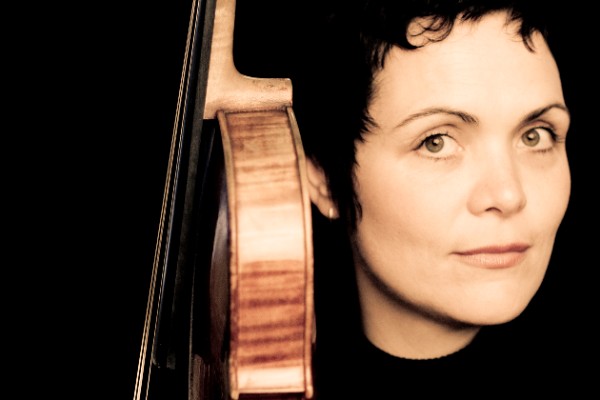
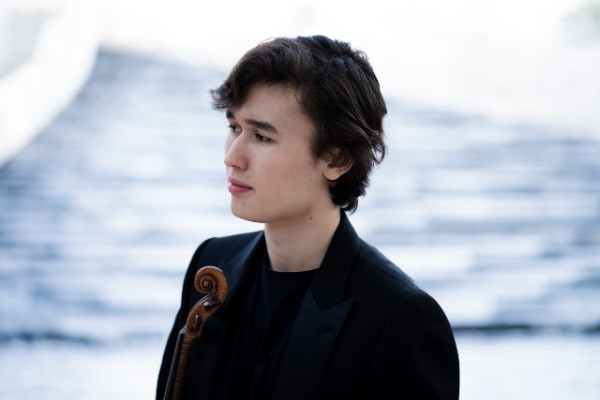
Tabea Zimmermann © Marco Borggreve
Born on 8 October 1966, her journey was marked by early triumphs, prestigious awards, and a relentless commitment to new music. Her approach to classical music is rooted in the belief that the art form must evolve while remaining anchored in its emotional and intellectual depth.
To celebrate her birthday, let’s delve into her perspective on the future of classical music while showcasing some of her most iconic performances and recordings.
Tabea Zimmermann plays Stamitz: Viola Concerto in D Major, Op. 1 (Concours de Genève 1982)
Bridging Tradition and Modernity
In a 2025 interview, Tabea Zimmermann articulated her convictions. “Classical music,” she said, “is not a museum piece; it is a living dialogue between past and present. We must climb every mountain to find new ways of expression while honouring the soul of the music.”
Zimmermann sees the future of classical music as one where accessibility, education, and innovation converge to engage new audiences and nurture young talent. This particular philosophy drives her work, whether performing Bach or premiering contemporary works.
Critics have echoed her optimism, but they also noted the challenges. The Guardian praised her ability to “bridge the gap between tradition and modernity by expanding the viola’s voice in a genre often dominated by violins.”
Tabea Zimmermann plays Ligeti: Sonata for Solo Viola, “Hora lunga”
Pushing Boundaries
For Zimmermann, the future of classical music lies in artists who dare to push boundaries while remaining deeply human. This sentiment reflects her role in commissioning works from composers like György Ligeti, Wolfgang Rihm, Heinz Holliger, and Georges Lentz, ensuring the viola’s repertoire grows in scope and ambition.
As chair of the Ernst von Siemens Music Foundation Board, Zimmermann strongly supports new compositions and young artists. As she explained in 2020, “we need to give composers the freedom to experiment and audiences the chance to discover. That’s how we keep this art alive.”
Her visions extend beyond performance and commissions. As a professor at the Frankfurt University of Music and Performing Arts since 2023, she emphasises personal growth over technical perfection. “I don’t want students chasing virtuosity for its own sake, as the future of this music is authenticity. It’s finding your voice, not mimicking others.”
Paul Hindemith: Der Schwanendreher (Tabea Zimmermann, viola; Bavarian Radio Symphony Orchestra; David Shallon, cond.)
Embracing Diversity
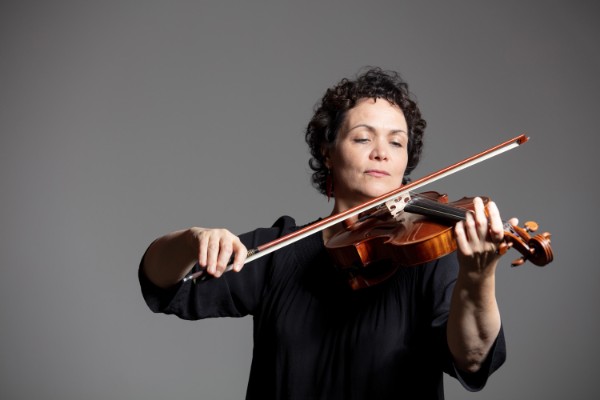
Tabea Zimmermann
Critics are frequently highlighting her role in making classical music more inclusive. A 2025 Gramophone review of her Schumann and Brahms recordings noted, “Zimmermann’s warmth and clarity invite listeners of all backgrounds into the music’s emotional core, proving that classical music can speak universally if performed with such conviction.”
Her work with the David Shallon Foundation, founded in memory of her late husband, further underscores this commitment, offering young musicians opportunities to develop their craft.
Zimmermann’s vision is clear. Classical music must embrace diversity, new voices, and bold experimentation to thrive in the 21st century.
Tabea Zimmermann plays Kurtág: In Nomine – all‘ongherese
Rooted and Revolutionary
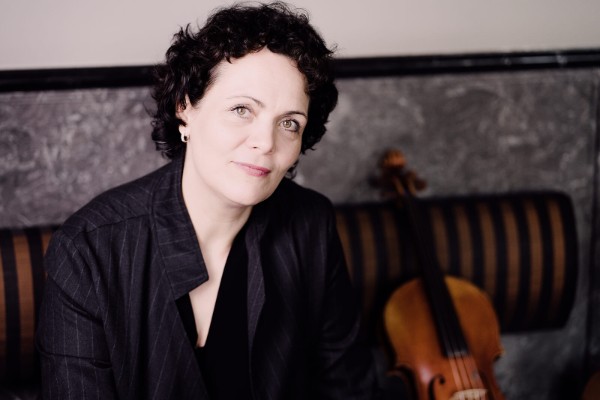
Tabea Zimmermann
Zimmermann’s contributions, through performances, recordings, and advocacy, point to a future where classical music is both rooted and revolutionary. As she told competitors at the 2025 Concours de Genève, “don’t aim for perfection; aim for conviction. That’s what moves an audience.”
Zimmermann is often seen as a model for the evolution of the genre. A 2025 New York Times feature on her Saint Paul Chamber Orchestra partnership noted, “Zimmermann’s leadership shows how classical music can remain relevant; by embracing new works, fostering collaboration, and teaching with heart.”
Tabea Zimmermann’s career is a testament to the viola’s untapped potential and classical music’s enduring vitality. Bridging eras and genres, her vision for the future is one of growth.
“We must keep exploring, teaching, and listening. That’s how classical music will thrive.”
For more of the best in classical music, sign up for our E-Newsletter