Heinz Holliger, born on 21 May 1939 in Langenthal, in the canton of Berne, is one of the most versatile musical personalities of our time. A conductor, composer, oboist, and pianist, Holliger has never stopped searching for the limits of human experience.

Heinz Holliger – Essentials (Deutsche Grammophon)
Holliger achieved worldwide recognition and fame as an oboist by performing and recording some of the earworm pieces from the Baroque and Classical periods. Yet, Holliger has always been a fierce advocate of contemporary music.
As a performer and composer, he has pushed the envelope by exploring extended techniques for the oboe. To celebrate his birthday and his achievements, let us explore a couple of seminal works inspired by and created by Holliger.
Heinz Holliger performs Berio: Sequenza VII (for oboe)
Virtual Polyphony
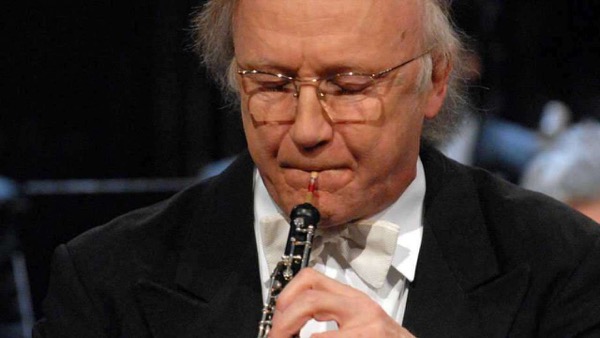
Heinz Holliger
In fourteen Sequenze, written between 1958 and 2002, Luciano Berio explored the resources of selected instruments in solo pieces. In his Sequenza VII, composed for Heinz Holliger in 1969, Berio discovers completely new sound spaces and colours for the instrument without relying on serial music.
Berio was looking to bring out the “virtual polyphony” contained within monophony, and in essence, he explored the same aspects as J.S. Bach in his Sonatas and Partitas for solo instruments.
Sequenza VII pivots around the pitch “B natural,” and presents multiple fragments that traverse the entire range of the oboe in order to investigate unaccustomed sonic constructions and playing modes. Berio, with Holliger in mind, provided the foundation for a completely new virtuosity.
Heinz Holliger performs Holliger: Studie über Mehrklänge
A New Language
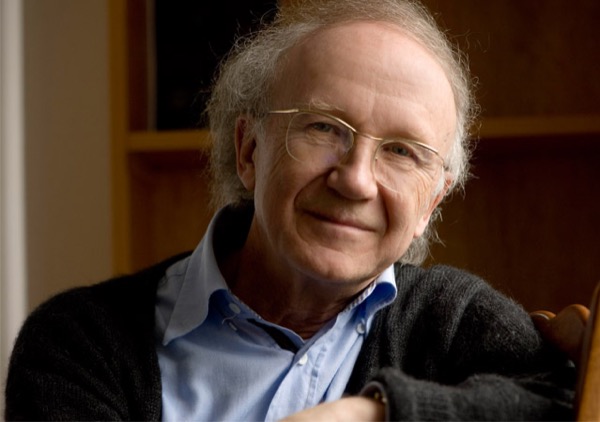
Heinz Holliger
In wind instrument terminology, a multiphonic is a sonority produced which is perceived as a mixture of several tones. In 1971, Holliger presented his Study in Multiphonics, a composition that unfolds as a series of long phrases and continuously changing multiphonics.
Specifically for this work, Holliger developed a notational system which looks very much like a tablature. As such, he indicated the enormous multiphonic possibilities of the oboe, ranging from double harmonics to the most complex pitch combinations.
Holliger also provides instructions for circular breathing, that is, when the music is to be played without interruption. This involved pressing out air without exhaling and without changing the tone quality or intonation, while simultaneously breathing through the nose.
Isang Yun: Piri (Heinz Holliger, oboe)
Tradition and Avant-Garde
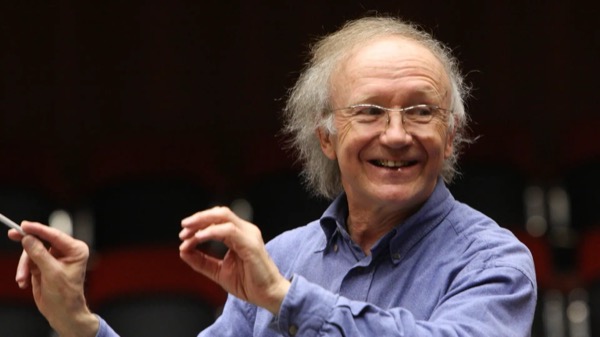
Heinz Holliger
In his music, Isang Yun explores aesthetic and philosophical issues relating to Asian traditional music and Western avant-garde compositional procedures. Born in Korea but musically educated in Europe, Yun dedicated a number of compositions to his good friend Heinz Holliger.
Piri, composed in 1971, references the traditional Korean oboe. Three main types of various sizes are employed in different cultural and social contexts, but the instruments all have a broad tonal range and uncommon flexibility and expressivity in common.
Isang Yun’s composition became a paradigm for the interaction of an East Asian sound experience and European methods. This one-movement work is designed in two parts, as a gradually densifying character of nervously shimmering elements proceeds into a section that has been described as a prayer.
Heinz Holliger: Cardiophonie
Pulse and Breath
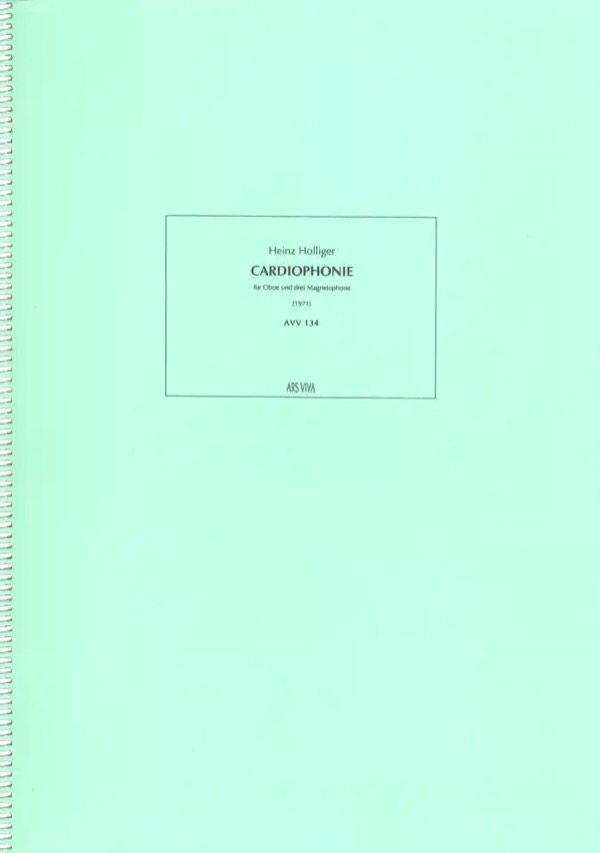
Heinz Holliger: Cardiophonie für Oboe und drei Magnetophone (1971), Ars Viva AVV 134
Originally written for oboe and three tape recorders, Cardiophonie (1971) turns the performer’s own body into the core of the musical process. In short, the performer’s heartbeat controls the music.
The performer’s pulse is amplified, recorded, and fed back through loudspeakers and tape loops. As the performer hears his own pulse becoming faster, it affects the playing and breathing. Holliger himself described it as a closed feedback loop between body and music.
As perhaps the greatest oboe virtuoso of his generation, Holliger revolutionised the instrument, and he helped to redefine what a musical work could be. He transformed the oboe from a lyrical instrument into a vehicle of sonic experimentation and expanded the boundaries of contemporary music itself.
For more of the best in classical music, sign up for our E-Newsletter