After a car accident during his tour in China, Canadian pianist Martin Mayer wasn’t sure if he would ever play the piano again.
‘Within seconds: immense agony. Left hand – dislocated 5th finger jutting outward at a 90° angle. Right hand – sprained 4th finger.
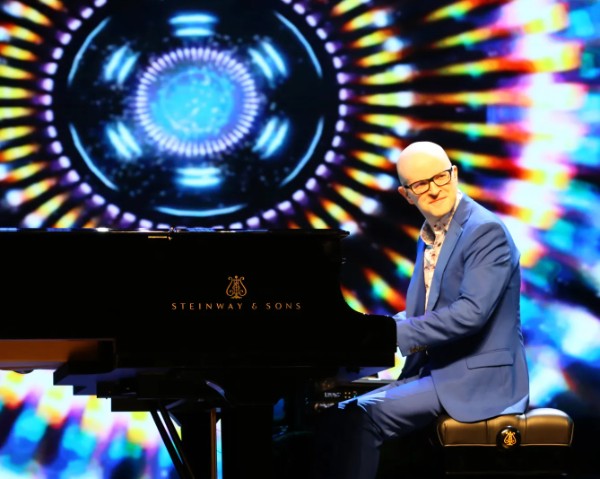
Martin Mayer in concert
What followed [in the ER in Beijing]: X-rays, local anaesthesia in both hands, warm compresses, injections, a rush of documents – because I had seven hours before an international flight and two more airports to navigate. Nothing touched the pain or the anxiety. I was alone and vulnerable, in a place where only the hotel staff spoke English. I made both flights, collapsed into my lay-flat seat, and awoke what felt like five minutes later in Vancouver.’ – Martin Mayer
This was only the beginning of a lengthy search for diagnosis and treatment, involving around 233 medical appointments, misdiagnoses, delays, inconsistent care, and multiple specialist consultations. It took nearly four years to obtain a diagnosis: the impact of the road accident had compressed the thoracic outlet – the space between Martin’s first rib and collarbone where veins, arteries, and nerves travel into the arms and hands. Surgery to remove the rib was the only solution.
Unable to play, Martin endured a deep rupture in his identity as a musician, further heightened by the uncertainty of whether he would ever return to the piano.
What nobody tells you about an odyssey like this is just how much it impacts your mental health and sense of self and worth. More than once, I was ready to walk away from everything. Music, which had defined me for nearly three decades, became something I couldn’t even listen to. Too painful a reminder of what I might never get back.
But he is back, performing and composing, and in 2025, he released The Solo Piano Collection, the culmination of some 30 years performing, and his most personal and best solo piano works.
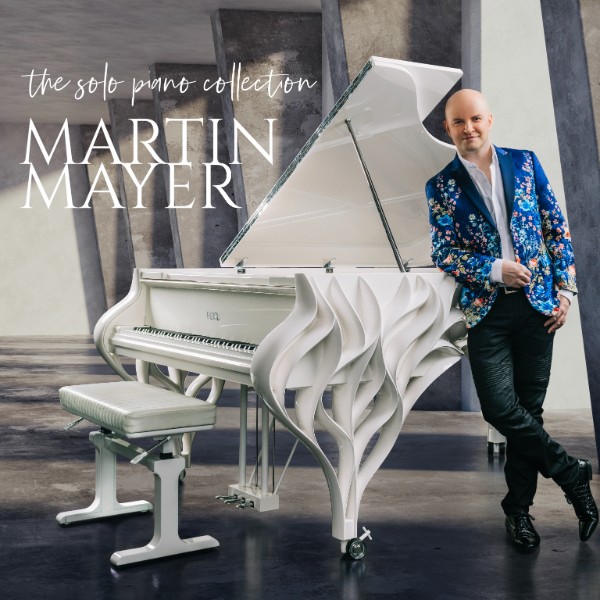
I caught up with Martin to find out more about The Solo Piano Collection and the motivation and inspiration behind its creation.
What inspired you to bring together these sixteen works into The Solo Piano Collection, and why was this the right moment in your career to release them?
I wanted to put together this album as a representation of the best solo piano pieces I’ve written over my 30-year career. It’s hard to believe it’s been that long since I wrote my first song, and these pieces certainly have a lot of meaning to them for me. Whether it’s songs I wrote earlier in my career or ones I wrote over the past few years, it’s truly me at my best. It was the right time now to release them as a celebration of the arduous medical journey it took to get back to the piano after a motor-vehicle accident took me away from it for four years.
Many of the pieces are deeply personal, such as Heart of an Angel, written for your mother. How do personal experiences shape your compositional process?
I think that usually depends on where I am when I am writing something. For example, Heart of an Angel was written on stage in China after a soundcheck on my first concert tour there in 2001. I was behind a beautiful 9’ Yamaha Grand Piano and really just wanted to keep playing. The other musicians and crew had left for lunch, and I just sat by myself in this massive theatre just playing. New Beginnings is particularly special to me, because it’s the first piece I wrote when I got back to the piano after my 233 medical appointment journey. That piece needed to have a vulnerability and sombreness to it, and then morph into a positive direction – where you see the ‘new beginnings’ beyond where you are. And then the power of the theme at the end, to where I’ve made it, and I’m beyond the pain and suffering, and am back and enjoying playing and writing again. I essentially enjoy being a storyteller: my voice just happens to be my piano!
Martin Mayer – “HEART OF AN ANGEL” – Featuring Charlie Bisharat
You’ve mentioned wanting the sheet music to reflect exactly how you perform each piece. Why was it important to capture those performance nuances on the page?
When I was studying classical piano in my formative years, I knew I would never be a classical pianist. I enjoyed the repertoire, but I was listening more to Elton John, John Williams, David Foster and the like. I wanted to learn how they played and what they played. So, I was excited to buy sheet music and listen to their records to learn the cool things they had done. Imagine my surprise when the things that made their performance unique weren’t captured in the sheet music. So there was always a massive disconnect between what was on the recording and what was in the sheet music. I wanted The Solo Piano Collection album and sheet music book to be companions to each other: if you listened to the album, you would see the sheet music exactly as you heard it, and vice versa. This way, whoever may be enjoying either one, they get the version of how Martin Mayer, the composer, intended it to be performed, and how I, as Martin Mayer the artist, perform them. It is the most personal project I’ve done and includes all the stories of how each song was inspired and written in the book.
Your music blends classical tradition with modern neoclassical storytelling. How would you describe the musical influences behind this collection?
I would say that influence is from the various genres I’ve always liked: classical, new age, pop, world, jazz. I’ve always liked the richness of using various styles, methods, structures and harmonies, so I bring that musical palette into anything and everything I write. And certainly, writing for solo piano is very different from writing a piano piece that will then be accompanied by other musicians. It’s far more intimate.
Several works evoke specific places – like Prague or Positano. How do travel and location influence the mood and structure of your compositions?
Sometimes it’s the visuals I see in something rather than personal experiences. In Prague Sunrise, the arpeggiated chords in the left hand reflect the gentle waves of the Vltava River at sunrise; in contrast, the left-hand rhythms in Positano are the waves of the ocean as you’re looking towards the town from the water. And In the Arches of St. Vitus, the very beginning, before the melody is introduced, reflects the whispers you hear entering that amazing cathedral. It’s the voices of people visiting it at the time I was there, or the silent echoes of all this 14th-century cathedral has witnessed in its chambers since then. So it can be a combination of what I see, feel, imagine or something that otherwise strikes me.
After overcoming a serious injury that affected your hands, how did returning to the piano change the way you write and perform music?
Well, the first thing I did was relearn how to play the piano. Not because I had to, but because I wanted to address the things I needed to improve. We spend so much time learning how to play the piano, but not how to take care of the hands, arms and body that allow that incredible artistry to come alive. I’ve retrained my muscles through Functional Strength Training, I warm up by stretching extensively, I use a massage gun, and I do the same in between playing and practising, and afterwards as well. Then I make sure to take care of my mental health, too. I enjoy the journey of playing so much more now. And it’s incredible how sitting on a piano bench at 1” too high or too low can make such an incredible difference. I also recognise when my hands might feel tired, that I’m not using my back muscles enough. I savour playing and writing now as something that I enjoy and leave the ‘goal’ of being on stage or recording something to be a natural progression, as opposed to something I’m specifically working towards.
For pianists who are discovering your music for the first time, what do you hope they feel or learn when they play these pieces themselves?
I hope they enjoy learning to play the songs as much as I have enjoyed writing them. The great thing about instrumental music is that it is open to interpretation. By opening the book, you have the chance to read the story behind each piece or skip that part and go right to the song. When you do the latter, you allow the title to give you enough information about what the piece is about, but the rest is open for interpretation. At the end of the day, I’m just glad that a piece of mine might find itself on someone else’s piano and be played by another artist, and hopefully they are inspired by it in some way.
Is there a particular piece in the collection that feels most representative of who you are today as an artist?
All of them do, of course, but I would say that Prague Sunrise, The Homecoming, New Beginnings, The Torch, In the Arches of St. Vitus, and T.C. are more reflective of my current writing because they were written in the last few years leading up to the release of the album. Indeed, New Beginnings was the first piece written at the piano when I returned from my harrowing ordeal. So you get the full picture of my writing over the last 30 years.
How do you balance accessibility for pianists with the expressive depth and technical detail that your compositions require?
That’s a great question. When I was listening to Elton John or learning the scores of John Williams, it was at a young age when I didn’t fully understand – or yet know – the methodology of how these incredible pieces of music were put together. But I appreciated the complexity, and was inspired to learn to know those tunes, the styles, and the techniques by seeing them on paper. Then, when I was at a place where my technique and learning were far enough along, I was able to truly play the pieces and understand them.
Looking ahead, do you see The Solo Piano Collection as a culmination of your journey so far – or the beginning of a new chapter in your music?
Perhaps a bit of both? Some of the earlier pieces I wrote might be a culmination of the journey, with the newer ones as the beginning of a new chapter in my music. Certainly, this forthcoming chapter will be called New Beginnings. Maybe a piece I should write and reflect on could be called Journey ‘til Now?
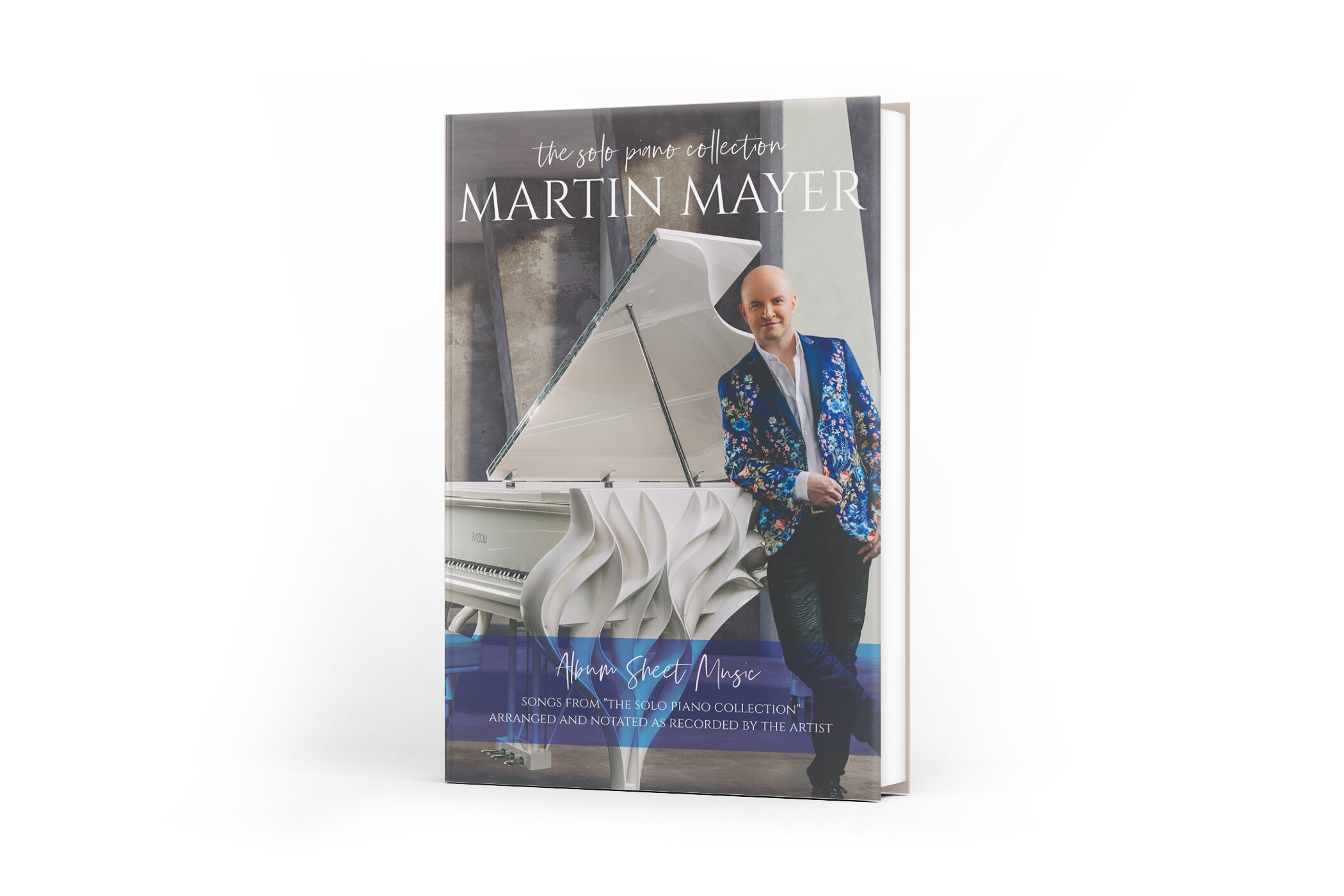
The Solo Piano Collection is available as sheet music in paperback format and as a digital download. The album can be streamed from all major platforms.
https://www.martinmayermusic.com/
For more of the best in classical music, sign up for our E-Newsletter