Pianist Shannon Wettstein invites audiences to discover a century of Italian piano music, connecting historic classics with cutting-edge contemporary works. “For me, it’s about taking risks. I love guiding audiences into uncharted territory,” Wettstein explains. Having premiered over 450 pieces, she has performed at venues like Lincoln Center, the Los Angeles Philharmonic’s Green Umbrella Series, the Fort Worth Modern Art Museum, and Chicago’s Constellation. Steve Smith of The New York Times described her concert at The Stone as “full of subtleties no recording could capture, a reminder of why we attend live performances.”
Her performances have taken her to venues like Hong Kong’s City Hall, Bogotá’s Matik Matik, and Cremona’s Camerata in Italy. She has received awards from the National Endowment for the Arts, American Composers Forum, and Chamber Music America. Previously, she was the pianist for Boston’s Auros Group for New Music and Minnesota’s Zeitgeist New Music; she continues to work with innovative musicians such as saxophonist Kyle Hutchins, flutist Elizabeth McNutt, the Mivos Quartet, and the Fonema Consort. Her teachers include Sequeira Costa (University of Kansas), Stephen Drury (New England Conservatory), and Aleck Karis (UC San Diego), with additional guidance from Claude Frank and Ben Zander. She has taught at Michigan State University, St. Cloud State University, Augsburg University, and Bemidji State University. She also hosts the podcast Dr. Avant-Garde, which explores new directions in 21st-century music.
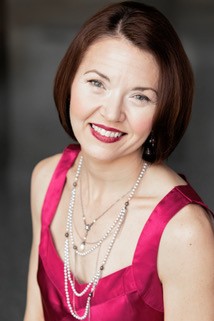
Shannon Wettstein © Elle Logan
Her latest album, Con Grazia, which means ‘with grace’, offers a broad survey of Italian piano music from nearly a hundred years. The program includes nine works from the 1930s to 2018, featuring pieces by Giacinto Scelsi, Luigi Dallapiccola, Luciano Berio, Franco Donatoni, Salvatore Sciarrino, and modern composers like Sonia Bo, Silvia Bianchera, Ivan Fedele, and Giuliano Bracci. Wettstein explains, “Each of these pieces exists in a space where old and new collide. They are connected by their respect for the past, whether through direct quotation, formal inspiration, or philosophical kinship.” Wettstein’s fascination with Italian music grew from her specialisation in avant-garde and experimental repertoire. “Important early influences were the works of Luciano Berio and Franco Donatoni. Knowing they were teachers, I sought out their students and discovered new works by living composers in Italy,” she says. Her research at the Fondazione Giorgio Cini in Venice allowed her to learn new compositions and form lasting friendships with many composers. “I discovered that Italian music of the last 100 years has been experimental and rebellious, yet deeply connected to classical tradition, poetry, and philosophy,” Wettstein reflects. “This balance is what drew me to the pieces for this album. Music can be uncompromisingly experimental and rooted in a deep love of tradition at the same time.”
The album title comes from the first track, a movement from Giacinto Scelsi’s Suite No.5. Wettstein chose the name to challenge assumptions about avant-garde music. “Too many assume this music lacks subtlety or the grace of humanity. The works on this album are full of nuance, and I want listeners to experience that,” she says. Scelsi’s piece is a polytonal dance with major and minor elements interacting in four-bar phrases, creating a lively, somewhat unpredictable character. Dallapiccola’s Quaderno Musicale di Annalibera employs the B-A-C-H motif and contrapuntal canons, blending lyrical serialism with classical clarity. Giuliano Bracci’s Canto Notturno reimagines Schubert’s Der Doppelgänger, allowing a melody to emerge gradually from clusters, which Wettstein compares to Michelangelo revealing a sculpture from marble. Sciarrino’s Anamorfosi combines elements of Ravel and American musical theater in a playful collage, while Berio’s Wasserklavier evokes a memory of Brahms through modern idioms.
When asked how she interprets references to past music without creating derivative works, Wettstein emphasizes the individuality of each composer. “No art is created in a vacuum. Each of these composers has a clearly defined voice. Donatoni uses trills and mordents to create a playful effect unlike any Baroque keyboard work. Their knowledge of the classical canon forms a foundation for music that is entirely original,” she explains.
Italian modernism is rarely featured in mainstream programs, but Wettstein hopes audiences will connect with its evocative power. “Like Italian food, film, fashion, or literature, this music is an intensely human experience, not the purely cerebral stereotype of some avant-garde works,” she says.
Looking forward, Wettstein has several solo projects in development. Her “Next Phase” Italy project focuses on 21st-century works, many for prepared piano, with an emphasis on women composers. This overlaps with her Women of the World project, featuring works by women from every continent except Antarctica. Both programs are modular, allowing her to emphasize specific regions or thematic concepts such as water or the seasons. She is also envisioning an Opera project, featuring piano works that are operatic or inspired by the stage, sparked by Brian Ferneyhough’s Opus Contra Naturam. “I love creating singing lines, orchestral colors, and theatricality. I cannot wait to explore this music fully,” she says.
With Con Grazia, Shannon Wettstein offers listeners masterful interpretations and a window into the vibrant evolution of Italian piano music. Each program she curates, past, present, and future, reflects her commitment to exploration, connection, and revealing the enduring magic of sound across centuries.

Con Grazia
Performed by Shannon Wettstein
Label: Neuma Records
For more of the best in classical music, sign up for our E-Newsletter