
Maria Callas stands at the heart of twentieth-century operatic interpretation as a magnetic, divisive and transformative force. To speak of Renata Tebaldi, Joan Sutherland, or Elisabeth Schwarzkopf is, inevitably, to speak of them in relation to her, for each represents a contrasting answer to the artistic questions Callas made urgent.
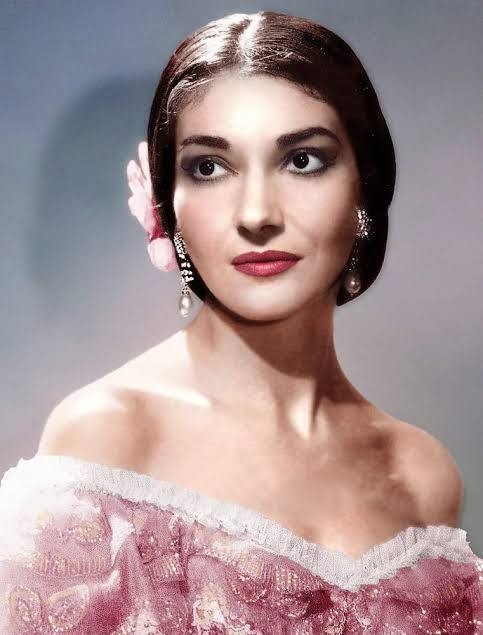
Maria Callas
The presence of Maria Callas reframed the interpretive landscape. What should opera express? Where does beauty give way to truth? Must the voice serve drama, or can drama serve the voice?
Callas did not simply sing roles, but she redefined what it meant to inhabit them. To celebrate her birthday on 2 December 1923, let’s explore the gravitational field she created in relation to Tebaldi, Sutherland, and Schwarzkopf.
Maria Callas sings Bellini: Il pirata, “Oh! S’io potessi”
Vocal Dramaturgy
What made Callas the centre of so much debate was not her voice alone, but the way she turned singing into acting by vocal means. For Callas, technique was a psychological instrument. Every colour, every accent, every articulation carried emotional intent.
She approached each role as a character with a beating heart and a vulnerable mind, and her hallmark was vocal dramaturgy. She could darken the sound to reveal fear, thin it to a whisper of doubt, or unleash its metal to express rage or defiance.
Her ability to make drama audible was so striking that critics began speaking of her performances less as concerts and more as events. “Callas as Norma,” “Callas as Medea,” “Callas as Violetta” became categories unto themselves, almost separate from the works.
Maria Callas sing Puccini: Tosca, “Vissi d’arte”
Drama Yielding to Beauty
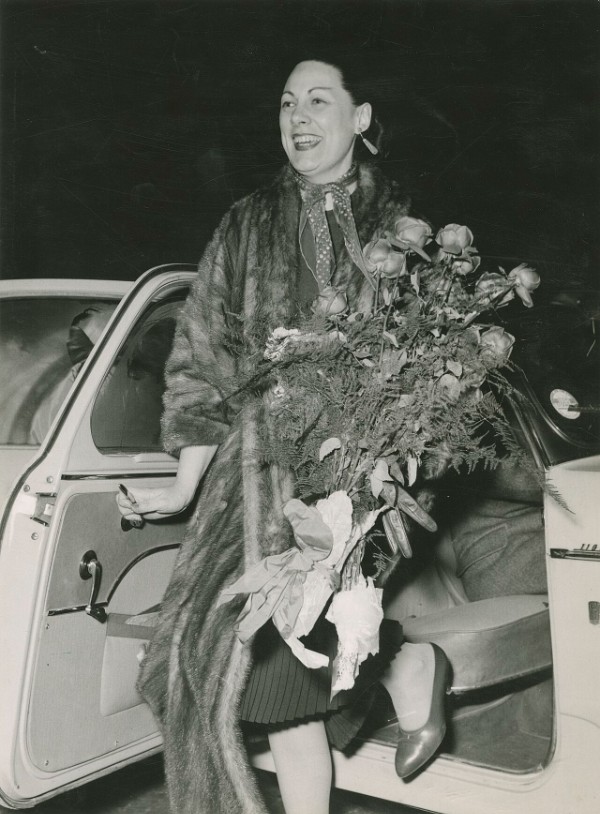
Renata Tebaldi
If Callas embodied drama, Renata Tebaldi embodied beauty. Her voice was famously described as “golden” and “opalescent,” adjectives chosen not by accident but because her sound seemed made of light rather than flesh.
Where Callas carved emotional detail into each phrase with almost surgical intent, Tebaldi allowed the line to flow with serene continuity. To be sure, Tebaldi’s interpretive philosophy offered an alternative to Callas’s visceral intensity.
For Tebaldi, emotional truth emerged not from emotional specificity but from the sheer loveliness of the vocal line. She did not expose frayed vulnerabilities, but a gentler and profound humane sincerity.
The so-called “rivalry” between the two sopranos, often exaggerated by the press, in fact reveals two coexisting ideals as Tebaldi reminds us that beauty itself can be a form of emotional communication.
Renata Tebaldi sings Puccini: Madama Butterfly, “Un bel dì, vedremo”
Vocal Architecture
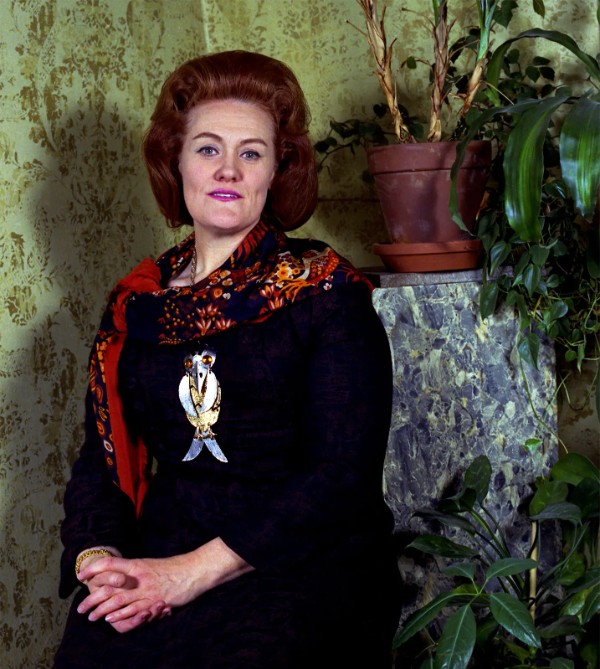
Joan Sutherland
If Callas made drama central and Tebaldi made beauty sacred, Joan Sutherland made technique her artistic compass. In fact Sutherland represents the voice conceived as a perfectly calibrated instrument. Her coloratura feats were unmatched but seemed to bloom with limitless ease.
Her bel canto revivals were rooted not in psychological realism but in vocal architecture, the sheer splendour of sound stretched across long melodic arcs. Where Callas’s “Norma” burns with spiritual agony, Sutherland’s “Norma” glows with lofty grandeur.
Yet in contrast with Callas’s insistence on textual specificity and detailed dramatic articulation, Sutherland’s diction often blurred into a velvety abstraction. Listeners who grew accustomed to Callas’s inflected, word-sensitive approach sometimes found Sutherland too generalized, too detached from character.
But this detachment was part of her philosophy as she believed that the voice itself could transcend the drama, that emotional impact could be generated through sound rather than character psychology.
Joan Sutherland sings Bellini: Norma, “Casta diva”
Precision and Poise
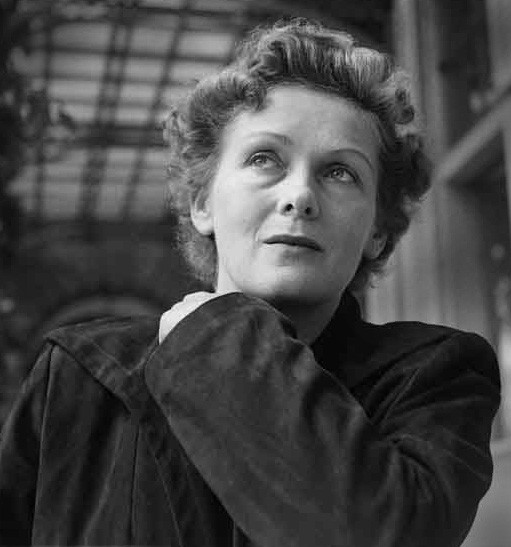
Elisabeth Schwarzkopf
Where Sutherland opposed Callas with musical abstraction, Elisabeth Schwarzkopf offered a contrasting response by focusing on intellect, textual exactitude, and stylistic elegance. Schwarzkopf’s art comes closest to Callas in its seriousness of purpose, but the paths diverge sharply.
Callas’s intensity was volcanic, instinctive, volatile. Schwarzkopf’s was controlled, curated, and exactingly precise. She approached interpretation like a chamber musician or a poet, with every phrase meticulously designed.
While Callas used colour and weight to reveal a character’s psychological fractures, Schwarzkopf sought emotion through aesthetic order. Her performances radiate a cultivated warmth, essentially a reflective intelligence. Where Callas’s characters bleed, Schwarzkopf’s observe, contemplate, and understand.
Elisabeth Schwarzkopf sings Lehar: The Merry Widow, “Vilija”
Beyond Rivalry
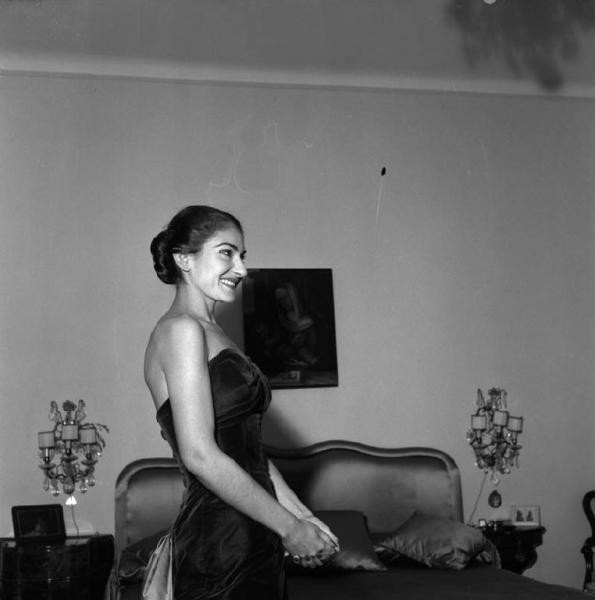
Maria Callas, 1957
Maria Callas was the catalyst who reshaped expectations. Audiences demanded drama, and singers reconsidered diction, character, and emotional truth. Tebaldi, Sutherland, and Schwarzkopf each responded by doubling down on their own artistic values.
In the end, Callas remains the solar centre not because she outshines the others in every category, but because she changed the gravitational forces of opera. She shifted expectations. She expanded the definition of interpretation, and through her, the medium became psychologically alive.
Tebaldi offered a parallel truth, Sutherland a transcendent alternative, and Schwarzkopf a cerebral complement. Yet all three exist in a dialogue with Callas. The story of 20th-century operatic interpretation is not one of rivalry but of different answers to the artistic questions that Callas made impossible to ignore.
For more of the best in classical music, sign up for our E-Newsletter





As always, there is too much mythologising of Callas, which bears little resemblance to the historical truth. Her career was relatively short compared to some of her lauded contemporaries, with once vocal crisis after another ensuing due to repertoire choices that were just too heavy for her voice. At the Metropolitan and elsewhere, it was remarked upon by contemporary critics, that her voice was somewhat lighter and insubstantial than recordings would suggest. Allied to this, a well documented history of highly variable performances, which saw her voice often crack, become inaudible and riddled with intonation issues and a well developed flapping wobble, you soon come to realise that “La Divina” was a marketing phenomenon rather than a vocal one.
If there was any genius, then it was with words alone. It’s a second or even third rate voice, married to an artistic soul for delivering meaning in text. I admit, her way with words is revelatory. However, her stage antics would be considered embarrassing to behold now. A great actor is more than relentless mugging on stage, with the same pained expression repeatedly trotted out.
Her biggest failure, alongside her wayward and somewhat poor voice, is as a musician. The oft erroneously repeated fact that she launched the bel canto revival in the 20th century is utter nonsense. In Italy and beyond, much of her core bel canto repertoire was alive and kicking, but what is unforgivable, is that she just sang the butchered scores as the rest of them at that time. There was no insistence on musical accuracy, the composers intentions. The same cuts happened, the same interpolation added etc etc. We had to wait for Sutherland, Caballé and Sills to champion the start of the renaissance in bel canto.
Each of the above singers in this tiresome, unthinking article, is infinitely greater than Callas. Opera’s answers to Taylor Swift. Being popular, does not make you great. Bad taste is fairly commonplace. She is known by some as “La Divina”, but I think her other, lesser known soubriquet, is somewhat more appropriate, “La Greca atroce”.