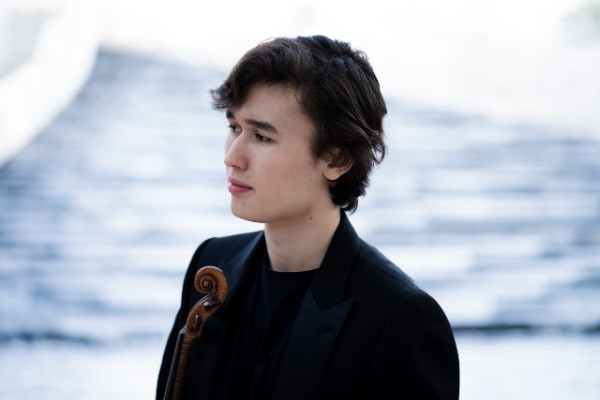
Among today’s pianists, Konstantin Lifschitz is closely associated with the music of Johann Sebastian Bach. Ever since his legendary 1994 recording of the Goldberg Variations, made when he was 17 and still a teenager, Lifschitz has been regarded as a singular Bach interpreter.
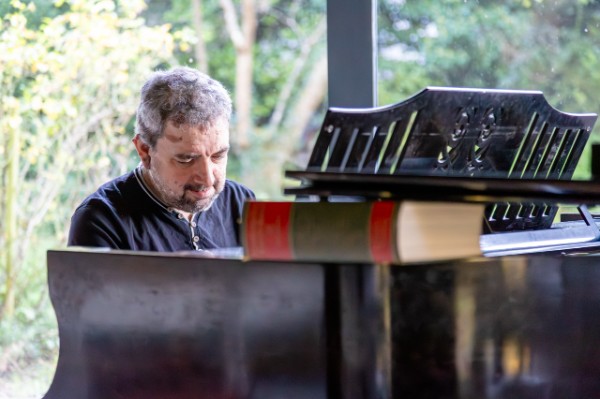
Konstantin Lifschitz
In fact, the music of Bach is not simply repertoire for Lifschitz, but it is a lifelong companion, a guiding force, and an artistic compass. His relationship with Bach is neither academic nor doctrinaire. Rather, it is rooted in curiosity, introspection, spiritual openness, and a near-architectural sense of musical design.
When Lifschitz speaks about Bach, the words “wonder,” “clarity,” and “searching” appear frequently. On the occasion of his birthday on 10 December 1976, let’s explore how his reverence and interpretive humility transform into extraordinary originality.
Konstantin Lifschitz plays Bach: “Adagio in G Major,” BWV 968
A Universe without Boundaries
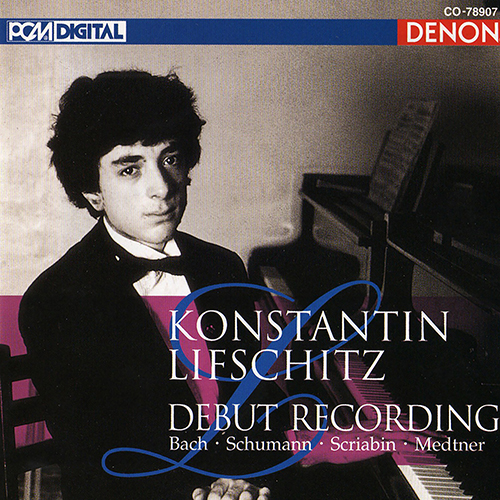
Piano Recital: Lifschitz, Konstantin – BACH, J.S. / SCHUMANN, R. / SCRIABIN, A. / MEDTNER, N. (Debut Recording)
Lifschitz has always resisted the idea that Bach should be played according to fixed rules or historical templates. For him, Bach’s music is a living universe, vast and inexhaustible. “Bach is a miracle,” he has said in interviews. “Every time you look, there is more.”
This sense of exploration is central to his musical identity. Unlike some interpreters who choose a single stylistic path, Lifschitz moves effortlessly between interpretive paths.
His interpretations can feel crystalline and transparent in one moment, and deeply expressive in the next, as though he is continually shifting the camera angle through which the music is viewed.
Johann Sebastian Bach: Overture (Partita) in the French Style in B Minor, BWV 831 (excerpts) (Konstantin Lifschitz, piano)
Transcending Time
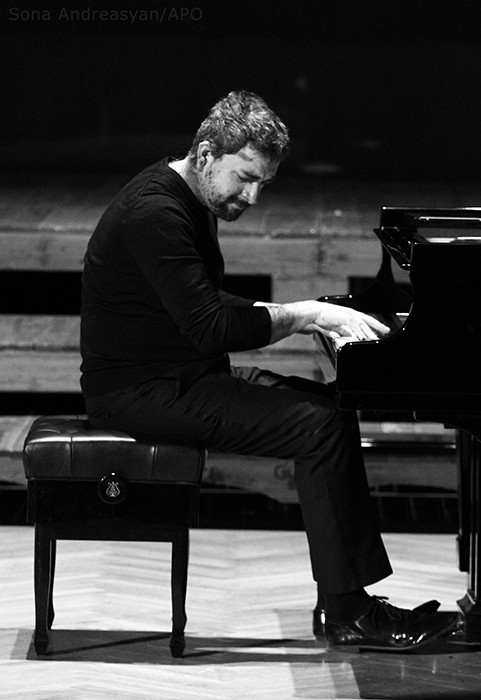
Konstantin Lifschitz
This approach reflects his guiding belief that Bach’s music transcends time, culture, and instrument. Lifschitz acknowledges the historical reality of Bach’s sound world, but he also sees the modern piano as an instrument capable of revealing new perspectives.
Instead of forcing the piano to imitate the harpsichord, he uses its dynamic range, its pedal colours, and its cantabile potential to expand on the expressive possibilities of Bach’s writing.
Yet he never indulges in excess. His control of texture and line keeps the music rooted in clarity. Even when he explores colouristic nuance or pushes a phrase toward expressive intensity, there is always a feeling that every detail serves a larger expressive purpose.
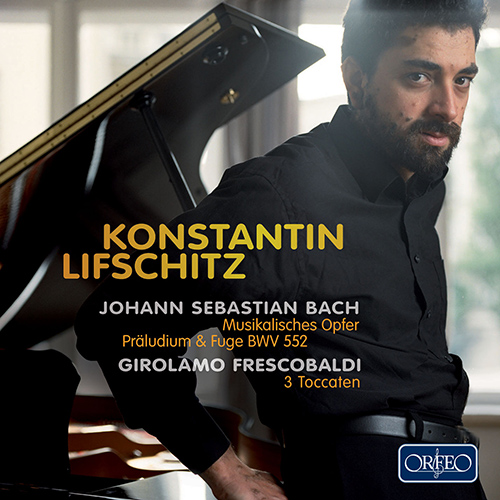
Johann Sebastian Bach: Musical Offering, BWV 1079 (Konstantin Lifschitz, piano)
Architecture in Motion
One of the most striking qualities in Lifschitz’s Bach is his sense of architecture. Each phrase is shaped with purpose, and each movement forms part of a larger whole. He builds a Bach suite or partita like a cathedral, allowing the listener to perceive both the fine details of ornamentation and the grand proportions of structure.
This architectural sensibility is especially evident in his performances of the Well-Tempered Clavier, where fugues unfold with a sense of inevitability, as though the logic of the music is being revealed in real time.
But structure alone does not define Lifschitz’s playing. Equally important is breath and the sense that music, even in something as intricate as a fugue, must feel alive. His rubato is subtle and meaningful, giving space to harmonic turns or moments of repose.
Konstantin Lifschitz plays Bach: WTC, “Preludes and Fugues C-sharp Major”
Intellect with a Human Pulse
Lifschitz is often praised for the intellectual depth of his interpretations, but this description can be misleading, as his intelligence is not dry but vibrant, curious, and creative. He constantly asks questions of the music, including what its spiritual identity is or what the emotional temperature of the movement is.
His analytical approach allows him to illuminate inner voices, clarify contrapuntal relationships, and highlight structural symmetries, yet his playing never feels like a theoretical exercise.
Emotion in Lifschitz’s Bach is expressed in refined, understated ways. In slow movements, he creates an atmosphere of contemplative stillness. The listener enters a space of gentle inwardness, where ornamentation becomes speech and harmony becomes memory. In contrast, his fast movements sparkle with energy.
Johann Sebastian Bach: Keyboard Concerto in D Minor, BWV 1052 (Konstantin Lifschitz, piano; Stuttgart Chamber Orchestra; Konstantin Lifschitz, cond.)
Evolving Poetry
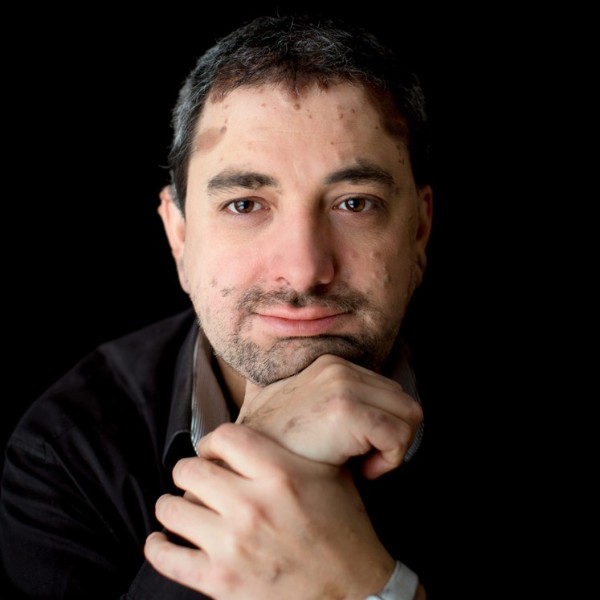
Konstantin Lifschitz
No discussion of Lifschitz’s Bach would be complete without mentioning the Goldberg Variations. His early recording remains one of the most astonishing Bach debuts of the late twentieth century.
Over the years, as he has lived with the work, his view of it has deepened. Later performances, including live recitals, show a more introspective, meditative approach. The pacing becomes more spacious, the transitions more poetic, as if the Variations are less a virtuoso display and more a spiritual odyssey.
For Lifschitz, the Goldbergs are not merely a masterpiece. They are a companion that evolves with him. Each performance becomes a snapshot of where he is in his artistic life. He plays the work not as an exhibit in a museum, but as something alive, breathing, full of human warmth.
Johann Sebastian Bach: Die Kunst der Fuge (The Art of Fugue), BWV 1080 – Fuga a 3 Soggetti (Konstantin Lifschitz, piano)
A Living Language
Today, when pianists grapple with questions of authenticity, historical style, and technical brilliance, Lifschitz offers a refreshing model. He avoids dogmatism and fashionable trends.
Instead, he pursues Bach’s music with the notion that it is large enough to contain many interpretive perspectives, and that the performer’s duty is not to impose a style but to reveal the music’s essence.
Lifschitz’s Bach is not a monument but a living language, one capable of speaking directly to the modern heart. His interpretations avoid extravagance and instead embrace honesty, transparency, and a profound respect for the composer.
For more of the best in classical music, sign up for our E-Newsletter
Johann Sebastian Bach: Goldberg Variations, BWV 988 (Konstantin Lifschitz, piano)