Composer, improviser, and saxophonist Joane Hétu has been a vital figure in Quebec’s experimental music scene since the 1980s. Her latest album, Elle a son mot à dire (She Has Her Say), released with Ensemble SuperMusique, brings together compositions written between 2001 and 2023 in a vivid, genre-defying live performance. In recent interviews with both Hétu and trumpet player Émile Fortin, I had the opportunity to explore the creative process behind this album and their views on improvisation, collaboration, and performance.
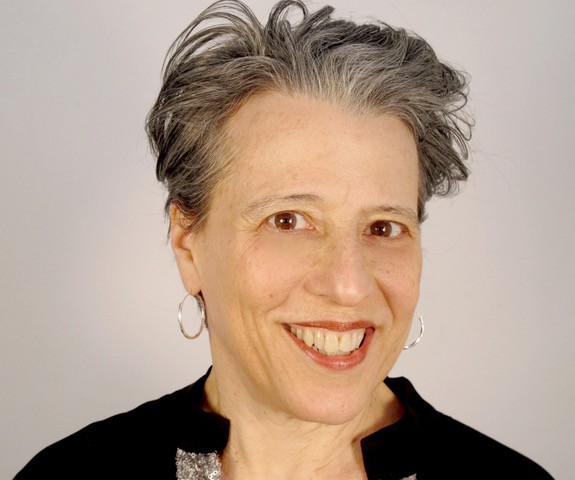
Joane Hétu © Céline Côté
The album, recorded live in May 2023, reflects Hétu’s signature blend of notated music, improvisation, and text. Though the pieces weren’t composed under a unified theme, Hétu explains that her fascination with language and expression shapes the project: “I didn’t work from a specific theme, but as the title suggests, I explored words I wanted to bring together in a single concert. It’s a unique performance built around language.”
Several of the album’s works are based on original texts, some of which have been long-held, while others are newly written. Vivante, for example, features Hétu on voice and Michel F Côté on percussion in a free improvisation based on a text from 2005 that had never been performed before. In Mot elle a, the singer’s part is fully composed, while the percussionist improvises within a set of guidelines. Other pieces, like Elle qui est-elle?, feature a hybrid form—composed structures with space for instrumental solos, including trumpet and tuba.
For Hétu, this balance between structure and freedom is essential. She describes herself as drawn to “radical improvisation”—music made without scores or directions, relying purely on listening, interaction, and spontaneity. “Improvising takes less time to prepare than a fully notated piece,” she notes, “but it requires a different kind of attention—grace, intelligence, and musicality in the moment.”
The album was created with Ensemble SuperMusique, a variable-geometry collective Hétu co-directs alongside founding member Danielle Palardy Roger. For this project, the group included seven musicians—instrumentalists and vocalists—whose diverse backgrounds and creative input shaped the sound of the performance. The concert wasn’t just about music; it was a total experience. Costumes, makeup, movement, and staging all played a role in supporting the sonic language of the pieces.
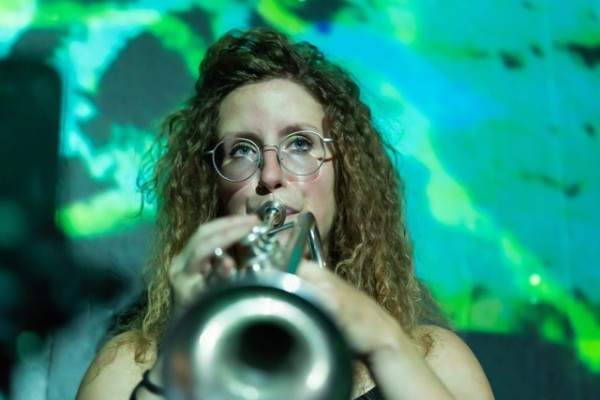
Émile Fortin
One of the performers, Émile Fortin, a classically trained trumpet player and improviser, spoke enthusiastically about the process. “We had about 18 hours of rehearsal, which is a lot for a single performance,” they shared. “Some of the pieces used small percussion or toys instead of our main instruments. The visual element mattered too—we had specific colours, costumes, and makeup. It all helped us feel that the concert was conceived as a whole.”
Émile’s exploration of new music began in graduate school, when a seminar on Vinko Globokar’s Laboratorium introduced her to performance techniques beyond traditional orchestral methods. Her musical identity developed through free improvisation, acting, movement, and performance art. Today, Émile performs in a variety of contexts, from solo work to ensemble settings, and manages their projects, which are centered on experimental and community-engaged music.
She describes free improvisation not only as a musical approach but as a way of relating to others: “It’s like a social model. Sometimes you instantly connect with the other musicians, sometimes you don’t—but you still have to listen and respond. It teaches you how to be present and relevant, just like in a real conversation.” In improvised settings, silence, restraint, and timing become as important as sound itself.
Hétu shares this deep commitment to listening, both in performance and as a composer. While her compositions often begin with texts and melodies that live in her mind for months or years, she always seeks to preserve space for interpretation and dialogue. One thing that distinguishes her work is the way she writes with performers in mind. Émile emphasised this point: “Joane doesn’t just write for the trumpet—she writes for me. She lets each musician’s personality shape the music.”
For those new to experimental music, both artists encourage live listening. “This music isn’t difficult if you allow yourself to let go,” Hétu said. Émile agreed, highlighting the energy of live interaction as a defining feature: “If you can attend a free improvisation performance, that’s where you’ll feel it—especially the moment when something clicks between the musicians.”
They both recommend the track Vivante as a good starting point. “It’s just voice and percussion, but it swings in a way that’s very immediate,” Émile said. “It almost feels like a song you’d hear on the radio, but with so much freedom.”
Beyond Elle a son mot à dire, Hétu continues to mentor and collaborate across generations, helping keep Montreal’s new music ecosystem vibrant and intergenerational. Meanwhile, Émile carries this ethos forward in their projects, including a wind trio called Williwaw, known for performances that blur the boundaries of instrument, object, and identity.
Together, Hétu and Émile exemplify the power of experimental music to create space for individuality, community, and discovery. In this album, and in their artistic lives, they remind us that sound can speak—even when words fail to convey the full meaning.
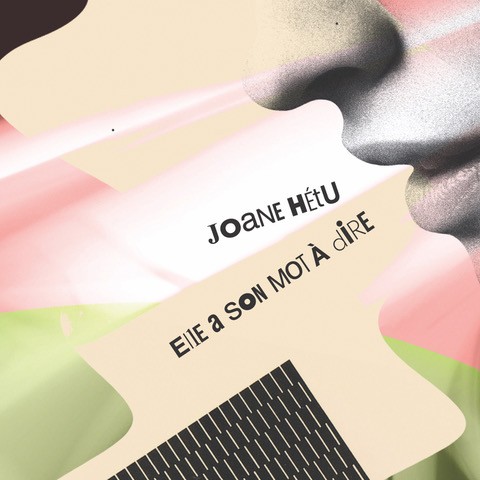
Joane Hétu – Elle a son mot à dire
Performed by Ensemble SuperMusique
Live recording from a concert in May 2023
Label: Ambiances Magnétiques / ActuelleCD
Official website
For more of the best in classical music, sign up for our E-Newsletter