Jean Sibelius (1865-1957), the great Finnish composer, is known around the world for his powerful, emotional, and deeply atmospheric music. One of the most interesting things about him is how strongly he was influenced by mythology, especially Finnish mythology.
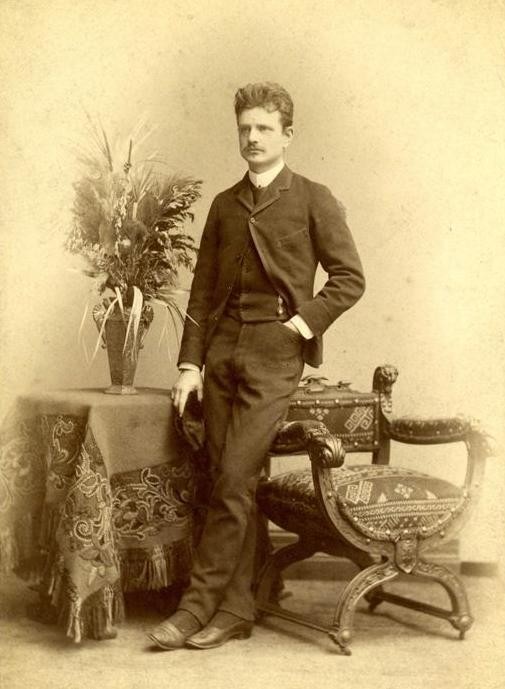
Jean Sibelius
These old stories did not just give him ideas for musical pieces. They shaped his entire way of thinking about music, nature, and Finnish identity. For Sibelius, mythology was not just entertainment. It was a source of inspiration, a doorway to ancient times, and a way to express the feelings and spirit of the Finnish people.
To celebrate his birthday on 8 December, let’s explore how mythology influenced Sibelius’ life, his artistic vision, and his most famous pieces.
Jean Sibelius: En Saga, Op. 9
When Finland Looked to Its Legends
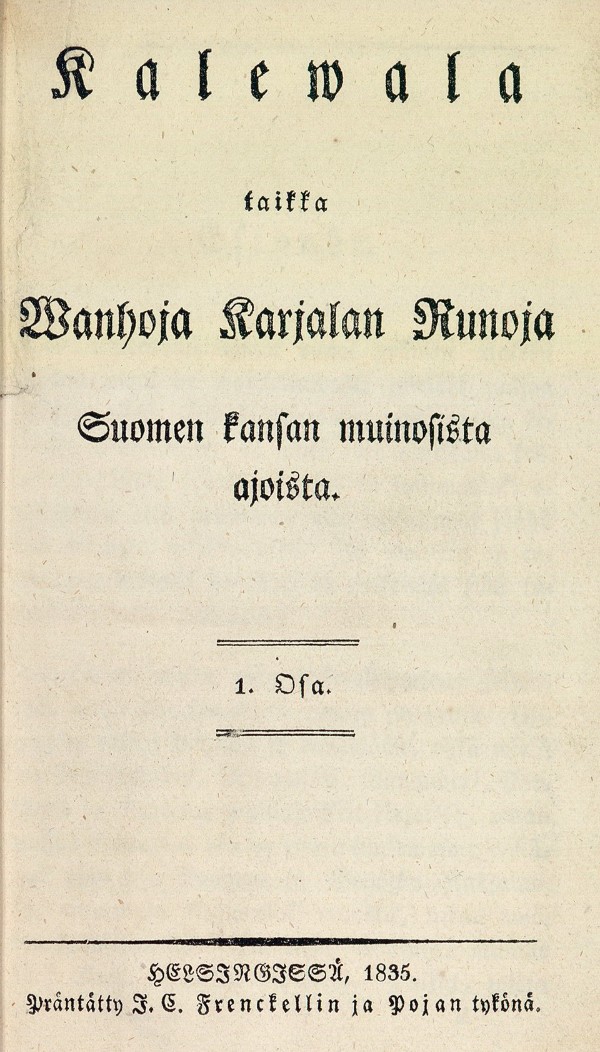
First edition of Kalevala
To understand why mythology was so important to Sibelius, it helps to know a bit about Finland during his lifetime. When Sibelius was born in 1865, Finland was not yet an independent country.
It was part of the Russian Empire, but many Finns wanted independence. As such, people were trying to define what it meant to be Finnish and what made their culture special.
Around this time, scholars and poets collected old Finnish myths and stories passed down through generations. These stories were written down in a book called the Kalevala, which became Finland’s national epic. It is a long poem filled with magical characters, heroic journeys, and mysterious events.
Jean Sibelius: Laulu Lemminkaiselle (A Song for Lemminkainen), Op. 31, No. 1 (Finnish National Opera Chorus; Finnish National Opera Orchestra; Eri Klas, cond.)
Heroes that Sparked Imaginations
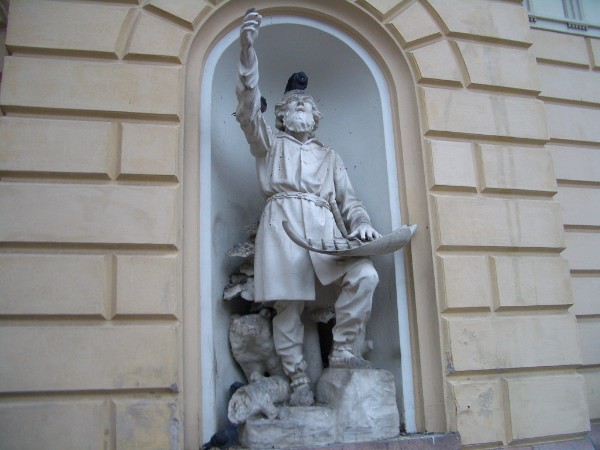
The statue of Väinämöinen by Robert Stigell (1888) decorates the Old Student House in Helsinki
Some figures in the Kalevala include “Väinämöinen,” a wise old singer and magician, “Lemminkäinen,” a brave and often reckless hero, and “Kullervo,” a tragic and angry young man. And there was “Louhi,” the powerful queen of the dark land called “Pohjola.”
These myths were fresh, exciting, and inspiring. They brought a sense of pride to Finland. Sibelius read the Kalevala when he was young, and it changed his life. He felt a deep connection to its magical world.
For Sibelius, mythology became a powerful tool for expressing the soul of Finland. It allowed him to show the world who the Finnish people were and where they came from. The stories gave him characters, emotions, and landscapes to explore through music.
Jean Sibelius: Pohjola’s Daughter, Op. 49 (Finnish Radio Symphony Orchestra; Hannu Lintu, cond.)
A Swan, A River, and a World Beyond
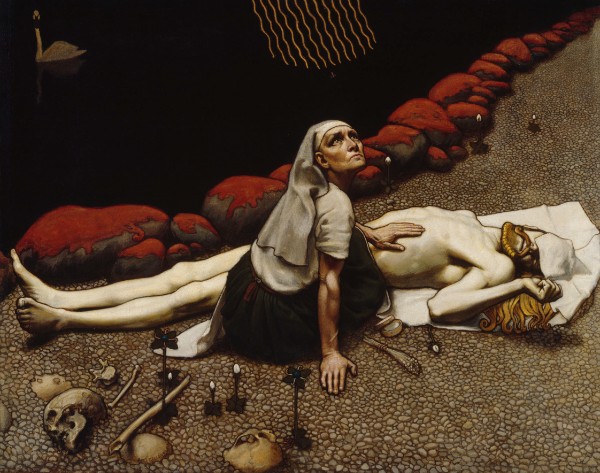
Lemminkäinen’s Mother by Akseli Gallen-Kallela, 1897
Sibelius once said that the Kalevala “opened the floodgates of imagination.” He did not see it simply as a collection of stories. Instead, he saw it as a source of rhythm, atmosphere, and emotion that could shape musical ideas. The epic’s poetic style, its repetitions, and its sense of magic all found their way into Sibelius’s works.
The most famous example of this inspiration is the piece The Swan of Tuonela. This haunting and beautiful work is part of a group of pieces called the Lemminkäinen Suite. It tells the story of Lemminkäinen traveling to Tuonela, the land of the dead. There, he sees the mystical Swan of Tuonela, a bird that swims peacefully on the black river that circles the underworld.
The music uses a soft, dark tone and a long, singing melody played by the English horn. This melody represents the swan. The orchestra around it creates a feeling of mist and mystery.
Even people who do not know the story can sense that the music describes something magical and otherworldly.
Jean Sibelius: Lemminkäinen Suite, “The Swan of Tuonela” Op. 22, No. 2
Heroes with Human Hearts
A good many works of Sibelius include characters from the Kalevala. However, he did not see them as simple heroes. Instead, he showed them as complex and human, full of fear, strength, sadness, and hope.
“Lemminkäinen,” for example, appears in several pieces by Sibelius. Sometimes he is brave and determined, and other times he is reckless and careless. Sibelius understood that ancient heroes were not perfect but real and complicated.
The Lemminkäinen Suite includes four pieces that show different parts of the hero’s life.
Together, they create a portrait of a man who is both strong and vulnerable. Sibelius liked this mix of qualities because it gave him plenty of emotional material to work with.
Jean Sibelius: Lemminkainen Suite, Op. 22 – IV. Lemminkainen’s Return (Helsinki Philharmonic Orchestra; Leif Segerstam, cond.)
Timeless Sounds
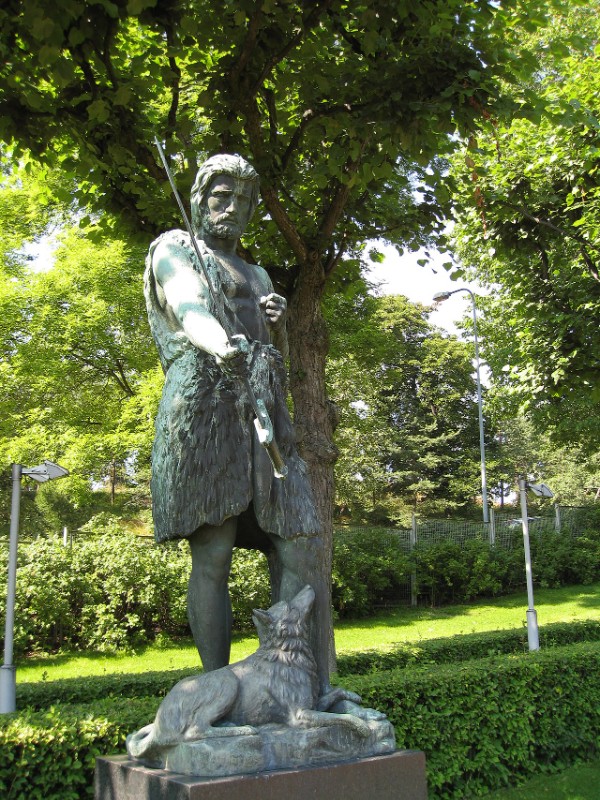
Kullervo Speaks to His Sword by Carl Eneas Sjöstrand, 1868 (cast into bronze in 1932)
One of Sibelius’ earliest major works is the “Kullervo” Symphony, based on the tragic story of the young hero Kullervo. In the Kalevala, Kullervo has a difficult and painful life. His family is destroyed, he is mistreated, and he eventually commits terrible actions and dies tragically.
Sibelius was deeply moved by this story. His symphony brings out the sadness, anger, and loneliness that Kullervo feels. It is powerful, dramatic, and full of passion. Although Sibelius later moved away from writing such openly narrative music, Kullervo shows how strongly the myths affected him in his early years.
Sibelius did not only use myth by writing pieces about certain stories. Mythology also shaped the way he wrote music. Many listeners say that Sibelius’ music feels ancient or timeless, even when they do not know the stories behind it. This is because Sibelius often used techniques that created a sense of mystery and wonder.
Jean Sibelius: Kullervo, Op. 7
The Sound of Living Myths
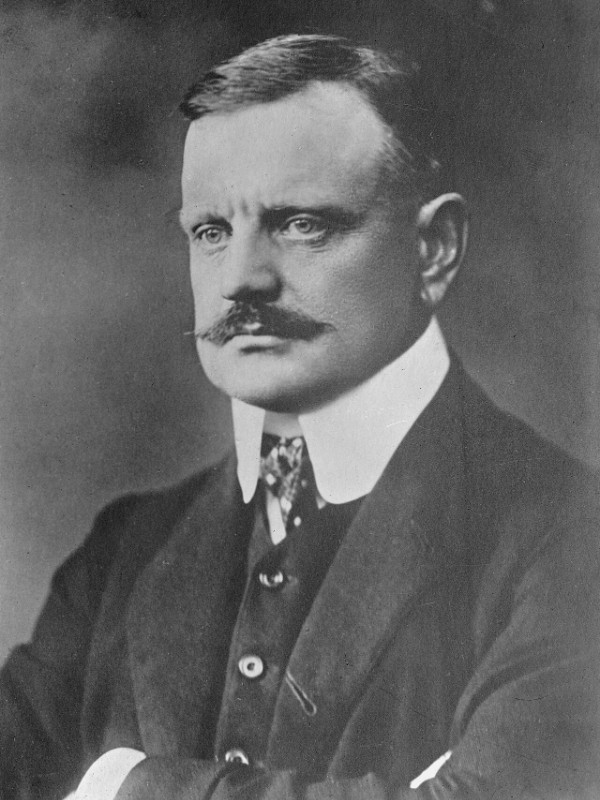
Jean Sibelius, 1913
Instead of following a clear storyline, the music of Sibelius builds a setting or mood. This is like how myths often create worlds filled with magic, not just sequences of events.
Myths often repeat ideas in different forms. Sibelius did something similar in his music. A small idea might appear again and again, but slowly change. This makes the music feel organic, like a living legend.
In Finnish myths, nature is alive and filled with spirits. Sibelius often blurred the line between natural sounds and mythical ones. His music feels like forests, lakes, storms, and spirits all mixed together. This creates a unique sound world that listeners instantly recognise.
Many myths are told in simple language but express deep truths. The music of Sibelius often appears simple at first, featuring quiet melodies and calm rhythms. But underneath, there is great complexity. This special balance is part of what makes his music powerful.
Jean Sibelius: Vainon virsi (Vaino’s Song), Op. 110 (Finnish National Opera Chorus; Finnish National Opera Orchestra; Eri Klas, cond.)
Landscapes with Ancient Voices
For Sibelius, mythology and nature were deeply connected. He often said that the Finnish landscape, its forests, lakes, and silence, felt like the world of the Kalevala. In many myths, nature is full of magic, and when he looked at a dark forest or a frozen lake, he saw not just nature but a kind of ancient spirit.
Pieces like Tapiola, written late in his life, show this connection clearly. Tapiola is named after Tapio, the forest god. The music is cold, wild, and full of suspense. It feels like standing alone in a deep forest where something mythical might appear at any moment. Even though the piece does not tell a story, it creates a powerful myth-like atmosphere.
Although Sibelius focused mainly on Finnish myths, he was also interested in deeper, universal mythological themes. He believed that all cultures shared certain types of stories about heroes, fate, nature, and the unknown. These themes appear again and again in world mythology.
Jean Sibelius: Tapiola, Op. 112
Global Reach
By using mythology in his music, Sibelius helped to create a unique musical voice that continues to influence composers, filmmakers, and musicians. His ability to build vast landscapes of sound makes his music perfect for inspiring modern artists.
For example, contemporary film composers like John Williams and Howard Shore have been greatly inspired by Sibelius’ style. They use similar techniques to create magical or mysterious atmospheres in movies. Some listeners even say that certain fantasy films, like those based on Nordic or mythical themes, such as the Lord of the Rings, owe a great deal to the sound world Sibelius created.
More importantly, Sibelius helped to make Finnish mythology known around the world. People who hear “The Swan of Tuonela” or “Tapiola” often become curious about the Kalevala and end up exploring Finnish myths themselves. In this way, Sibelius became not only a composer but also a cultural ambassador.
Howard Shore: The Lord of the Rings Suite, “Return of the King”
Ancient Stories, Eternal Song
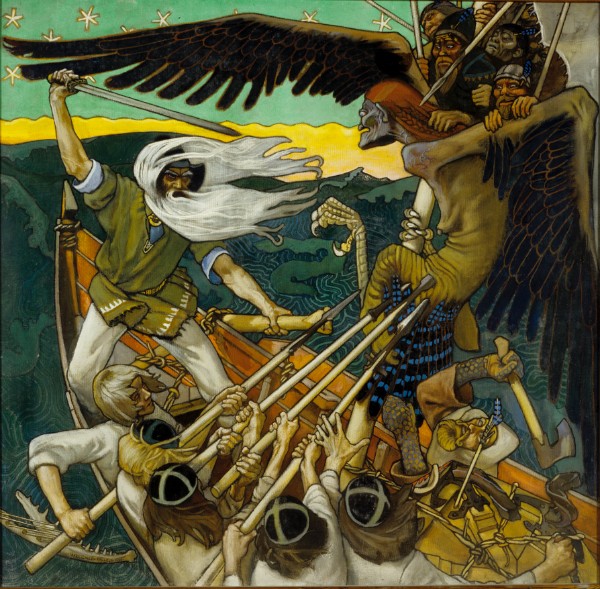
Mistress of the North, Louhi attacking Väinämöinen in the form of a giant eagle with her troops on her back.
(The Defense of the Sampo, Akseli Gallen-Kallela, 1896)
Jean Sibelius’ connection to mythology was deep and meaningful. Mythology shaped his ideas, inspired his greatest works, and helped him express the identity and spirit of Finland. Through the world of the Kalevala, he found characters, emotions, and landscapes that allowed him to create a unique musical language.
His music does not simply retell ancient stories, but captures their atmosphere, mystery, and emotional truth. Even today, listeners can feel the power of these myths when they hear Sibelius’s music. His work shows that mythology is not just about the past but a way of understanding human emotions, nature, and the mysteries of life.
In this music, Sibelius proved that mythology can be both ancient and modern, simple and profound. It continues to inspire people around the world, just as it inspired him throughout his remarkable life.
For more of the best in classical music, sign up for our E-Newsletter