Every 6 December carries a faint whiff of sophistication. There is a touch of verbal sparkle in the air, supported by the soft rustle of a rhyme so neatly tailored that it could double as interior décor. Why? Because this date marks the birthday of Ira Gershwin, the man who taught American songwriting how to dress sharply, speak wittily, and wink at the audience all at once.
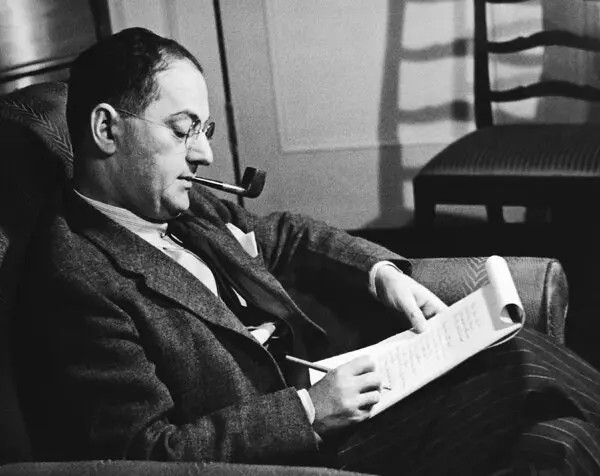
Ira Gershwin
His brother George Gershwin may have supplied the glamour; just think of the pianistic fireworks and sweeping melodic lines. But Ira had all the words. And not just any words, but the cleverest, tenderest, and most delightfully mischievous linguistic acrobatics Broadway ever applauded.
Ira was famously modest, a man content to let his rhymes do the speaking for him. By the time he stepped into the spotlight, the Gershwin name already carried an aura of jazz-age elegance. But Ira added something just as essential, it’s verbal architecture.
Ira/George Gershwin: An American in Paris, “I Got Rhythm”
The Art of Saying Everything with Almost Nothing
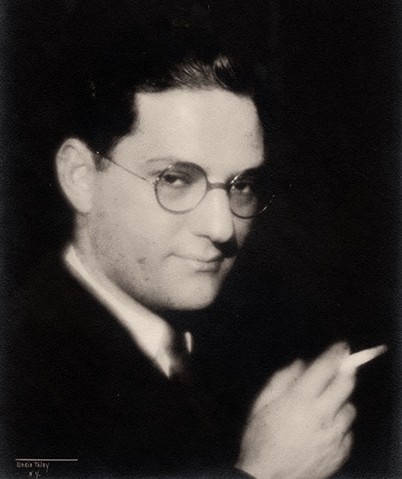
Ira Gershwin, 1925
What made Ira Gershwin so irresistible was his mixture of brains and blushes, romantic texts delivered with a sly, knowing grin. Consider how much he can say with almost nothing. “The way you wear your hat…” Just a couple of words with an entire relationship unfolding inside them.
Or take the gently flirtatious, faintly philosophical shrug of “Nice work if you can get it…”
It manages to be both a seduction and a life motto. And then there’s the line that turns linguistic disagreement into musical foreplay, “Let’s call the whole thing off…”
Only Ira could make an argument sound like a love scene. These short lines reveal his true magic and his ability to plant an entire emotional garden with a handful of syllables. With just a few carefully chosen words, he could suggest mood, character, humour, and affection all at once. Small seeds of language somehow grow into a full and fragrant landscape of feeling.
Ira/George Gershwin: “Nice Work if you can get it”
Effortless Craft
If you leaf through the Great American Songbook, either on the piano or simply in your imagination, you find the fingerprints of Ira Gershwin everywhere. His lyrics have a distinctive blend of qualities that few others managed to combine so naturally.
There is comedy, the kind that makes you feel clever without working for the punchline. There is sophistication, the kind that makes you briefly imagine yourself in a tuxedo or evening gown. And then there is emotional precision, the kind that quietly reaches you in the middle of your morning coffee.
Ira was equally at ease with philosophical melancholy and playful banter, an unusual flexibility that gave his work its depth. What sets Ira apart is how literary his writing is while still feeling completely effortless. He never strains for effect, and he never shows off his technique. He doesn’t try to impress you, but simply charms.
Ira/George Gershwin: American Songbook, “A Foggy Day”
Architect of Musical Conversation
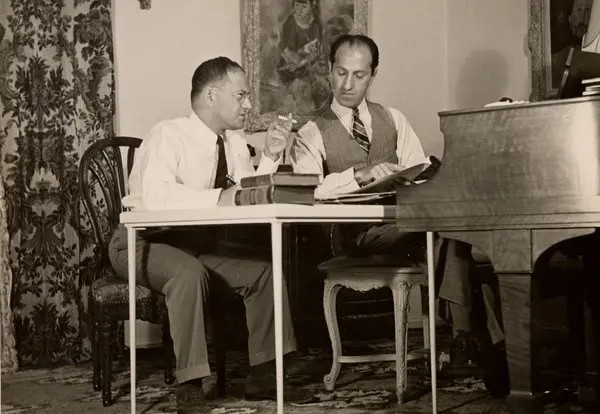
Ira and George Gershwin
Ira Gershwin was also a master collaborator, someone who understood instinctively how words and music could share the spotlight without competing for attention. With his brother George, of course, he formed one of the most influential partnerships in American music. Together, they reshaped the landscape of musical theatre, opera (Porgy and Bess), film, and the entire world of popular song.
But Ira’s artistry didn’t end with George’s tragically early death. He went on to work with a remarkable roster of composers, including Harold Arlen, Jerome Kern, and Kurt Weill, each with a distinct musical language that Ira matched with astonishing ease.
He adapted, evolved, and yet always sustained his trademark blend of warmth and wordplay. Where other lyricists went big, Ira preferred the quiet gesture. His bond with American culture was certainly distinctive. He didn’t merely reflect the national mood but helped to shape it.
Ira Gershwin/Kurt Weill: “My Ship”
Timeless Charm
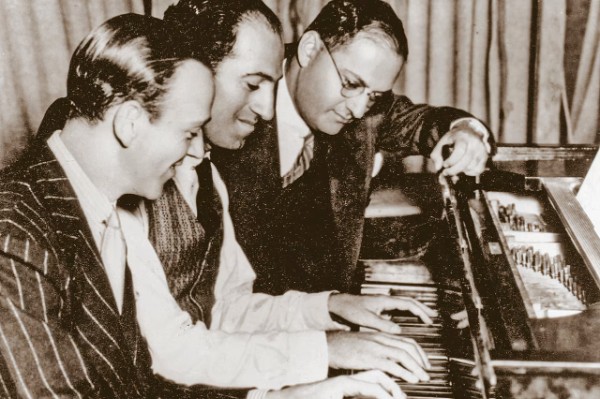
Frank Sinatra, George and Ira Gershwin
In the end, Ira Gershwin endures because he gave American music something uniquely its own, namely a language of charm, intelligence, and emotional honesty wrapped in effortless wit.
His lyrics continue to shimmer not because they are nostalgic, but because they remain alive. They are capable of making us smile, sigh, and feel seen with just a few perfectly placed words.
On 6 December, we celebrate more than a birthday. We celebrate a craftsman who proved that a lyric can be architecture, companionship, and quiet brilliance all at once.
For more of the best in classical music, sign up for our E-Newsletter