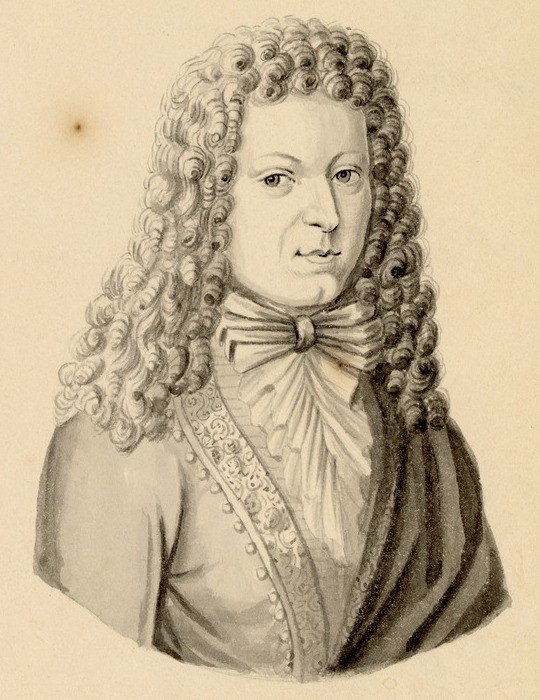
Giuseppe Tartini (1692-1770), born in Piran on 8 April 1692, was acclaimed as “the greatest composer of his time” by the astronomer Joseph Jérôme de Lalande. “One cannot speak of music… without mentioning the famous Giuseppe Tartini,” he writes, “who has long been the first violin of Europe.” (Rhapsody in Words)
Tartini principally composed in two instrumental genres, the solo violin concerto with string accompaniment and the violin sonata. We know that he had been asked to write music for the opera house in Venice, yet he always refused, declaring that the human throat was no violin fingerboard.
Giuseppe Tartini: Violin Sonata in G minor, “The Devil’s Trill”
The Art of the Bow
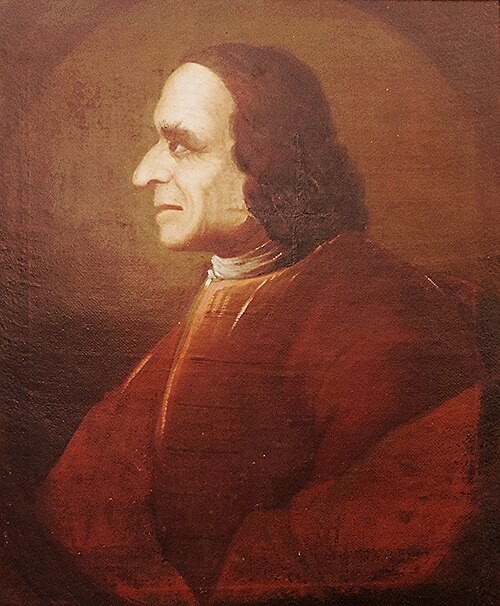
Giuseppe Tartini
In 1721, Tartini was appointed as director of the orchestra at the Basilica of St. Anthony in Padua, a position that granted him the freedom to perform internationally. However, by 1728, he had established his teaching activities in the so-called “School of Nations.”
Much of Tartini’s teaching method was based on his The Art of the Bow, a fundamental musical text for learning violin technique. It consists of fifty variations on a “Gavotte” from Corelli’s Violin Sonata Op. 5, No. 10.
As we mark Tartini’s birthday, let us explore why some authors refer to him as the godfather of modern violin playing. (Giuseppe Tartini)
Giuseppe Tartini: Violin Concerto in A Major, D. 96
“School of Nations”
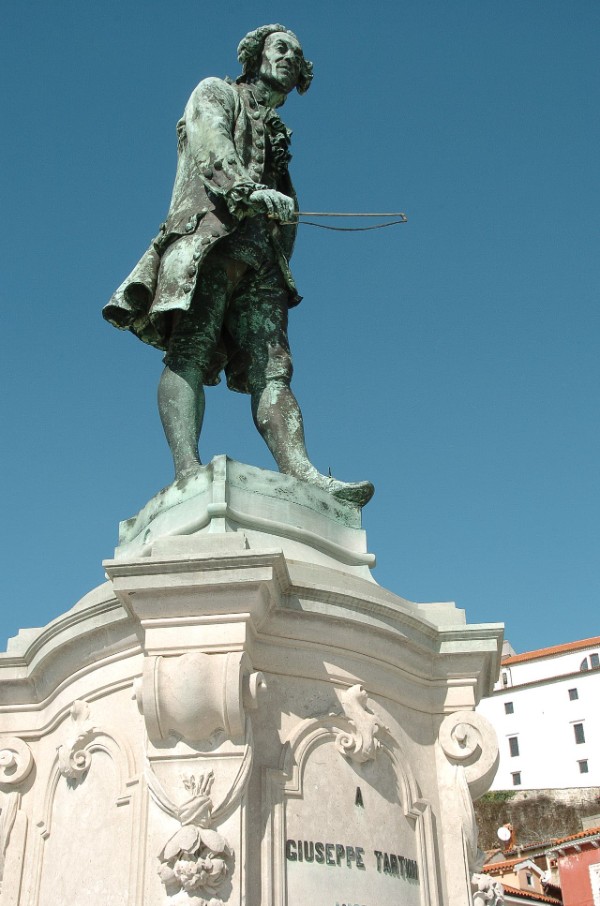
Monument of violinist Giuseppe Tartini in Piran, Slovenija
Tartini’s international fame attracted many students to Padua, including the well-known violinists Gaetano Pugnani and Pietro Nardini. His “Violin School,” which he directed for more than forty years, is said to have trained over seventy notable violinists.
Tartini taught not only violin technique but also composition, with a typical course of study usually lasting two years. Apparently, he paid careful attention to each individual student, with his teaching method focused on clarity of execution and intonation, beauty of sound, and subtlety of expressive nuance.
Much of his teaching was based on “the mastery of the bow,” and his influence made its way outside Italy as well. Leopold Mozart’s Violinschule, for example, copies the first part of Tartini’s treatise on embellishments in translation. Alongside Vivaldi and Veracini, Tartini was undoubtedly one of the greatest violinists of the 18th century.
Giuseppe Tartini: Violin Sonata No. 52 in D Major, B. D17 (Črtomir Šiškovič, violin; Luca Ferrini, harpsichord)
Mastering the Bow
Without getting overly technical, here are some key bowing innovations addressed in Tartini’s treatise. Initially, we do need to understand that in the mid-18th century, the bow was not held at the heel or frog. Instead, period players gripped it a short distance from the heel.
He very precisely described how the bow should be held. The thumb and forefinger would grip the bow tightly, with the other three fingers resting lightly. According to violinists, this produces a strong and sustained tone, and increased pressure means increased volume.
Tartini also advocated lengthening the bow to increase flexibility and springiness. In this way, a player could produce a richer tone, achieve a greater dynamic range, and have more expressive bowing.
Giuseppe Tartini: Violin Concerto in B-Flat Major, D. 118, “Non sospirar, non piangere…” (Carlo Lazari, violin; L’ Arte dell’Arco, Ensemble; Giovanni Guglielmo, cond.)
The Singing Bow
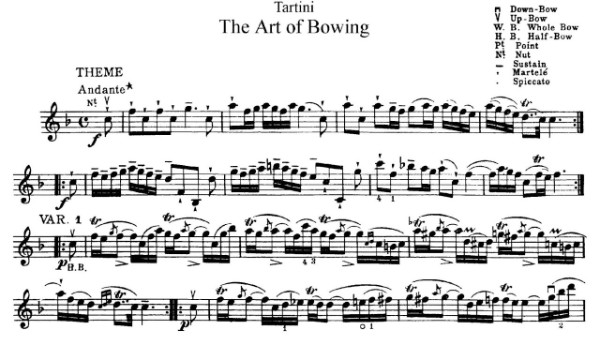
Giuseppe Tartini’s The Art of Bowing
By expanding the variety of bow strokes, Tartini widened the expressive range. He took “détaché” and “legato” from Corelli, and added “staccato” and a “bouncing stroke” for lightness and agility. In this way, Tartini advocated for a wider range of articulation, dynamics, and emotional colours.
Tartini directly linked bowing to musical expression, and his slurs and bow strokes align naturally with the phrasing of the music. Contemporary accounts praise Tartini’s bow for transforming the violin into a “harmonious, sweet instrument, full of grace.” (Rhapsody in Words)
Tartini’s innovations were part of a greater evolution in violin technique as he laid the groundwork for much of the Classical and Romantic eras.
Giuseppe Tartini: 25 piccole sonate per violino e violoncello e per violino solo: Violin Sonata No. 19 in D Major, B. D3 (Črtomir Šiškovič, violin)
Timeless Principles
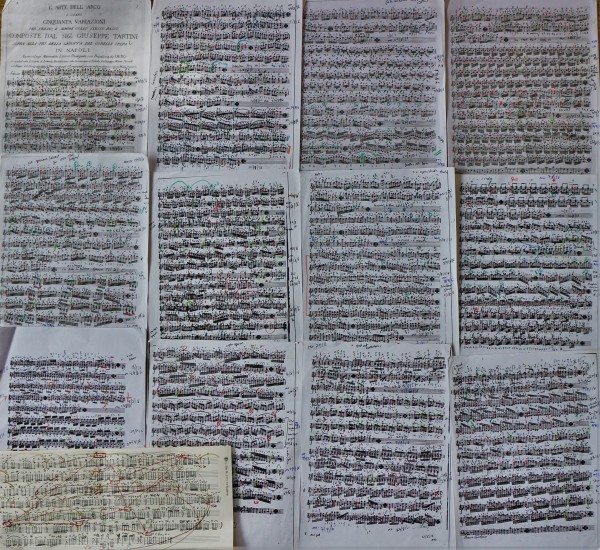
Giuseppe Tartini’s The Art of the Bow © Peter Sheppard Škærved
And as a modern observer writes, “Tartini’s art was progressive, meaningful, and full of humanity. It’s no surprise then that through generations of violinists, many of his principles and methods of teaching are used to this day, and his best compositions still thrive in modern repertoire.” (Rhapsody in Words)
Tartini’s The Art of the Bow serves as a comprehensive study in advanced bowing control and distribution. In this short overview, it is not possible to specifically look at every single variation, but the scholar/violinist Peter Sheppard Škærved has done so, and you can take a look here.
For more of the best in classical music, sign up for our E-Newsletter