American composer Peter Scott Lewis (b. 1953) wrote a cycle of piano works around a set of beautiful gemstones. From clear to all the colours of the rainbow, his Seven Nuggets takes us to a new world of piano miniatures that glisten with an inner light.

Peter Scott Lewis (photo by Thomas Heinser)
The cycle, completed in 2023, found its inspiration in a set of colourful gemstones.
He opens with Fire Opal, which carries the annotation ‘Intense and with brilliance’. Unlike regular opals, which are generally translucent, fire opals are more usually transparent in colours of red to orange to yellow. Most come from central Mexico.
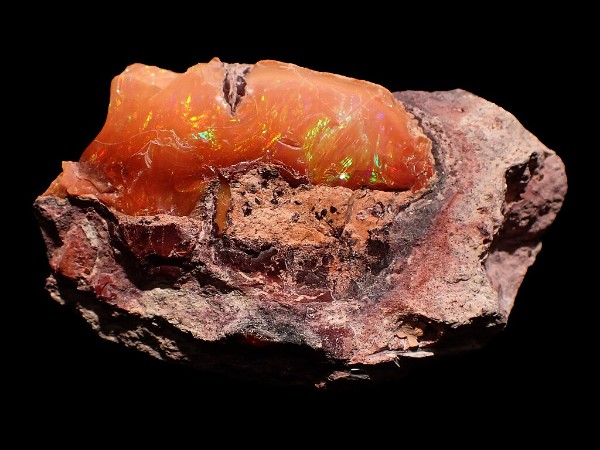
Fire Opal
Peter Scott Lewis: 7 Nuggets – No. 1. Fire Opal (Blair McMillen, piano)
Jade, long beloved of the Chinese and other Asian populations, doesn’t come only in the more familiar green, but in all colours from white to black. Just as a carved piece of jade is smooth and warms in the hand, Carved Jade flows and curves around the hand.
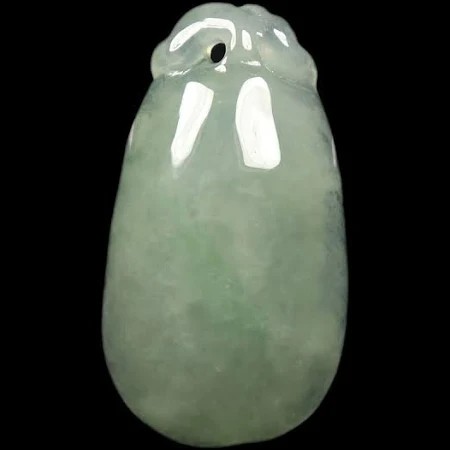
Carved Jade
Peter Scott Lewis: 7 Nuggets – No. 2. Carved Jade (Blair McMillen, piano)
Chrysocolla is full of blues and greens, as befits its development from copper. The name is old, first used by the Greek naturalist Theophrastus in 315 BC. Its cyan colour often makes it a substitute for the rarer turquoise.
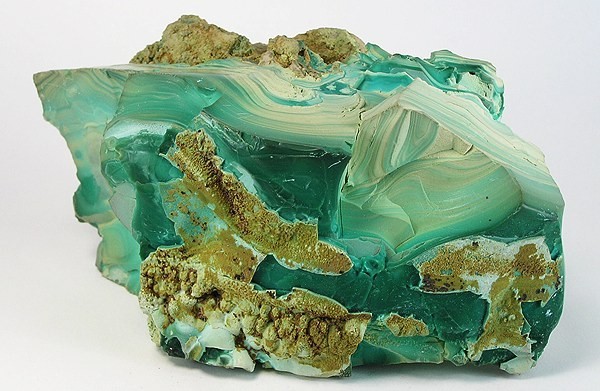
Gleaming Chrysocolla
Peter Scott Lewis: 7 Nuggets – No. 3. Gleaming Chrysocolla (Blair McMillen, piano)
Diamonds in the rough are how we refer to people who are of good character but lack style, either through manners or education. A rough diamond, on the other hand, is an unrefined stone – pure diamond but without the cutting and faceting that can bring out its inner beauty.
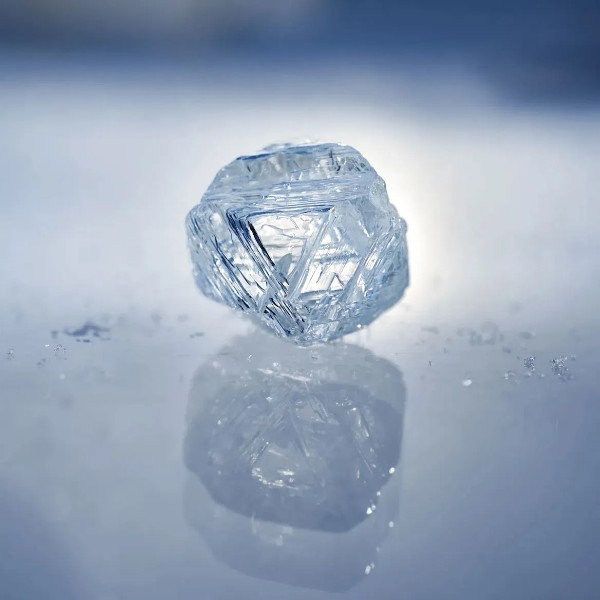
Rough Diamond
Peter Scott Lewis: 7 Nuggets – No. 4. Rough Diamond (Blair McMillen, piano)
Like the rough diamond, a raw sapphire is an unworked stone. It is most often blue but can also appear in colours from clear to pink to grey and black. Its red version is called ruby. Sapphires and rubies are both colours of corundum, coming from aluminium.
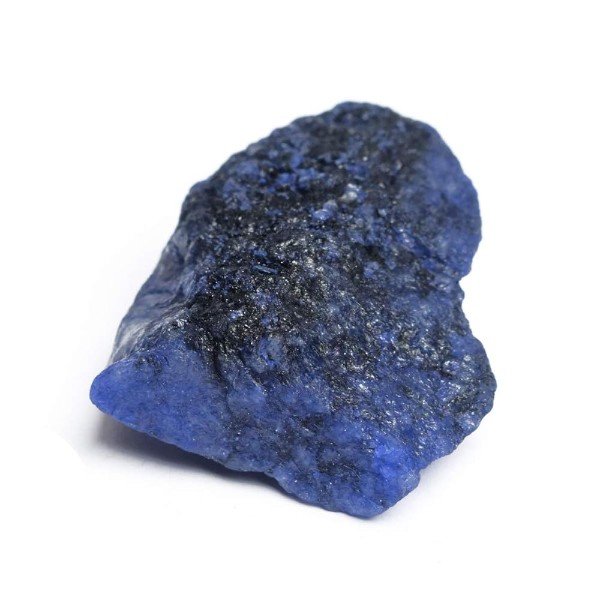
Raw Sapphire
Peter Scott Lewis: 7 Nuggets – No. 5. Raw Sapphire (Blair McMillen, piano)
One of the most beautiful gemstones is the emerald. Its rich, verdant green and transparency make it highly valued, although it is one of the more easily broken gems. They are known from ancient times, being mined in Ancient Egypt until replaced by the mines in Colombia, South America; the word ‘emerald’ came into use in the 14th century.
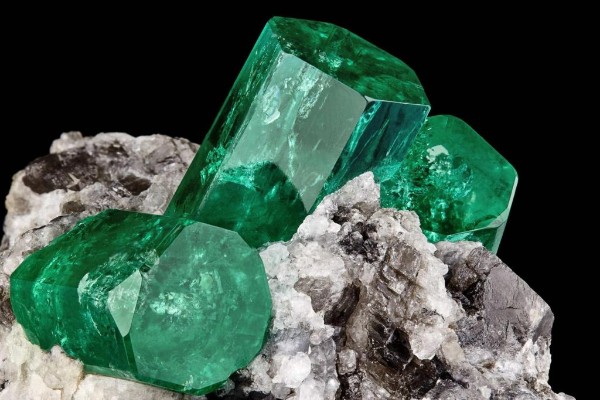
Emerald, Uncut
Peter Scott Lewis: 7 Nuggets – No. 6. Emerald, Uncut (Blair McMillen, piano)
The set closes with a combination of a stone and a metal. Lapis, With Gold Crystals is a slow movement that seems to be thinking back on all the other nuggets. Lapis, or, more formally, lapis lazuli, is a deep-blue rock, prized for its colour for many centuries. It has been mined in Afghanistan since prehistoric times. In the Middle Ages and Renaissance in Europe, it was used to create a dark blue pigment for painting and was the second most expensive colour used (following gold). It was used for Mary’s robes or for the robes of angels.
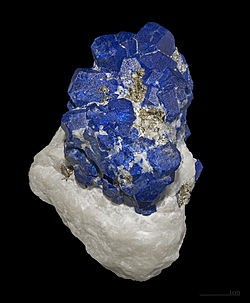
Lapis, With Gold Crystals
Peter Scott Lewis: 7 Nuggets – No. 7. Lapis, With Gold Crystals (Blair McMillen, piano)
As you listen, each nugget ends on an extended low note. At the end of Lapis, with Gold Crystals, those notes at a higher register are used in the final nine measures to create a sixth chord summarising the nuggets and completing the audio necklace.
For more of the best in classical music, sign up for our E-Newsletter