In her breakout 2005 role as Cleopatra in Handel’s Giulio Cesare, Danielle de Niese took Glyndebourne by storm. A last-minute replacement, she brought oodles of energy and killer dance moves that combined with her fantastic vocal agility.
Critics were over the moon, suggesting that her voice melted into a silken caress with phrasing so tender it could break your heart.
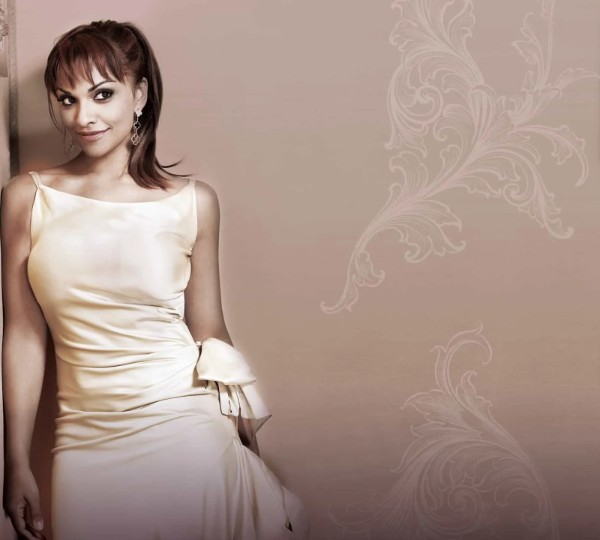
Danielle de Niese
Just a couple of years earlier, Danielle de Niese collaborated with Frederick Jorio to produce an album titled “Cyberdiva.” As we mark her birthday on 11 April, let’s have a listen to this niche crossover project.
Danielle de Niese performs Handel: Giulio Cesare, “Da tempeste il legno infranto”
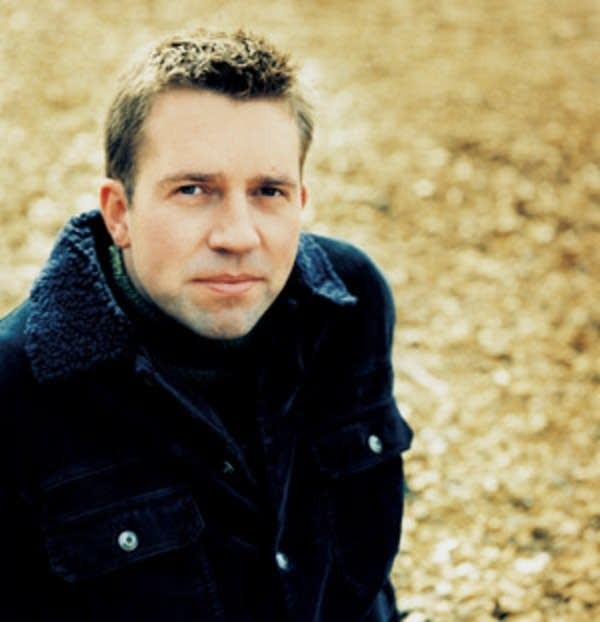
Meet Lectroluv
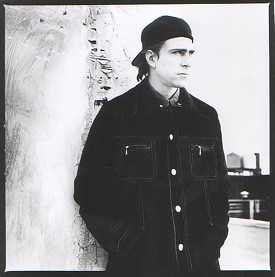
Lectroluv
Frederick Jorio, who also goes by the names Jorio, Fred Jorio, and aliases like Jungle Luv and Lectroluv, is essentially a dance-music creator. Based in New York, he remixes famous tracks to introduce artists like Madonna, Elton John, and k.d. lang to the dance-music community.
Lectroluv is a songwriter, producer, remixer, and DJ specialising in trance, house, tribal, progressive, and crossover music. He seems to have specialised in the repetitive drum’n’bass style, and he issued several singles in the mid to late 90s.
Essentially a one-man band, Lectroluv toured around the world, and some of his creations, are said to have become worldwide anthems on dancefloors across the globe.
Eric Calvi: Prayer (after A. Vivaldi’s Stabat Mater) (Danielle de Niese, soprano; Frederick Jorio, electronics)
Y2K Trance-Opera
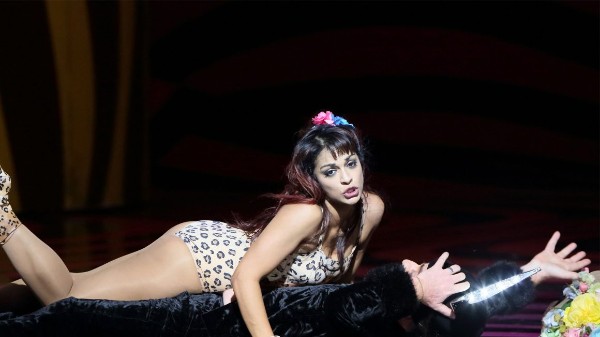
Danielle de Niese
I couldn’t find any information on how Jorio and de Niese connected, or where the idea of fusing opera with electronic dance music originated. In the event, classical arias from Vivaldi, Purcell, Puccini and others are adapted, remixed, and set to modern beats.
We find operatic vocals layered over a dancefloor-friendly production. It’s very much a Y2K-era production, defined by extreme technological optimism and a sleek, futuristic aesthetic.
This cultural period bridged the late 90s and early 2000s, when everybody was worried about the “millennium bug,” the rise of the internet, and wearing a distinct fashion style featuring metallic and tech-focused trends.
Eric Calvi: Mother’s Tears (after G. Puccini’s Suor Angelica: Senza Mamma) (Danielle de Niese, soprano; Frederick Jorio, electronics)
Genre Makeover
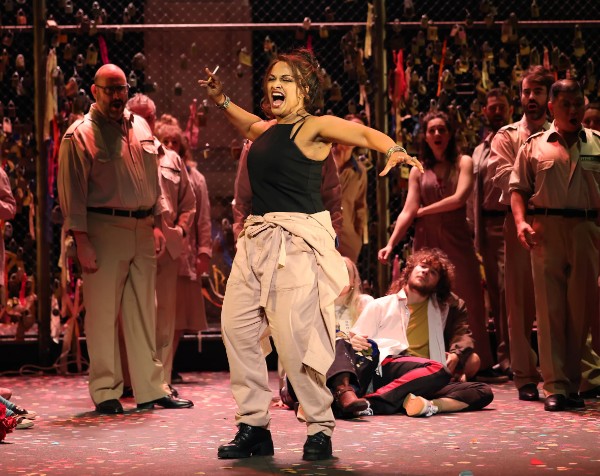
Danielle de Niese
Blending highbrow classical with club culture, the album lists a number of styles and genres. And to be honest, I had to look them up. “Tribal House” fuses funky house beats with ethnic percussion elements inspired by African and South American music traditions.
Apparently, “Trance” is a major genre in electronic dance music that creates a hypnotic and emotional style by repeating melodic phrases, soaring synthesiser leads, and heavy use of reverb.
And then there is “Euro House,” a commercial and European-flavoured subgenre of “House Music.” It’s upbeat, radio-friendly dance music with strong pop influences.
Eric Calvi: Remember Me (after H. Purcell’s Dido and Aeneas: When I am laid in Earth) (Danielle de Niese, soprano; Frederick Jorio, electronics)
Cyberdiva Experiment

Danielle de Niese is credited simply as “Vocals,” delivering the classical-inspired singing that gives this project its “trance-opera” sound. If anything, it’s an early crossover experiment that clearly didn’t warrant a sequel.
The album was never a big commercial hit, but according to some sources, “Remember Me” got club play and a number of remixes. At the time of this recording, Danielle de Niese was based in New York and active in the Met Opera’s Lindemann Young Artist Program.
She might well have met Lectroluv on the NYC clubbing scene, but this album is not officially mentioned on Wikipedia or her primary bios. A youthful indiscretion best forgotten, and personally, I am very happy she made it to the operatic stage. But at least we know where she learned how to dance.
For more of the best in classical music, sign up for our E-Newsletter