I just love the piano music of Frédéric Chopin. It makes me laugh, it makes me sigh, it makes me feel as if the world has suddenly become brighter, softer, and a little more magical.
There is something in the way his melodies curve and twirl, something in the delicate interplay of harmony and rhythm that reaches directly into the heart. His music can be tender, playful, or stormy, often within a single phrase, and it has this uncanny ability to mirror every mood, every emotion.
But let’s not forget that his music is incredibly difficult to play! Every étude, waltz, and nocturne demands not only technical precision but also deep emotional understanding.
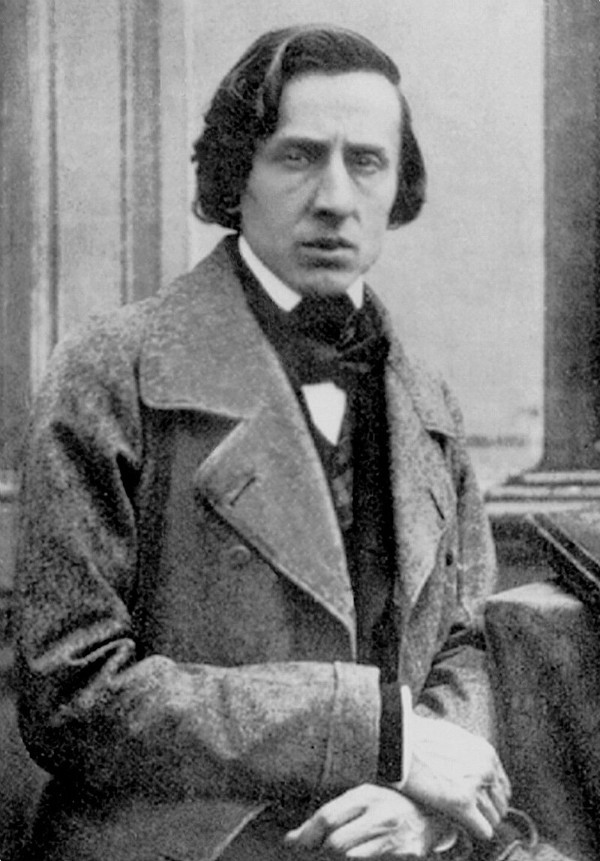
Frédéric Chopin
Chopin’s music has always been a favourite playground for both the pianist and the listener. And then, oh, then, comes Leopold Godowsky, the piano sorcerer of the late Romantic era. He makes Chopin sound like you’ve never heard or imagined this music before.
Chopin/Godowsky: Etudes (excerpts)
Tiny Explorer, Towering Talent
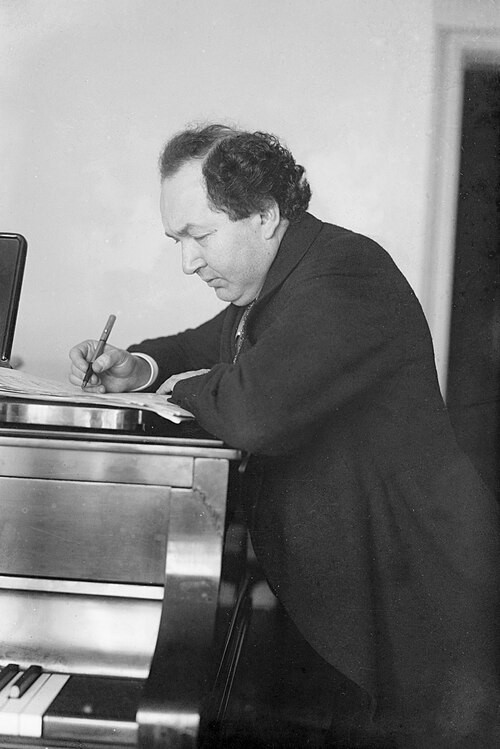
Leopold Godowsky
Leopold Godowsky’s story starts with a little bit of magic. Born on 13 February 1870 in Žasliai, now located in Lithuania, he showed an almost spooky musical instinct from toddlerhood.
By the time most children were figuring out their toys, Godowsky was already poking around the piano, teaching himself, improvising, and even composing. He had no neatly planned lessons or a conservatory schedule. Rather, his early musical life was wonderfully messy, shaped by curiosity, constant movement, and a mind that refused to wait for permission.
As he grew up, Godowsky learned the piano the way a natural explorer learns the world. He watched, listened, and experimented.
Leopold Godowsky: 53 Studies on the Chopin Études (excerpts) – No. 48 in F Major (after Chopin’s Op. 10, No. 11 and Op. 25, No. 3) (Konstantin Scherbakov, piano)
Curiosity Unleashed
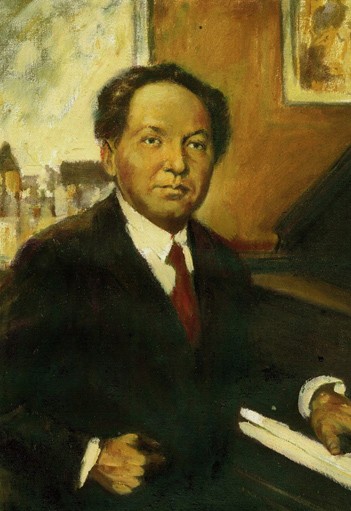
Leopold Godowsky
He devoured scores, listened obsessively to other pianists, and tested ideas at the keyboard until everything felt easy and natural. Public performances came early, and audiences were simply amazed.
Even a short spell of formal study in Berlin couldn’t tame his independent streak. Those early years were full of discovery and quiet brilliance. All this shaped an imaginative pianist who would later make the piano world gasp, scratch its head, and smile in disbelief.
As his career took flight, Godowsky quickly turned into a globe-trotting marvel, he criss-crossed Europe, America, and Asia, leaving audiences wide-eyed and fellow pianist shaking their heads.
Chopin/Godowsky: Etude Op. 25, No. 4
The Pianist’s Pianist
Wherever he went, the word spread. This was not just a pianist with fingers of steel, but a musician with a mind that seemed to see the piano from the inside out. Fame followed him, but he wore it lightly, more interested in ideas than applause.
Alongside his travels, Godowsky became a deeply influential teacher, especially during his years at the Chicago Conservatory. Students and colleagues were struck by his soft-spoken warmth and extraordinary intellect.
He wasn’t the sort of virtuoso who dazzled with theatrics. Instead, his authority came from wisdom, imagination, and an uncanny sense of ease at the keyboard. That rare mix of humility, brainpower, and almost superhuman ability turned him into a pianist’s pianist.
He was revered, slightly mysterious, and legendary, even if most of his music remained bravely admired from a safe distance. One thing is for sure: he was a genius at the keyboard, and he delighted in making his fingers dance in ways that seem almost physically impossible.
Leopold Godowsky: 53 Studies on the Chopin Études (excerpts) – No. 14 in C Major, “Toccata” (1st version after Chopin’s Op. 10, No. 7) (Konstantin Scherbakov, piano)
Piano Fireworks in 53 Acts
The most famous reworkings that Godowsky ever did were to craft 53 Studies, like arrangements, on Chopin Études. And if you think that the originals are challenging, you haven’t yet met Godowsky’s versions.
The Chopin Études were already considered the Mount Everest of piano writing, technical challenges wrapped in pure poetry. Godowsky looked at them and thought, what if we could take these miracles even further, not to show off, but to explore.
Godowsky adored Chopin, but he treated these pieces not as sacred relics. Instead, he saw them as living organisms, flexible, expandable, and full of hidden possibilities. To be sure, what emerged was not just a simple arrangement.
Chopin/Godowsky: Etude Op. 25, No. 5
Impossible Made Playful
Godowsky went on to radically re-imagine these pieces in a way that stretched the piano vocabulary in completely new directions. His approach was gleefully inventive. Some études are transferred entirely to the left hand, others re-layer voices, redistribute textures, or combine two Chopin études at once in a kind of high-wire contrapuntal stunt. On occasion, single etudes emerged in multiple versions.
On paper, they look terrifying, and yes, they are, but beneath the acrobatics lies a deep musical logic. Godowsky wasn’t interested in brute force as he was obsessed with independence, balance, and ease. His aim was to make the impossible feel natural, to teach the hands to think independently and sing simultaneously.
Historically, these études arrived at a fascinating moment, around the turn of the 20th century, when pianists were rethinking what virtuosity could mean. Godowsky’s Chopin Études quickly gained a legendary reputation, admired more often than played.
Some pianists considered them outrageous, others visionary. Even those who never attempted them felt their influence. They quietly reshaped ideas about technique, touch, and the expressive limits of the piano.
Today, the Godowsky–Chopin Études remain a kind of holy grail. They are feared, revered, and endlessly fascinating. These are works that even the super-virtuosos of our own time approach with a mix of bravado, respect, and a very deep breath.
Chopin/Godowsky: Etude Op. 25, No. 1
Dancing Thirds
Take, for example, Godowsky’s reimagining of the Chopin Op. 25, No. 6 in G-sharp minor, the so-called “Thirds Étude.” Chopin’s original is already a feast for fingers dancing in thirds, but Godowsky twists it into an almost otherworldly kaleidoscope of lines, counter-lines, and harmonic juxtapositions.
Every note seems to sparkle with a cheeky sense of personality, almost as if Chopin’s original ghosts are tiptoeing around Godowsky’s improvisational whims.
Pianists often report that playing it feels like conversing with two friends at once. One is charmingly polite, and the other is gleefully mischievous. As for the audience, they are always spellbound.
Chopin/Godowsky: Etude Op. 25, No. 6 “Double Thirds”
Melancholy with a Wink
Godowsky didn’t stop at making the technically impossible plausible. He also loved creating musical irony. For example, his left-hand-only versions of pieces like the Étude Op. 10 No. 3 in E major, Chopin’s “Tristesse,” might at first seem melancholic and serious.
But then, in Godowsky’s hands, it becomes a study in subtle humour. The left hand, alone, manages to mimic the delicacy and lyricism of two hands, creating a slightly exaggerated, almost tongue-in-cheek melancholy.
In moments like this, we see Godowsky at his most charming. Beneath the jaw-dropping technique is a mischievous smile, a composer quietly winking at both Chopin and the pianist brave enough to try.
Chopin/Godowsky: Etude Op. 10, No. 3 (Left Hand)
Chromatic Carnival
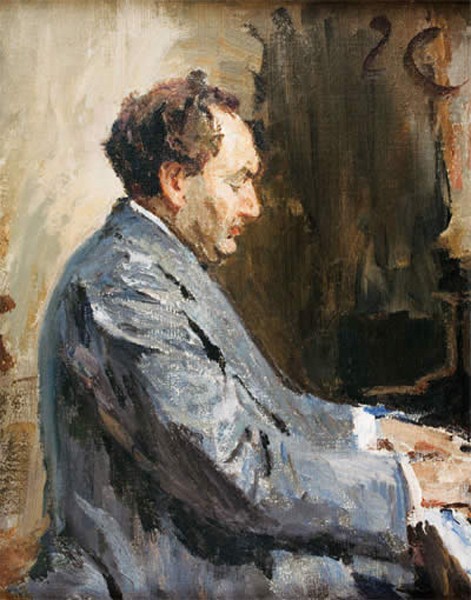
Leopold Godowsky
Another fantastic example is his transformation of the Étude Op. 10 No. 2 in A minor, Chopin’s famously fast chromatic right-hand study.
Godowsky spins this into a full-blown contrapuntal tour de force, where the right hand’s rapid chromatic runs are doubled, inverted, and mirrored in ways that make it feel like a musical kaleidoscope.
The original étude is already a rocket ship, but Godowsky’s arrangement? It’s like strapping a jet engine to that rocket and adding fireworks. One can almost hear Chopin looking over Godowsky’s shoulder and laughing in admiration or mild horror.
Chopin/Godowsky: Etude Op. 10, No. 2
Étude Mash-Up
One can’t talk about Godowsky’s Chopin arrangements without marvelling at his genius for layering and polyrhythms. In one particularly astonishing work, he actually combines two Chopin études, Op. 10 No. 5 and Op. 25, No. 9, into a single dazzling tapestry.
The playful hand crossings of Op. 25 No. 9 are transformed into a rhapsody of contrapuntal echoes, inversions, and rhythmic displacements. It’s like the pianist is juggling a tiny orchestra with just two hands.
Godowsky’s giddiness didn’t stop at rhythm, as he also loved bending harmony. In this fusion, he stretches Chopin’s original tonalities into unexpected keys and modulations, sprinkling delightful surprises that keep both pianist and listener on their toes.
Chopin/Godowsky: Etudes Op. 10, No. 5 & Op. 25, No. 9 (combined)
Godowsky in Full Flight
It’s also worth noting Godowsky’s approach to texture. He could transform a simple Chopin melody into a luxuriant tapestry of sound, where inner voices converse, harmonies twist elegantly, and rhythms dance in unexpected directions.
His arrangement of the Étude Op. 25 No. 11 in A minor, nicknamed the “Winter Wind,” is a perfect example. The original is a tempestuous storm, but Godowsky’s version is a symphonic gale.
Each hand is a whirlwind of motion, yet every note finds its place with sparkling clarity. The result is terrifyingly beautiful and hilariously joyful, a contradiction that somehow makes perfect sense in Godowsky’s universe.
Chopin/Godowsky: Etude Op. 25, No. 11 “Winter Wind”
Playful Admiration
In many ways, Godowsky’s relationship with Chopin is one of playful admiration. He doesn’t attempt to overshadow the original genius.
Rather, he amplifies it, teases it, and turns it inside out to reveal hidden facets. Listening to a Godowsky arrangement is like peeking into a funhouse mirror.
Familiar shapes and patterns are twisted in ways that make you laugh, gasp, and marvel all at once. The genius of Godowsky lies in his ability to combine technical brilliance with emotional depth.
Chopin/Godowsky: Etude Op. 10, No. 12 “Revolutionary” (Left Hand)
A Treasure Hunt of Sound
He can dazzle the listener with impossible finger work, yet never lose the essence of Chopin’s lyrical, poetic soul. Each arrangement is a sparkling celebration of both composer and pianist.
Playing Godowsky’s Chopin arrangements is not merely an act of technical execution. It is a puzzle, a treasure hunt, and a carnival ride all rolled into one. The pianist is constantly challenged to think, feel, and laugh simultaneously.
I will never be able to do justice to the Godowsky arrangements, but it always reminds me that classical music can be playful, giddy, and full of surprises. Chopin’s genius is undeniable, but Godowsky’s interpretations elevate it to a realm of joyful enchantment.
So, if you ever find yourself craving a dose of pianistic magic, dive into Godowsky’s Chopin arrangements. Laugh, marvel, gasp, and smile. Let your fingers chase the fireworks he so brilliantly ignited.
For more of the best in classical music, sign up for our E-Newsletter