It’s time to celebrate the birthday of Alfred Hitchcock, the genius behind some of the most gripping and unforgettable films ever made. Born on 13 August 1899 in London, Hitchcock became known around the world as the “Master of Suspense.”
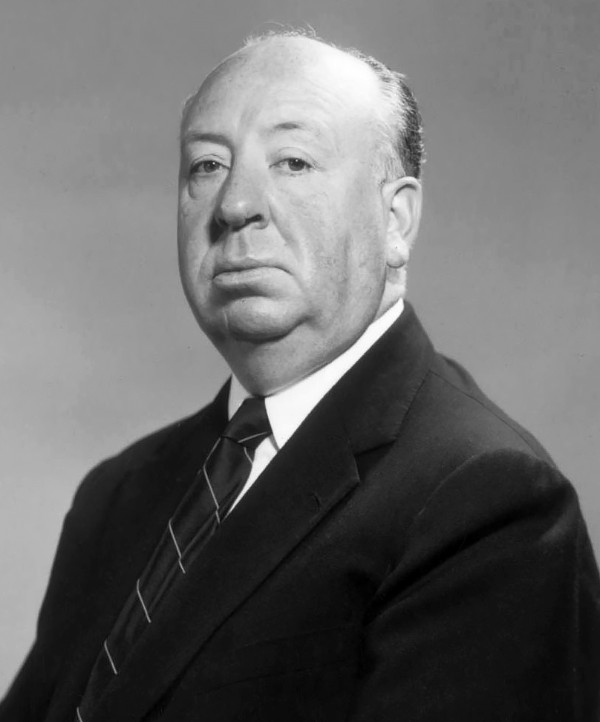
Alfred Hitchcock
His movies weren’t just about scares; they were all about building tension, playing with the expectations of the audience, and keeping us guessing until the very end. During a career lasting six decades, Hitchcock directed more than 50 feature films, including Psycho, Rear Window, Vertigo, North by Northwest, and The Birds.
These films weren’t just popular; they actually changed the way people thought about storytelling in cinema. His camera techniques, clever plot twists, and memorable characters have influenced generations of filmmakers.
Even today, Hitchcock’s work continues to thrill audiences. His movies are studied in film schools, celebrated at festivals, and streamed by fans who appreciate the craft of a true master. On his birthday, we remember not just the man, but the lasting legacy he left behind.
“The Shower,” Psycho Movie Clip
Psycho
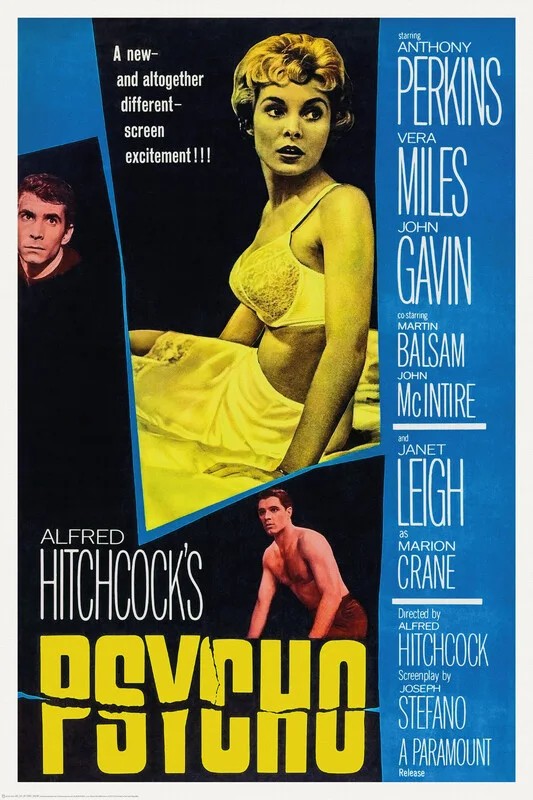
Hitchcock’s Psycho movie poster
Did you notice that suspense always goes much better with music? The piercing, all-strings “shower scene” in Psycho with shrieking violins must be one of the most iconic moments in film history. The score is relentless, as the stabbing rhythms mirror the film’s tension and psychological horror.
The use of a string-only orchestra creates a raw and unsettling sound, and the music amplifies the film’s shocking scenery. And did I tell you that the music was composed by Bernard Herrmann, who makes use of every technique in playing those instruments to create a world of black-and-white terror.
Alfred Hitchcock was not a composer, but he understood the crucial partnership between the cinematic image and the aura created by music. Somebody once said, “His profound importance as a film-maker is bound to the musical world that informs his films.”
Dial M for Murder
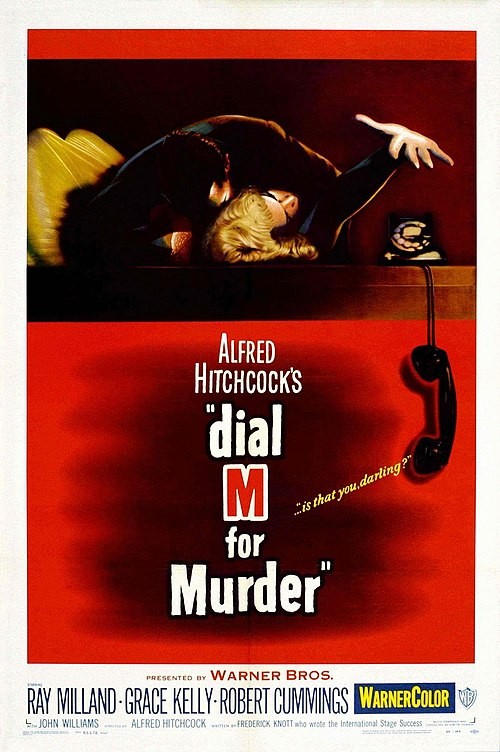
Hitchcock’s Dial M For Murder movie poster
Dimitri Tiomkin: Dial M for Murder Suite (arr. J. Mauceri for orchestra) (Danish National Symphony Orchestra; John Mauceri, cond.)
“Dial M for Murder “ dates from 1954 and is one of the best Hitchcock thrillers. It tells the story of Tony Wendice, a retired tennis player who discovers his wife Margot’s affair and plots her murder to secure her wealth.
He blackmails an old acquaintance to kill her by luring Margot to answer a phone call at their apartment. The plan fails when Margot kills Swann in self-defence. Tony manipulates evidence to frame Margot for murder, but her lover Mark and a clever police inspector unravel the scheme, exposing Tony’s guilt.
For the soundtrack, Hitchcock hired the Russian-born Dimitri Tiomkin, a composer and performer who had played the solo part in the European premiere of Gershwin’s Concerto in F at the Paris Opera in 1928. Tiomkin had been a student of Glazunov and Busoni, and he loved American popular music. The female lead is given an elegant and beautiful waltz, but it is surrounded by music from Mussorgsky’s musical depiction of murder and guilt in the opera Boris Godunov.
Rear Window
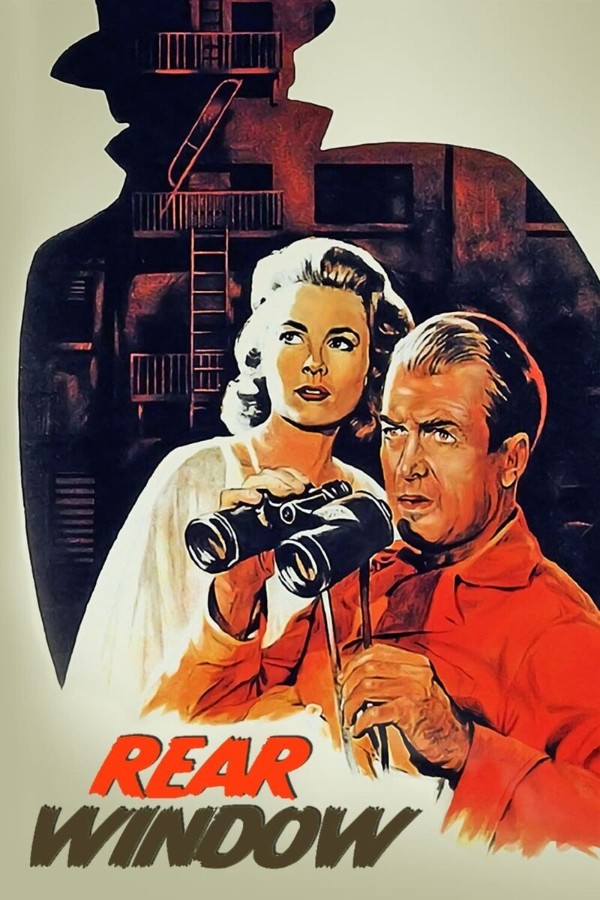
Hitchcock’s Rear Window movie poster
Franz Waxman: Rear Window Suite (arr. J. Mauceri for orchestra) (Danish National Symphony Orchestra; John Mauceri, cond.)
None of Hitchcock’s films has ever given a clearer view of his genius for suspense than Rear Window. When professional photographer L.B. “Jeff” Jeffries (James Stewart) is confined to a wheelchair with a broken leg, he becomes obsessed with watching the private dramas of his neighbours play out across the courtyard. When he suspects a salesman may have murdered his nagging wife, Jeffries enlists the help of his glamorous socialite girlfriend (Grace Kelly) to investigate the highly suspicious chain of events… Events that ultimately lead to one of the most memorable and gripping endings in all of film history.
A good many filmgoers, critics, and scholars consider Rear Window to be one of Hitchcock’s best films, as well as one of the greatest films ever made. Hitchcock builds tension through slow and deliberate pacing that accelerates as the plot unfolds. Key scenes are excruciatingly tense with close-ups and sound design keeping viewers on edge. Hitchcock uses layered storytelling to elevate the film beyond a thriller.
In terms of music, Hitchcock instructed Franz Waxman to avoid a conventional background score, opting instead for music that feels organic to the Greenwich Village courtyard setting. Most of the music is diegetic, thus heard as if coming from within the film’s world. Waxman does embed music, especially the lush “Lisa” song and curated pop tunes to create an authentic, immersive soundscape.
The Birds (1963) – Attacked in the Attic Scene
The Birds
Considered one of the greatest horror films of all time, The Birds focuses on a series of sudden and unexplained violent bird attacks on the people of Bodega Bay, California. Hitchcock decided to omit a traditional score and relied on orchestral swells and melodic cues instead.
He enlisted Bernard Herrmann, his frequent collaborator, as a sound consultant. Together with the electronic music pioneer Oskar Sala, they crafted a chilling soundscape using the Mixture Trautonium, an early electronic instrument capable of producing otherworldly, dissonant tones.
These manipulated bird shrieks and flutters become the film’s “score,” transforming natural sounds into a relentless assault on the senses. The result is a sonic environment that feels alive and malevolent, as if the birds themselves are orchestrating their attack on humanity.
Hitchcock
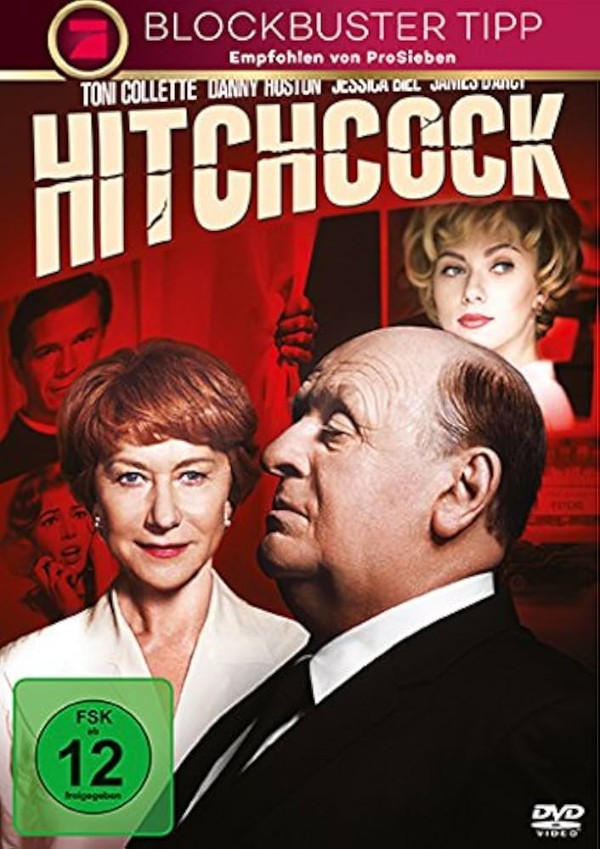
Hitchcock movie poster
Danny Elfman: Hitchcock (Original Motion Picture Soundtrack) (arr. T.J. Lindgren) (Nicholas Bucknall, clarinet; Everton Nelson, violin; Vicci Wardman, viola; Anthony Pleeth, cello; Skaila Kanga, harp; Hugh Webb, harp; Danny Elfman, instruments; Rick Wentworth, cond.)
It is not surprising that Alfred Hitchcock should become the subject of a film himself. And that’s exactly what happened with Hitchcock (2012), a biographical romantic drama focusing on Hitchcock and his wife Alma Reville during the risky production of Psycho.
The plot is set after the success of North by Northwest, with Hitchcock urged to retire.
Facing scepticism from the Studio, Hitchcock finances the film himself, mortgaging his home, while his wife grapples with her own creative ambitions and a flirtation with a writer. The narrative weaves Hitchcock’s professional risks with personal tensions, including his obsessive tendencies toward his leading ladies and Alma’s pivotal role in shaping Psycho’s iconic early-death plot twist.
The music was composed by Danny Elfman, and it complements the blend of romantic drama and light suspense. The score is a subtle nod to Bernard Herrmann’s iconic style without mimicking it as he underscores the emotional interplay between Hitchcock and Alma Reville. Plenty of lush strings and jazzy undertone to capture the 1950s Hollywood ambiance, don’t you think?
North by Northwest
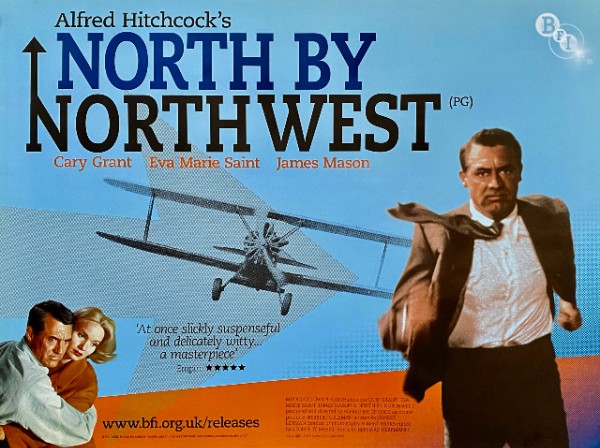
Hitchcock’s North by NorthWest movie poster
The crop duster scene in Alfred Hitchcock’s North by Northwest (1959) is a cinematic tour de force that epitomizes his mastery of suspense and visual storytelling. Stranded in a desolate Indiana cornfield under a blazing sun, Roger Thornhill (Cary Grant) expects a meeting but instead faces a chilling ambush by a low-flying crop-dusting plane, its engine’s hum growing from a distant drone to a terrifying roar as it dives to kill.
Hitchcock’s genius lies in transforming an open, seemingly safe rural landscape into a claustrophobic trap, with wide shots by cinematographer Robert Burks capturing Thornhill’s vulnerability against the endless horizon. The scene is devoid of music, but relies on natural sounds and precise editing to amplify tension that showcases Hitchcock’s “pure cinema” philosophy.
Alfred Hitchcock’s legacy as the “Master of Suspense” endures through his thrilling and timeless films that redefined cinema. He was a genius for turning everyday settings into gripping nightmares. With innovative camera work, sound, and editing, he explored human fears, and his psychologically rich stories remain captivating today.
For more of the best in classical music, sign up for our E-Newsletter