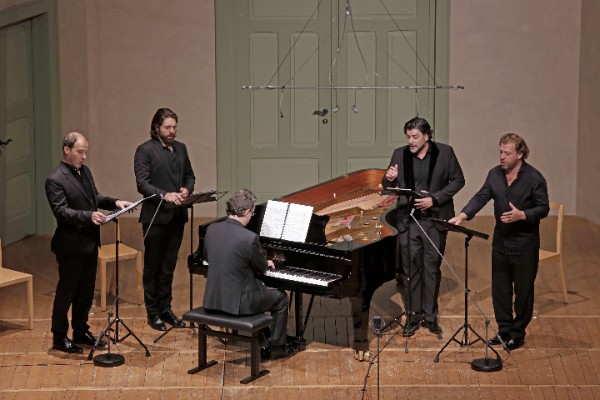
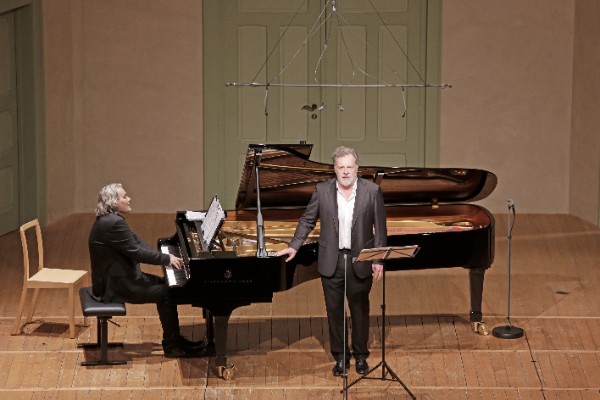
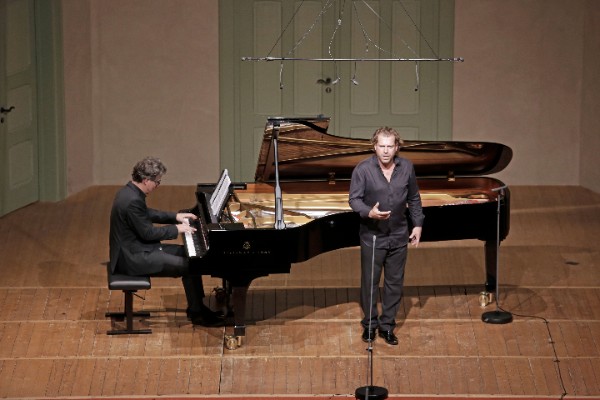
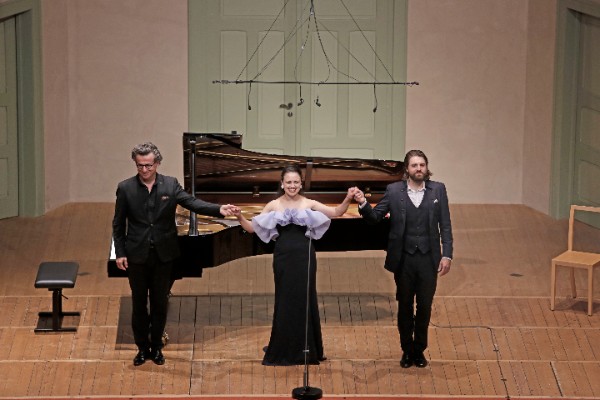
The Schubertiade Hohenems, specifically the one held in July 2025, was more than simply visiting a music festival; it felt like coming home. Tucked between the rolling hills of Vorarlberg and the shadow of the Alps, Hohenems hosted a celebration of Franz Schubert’s genius, one that blended the intimacy of chamber music with the rich cultural heritage of the region.
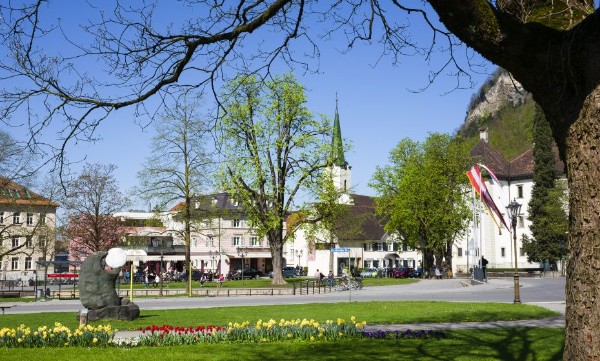
Hohenems © bodensee-vorarlberg.com
As I reflect on my time in Hohenems, I find myself returning to moments that made this festival not just a concert series, but a profound encounter with art, history and community. Hohenems itself is unassuming, with a historic town centre exuding a gentle charm with cobblestone streets and the imposing Hohenems Palace.
The Markus-Sittikus-Saal, the festival’s primary venue, is a true gem. A converted former gymnasium, it is lauded by artists and critics alike for its exceptional acoustics. And with only 300 seats, it hosted a knowledgeable and attentive audience. There seemed to be an unspoken bond among fellow concertgoers, all drawn to this lovely location by a shared love for the music of Schubert and his spiritual colleagues.
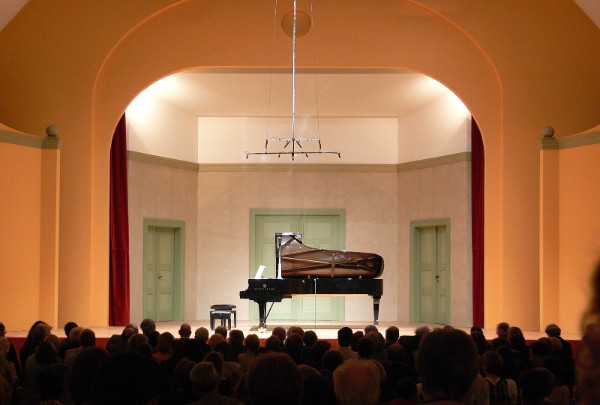
Markus Sittikus Hall, Hohenems
Every recital I attended, and I saw and heard them all, was of the highest musical and expressive quality. Since Interlude has already provided a play-by-play , I will simply refer you to the website. The overall impression was one of intimacy and emotional resonance, with artists seeking musical and personal connections with the audience.
Although the festival honours a long-standing tradition and the return of Schubertiade veterans, it also embraces young artists and new voices. It is that balance between the familiar and the new, between intimacy and fiery technical skills that made the Schubertiade grow from a modest gathering to the world’s most significant Schubert festival in the world.
The Festival founded by Hermann Prey and Hohenems-born Gerd Nachbauer has retained a sense of family closeness while fostering a sense of community pride. That pride is enriched by a cluster of museums, all initiated by Gerd Nachbauer. The Franz Schubert Museum, housed in a restored 16th-century vicarage, offered a glimpse into the composer’s life through manuscripts, listening stations, and a serene garden with views of the town. The Schubertiade Museum holds artifacts from the festival’s history, while the Elisabeth Schwarzkopf, Walter Legge, and the Nibelungen Museum added layers of cultural context connecting Schubert’s era and the present Schubertiade to broader artistic currents.
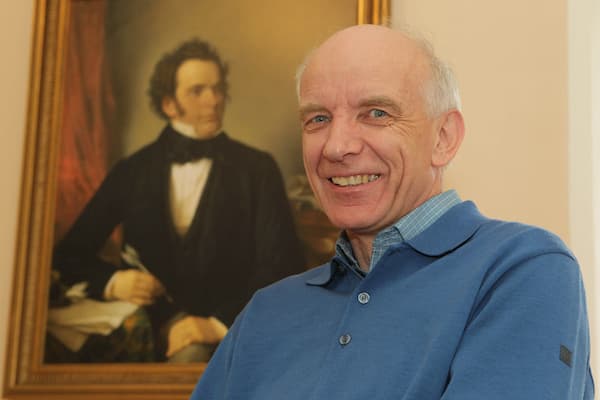
Gerd Nachbauer © Bernd Hofmeister
The practicalities of visiting Hohenems are surprisingly seamless. The Markus-Sittikus-Saal is a short walk from the train station and surrounded by restaurants and coffee shops. The Festival staff’s warmth matched the town’s hospitality, and with a bit of luck, you can hear artists practicing or you might even catch them over lunch or coffee.
I suspect that what I liked most about being at the Schubertiade Hohenems in July 2025 was the harmony between artists, audiences and locals. Hohenems created a space where music wasn’t just heard but deeply felt. In fact, the music of Schubert, Schumann, Brahms, and others personified what it always intended to be; a mirror to the human condition. Hohenems is a place that fosters a sense of belonging, and a locale where music, history, and nature converge to remind us of art’s power to connect.
Words along cannot capture the special atmosphere of the Schubertiade, but the encore of Brahms’ Lullaby by Krimmel, Konradi, and Heider offered undeniable proof. A radiant warmth filled the hall as their voices wove together with tender grace, and when they invited the audience to join, the melody became a collective embrace. It captured the very essence of the Schubertiade, a shared celebration of music’s power to unite and uplift the soul.
For more of the best in classical music, sign up for our E-Newsletter