Every November, on the third Thursday of the month, humanity takes a collective pause to celebrate something it has been doing since the dawn of time. UNESCO calls it World Philosophy Day, and it recognises the noble art of wondering why things are the way they are, and, when that gets too tiring, wondering why we’re wondering at all.
Philosophy, of course, has a grand history. From Socrates pestering people in the agora to Descartes inventing self-doubt, the discipline has been humanity’s most elegant way of not getting to the point.
World Philosophy Day
World Philosophy Day, established by UNESCO in 2002, aims to “encourage people to share their philosophical heritage and foster critical thinking.” That’s a great idea until you realise that it consists of reading a Nietzsche quote on Instagram and feeling profound for thirty seconds.
Johann Sebastian Bach: Prelude & Fugue No. 8 in E-flat minor, BWV 853, WTC 1
The Joys of Questioning Everything
It’s nice to have a day when humanity collectively admits that it doesn’t know what’s going on and feels pretty good about that. Essentially, it’s a celebration of uncertainty that makes us more aware of our assumptions.
Why do we assume time is real? Or that chairs exist? Or that our phones aren’t judging our search history? Can supper truly exist independent of perception?
Philosophers adore such questions, but World Philosophy Day isn’t just for the professionals in tweed jackets with elbow patches. It’s for everyone who has stared out of a plane window and wondered what it all means.
Erik Satie: Gnossienne No. 1
A Day for Overthinking
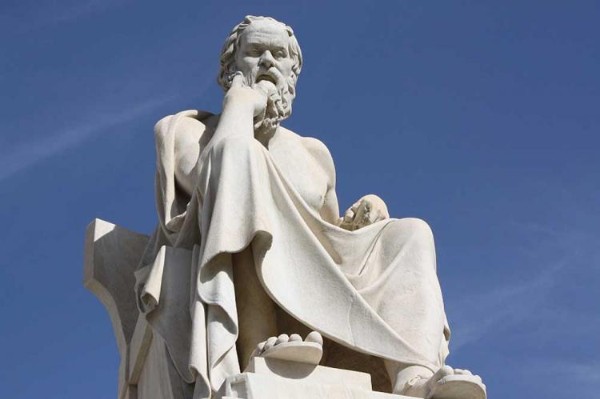
Socrates
Essentially, World Philosophy Day is a global permission to be insufferably introspective. You might quote Plato without irony, or engage in a Socratic dialogue with your barista. But how would philosophers throughout the ages feel about having a special day?
If Socrates was alive, he’d probably celebrate by asking why we need a special day for philosophy at all. Aristotle would give a lecture about the proper classification of such days.
Descartes would stay in bed, convinced that neither the day nor the bed actually exist. And Nietzsche would likely post something cryptic and vaguely threatening to social media about the death of calendar-based meaning.
Ludwig van Beethoven: Grosse Fuge in B-flat Major, Op. 133
Agreeable Disagreement
Philosophers, after all, have never been the easiest crowd to organise. Even among themselves, they can’t agree on what philosophy is. Some say it’s the pursuit of wisdom, others insist it’s a method of inquiry, and still others maintain that it’s just arguing politely with longer words.
This makes this day oddly charming, as it unites the world in disagreement for a short period of time only. No matter one’s background, culture, or caffeine intake, everyone can philosophise about why they’re philosophising in the first place.
One of the best things about World Philosophy Day is that it doesn’t tell you what to think. It merely invites you to think. Whether you lean toward the Stoics or the Existentialists, there’s room at the table.
Igor Stravinsky: Pulcinella Suite
Wi-Fi Stoicism
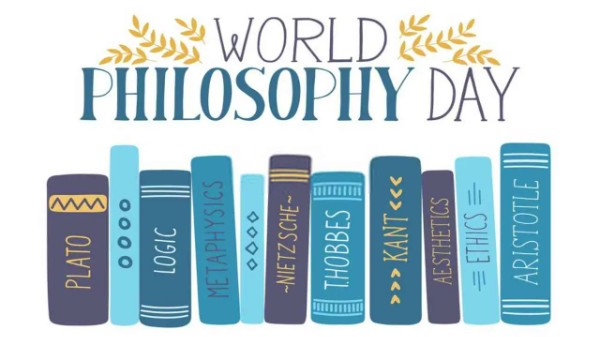
The Stoics, like Seneca and Epictetus, would tell you to accept life’s misfortunes with grace and detachment, a philosophy that pairs nicely with modern Wi-Fi outages. Existentialists, on the other hand, insist that life has no inherent meaning and that we must create our own.
Meanwhile, Eastern philosophy might invite you to contemplate non-duality and mindfulness, reminding you that the distinction between “thinking” and “not thinking” is itself an illusion.
The beauty of philosophy is that everyone can find their flavour. Today, anyone can be a philosopher with a Wi-Fi connection and a flair for posting pseudo-profound observations in elegant fonts.
Claude Debussy: “La cathédrale engloutie”
A Timeless Discipline
Philosophy has escaped the ivory tower and found refuge in memes. The ancient question “What is truth?” has evolved into “Who fact-checked that quote?” And yet, despite our modern distractions, the spirit of philosophy lives on.
There’s a delicious irony in assigning a single day to something as eternal as philosophy. You can’t really schedule wisdom between brunch and a dentist appointment. But perhaps that’s the point.
In a world increasingly allergic to uncertainty, philosophy offers a rare comfort. It doesn’t need to have the answers. It’s a space where ambiguity isn’t a flaw but a feature. As the philosopher Bertrand Russell once said, “The trouble with the world is that the stupid are cocksure and the intelligent are full of doubt.”
For more of the best in classical music, sign up for our E-Newsletter
Johannes Brahms: Intermezzo in A Major, Op. 118, No. 2
For more of the best in classical music, sign up for our E-Newsletter