In her latest album, Villani-Côrtes: Unreleased Piano Works, pianist and scholar Danieli Longo brings to light a remarkable body of music that had, until now, remained unheard. Dedicated to the Brazilian composer Edmundo Villani-Côrtes, the recording presents a collection of pieces preserved in the composer’s personal archive and never previously recorded.
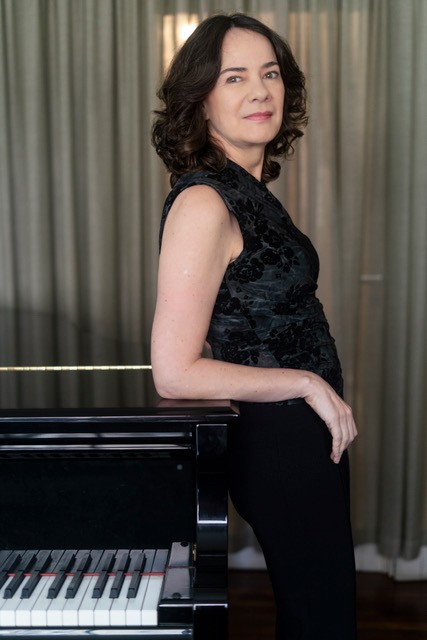
Danieli Longo © Heloisa Bortz
“The album is entirely composed of unpublished works,” Longo explains, “pieces that had never been recorded and were preserved in the composer’s personal archive.” What began as an unexpected reconnection became the foundation for the project. “In a way, the project emerged by chance, but as I believe that nothing truly happens by chance, I see it as the result of a meaningful encounter, where generosity and intuition played a decisive role.”
Longo first encountered Villani-Côrtes as a student at São Paulo State University (UNESP), where she now teaches. Decades later, a chance meeting at a concert led to a visit to the composer’s home. “He guided me through his personal archive and started presenting various scores. Among them were both well-known works and a significant number of unpublished pieces.” At the time, however, the materials remained set aside. “I was going through a particularly delicate period in my life,” she says. It was only years later, while reorganising the documents, that she reconnected with them and recognised their importance.
From that moment, the project took shape. “I began a selection process, as I had received a substantial number of scores.” The resulting album spans five decades of Villani-Côrtes’ output and is organised chronologically. “The program invites the listener to immerse themselves in his poetic universe, tracing a lifelong journey dedicated to the piano.”
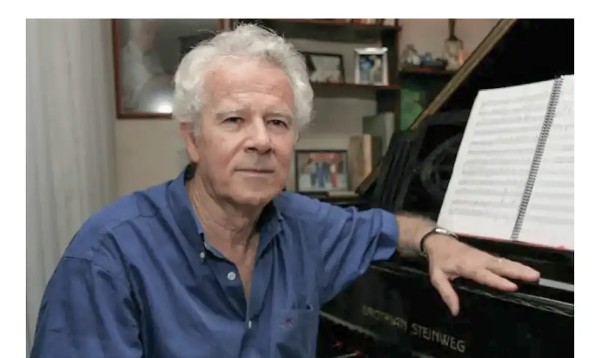
Edmundo Villani-Côrtes © Conferência dos oceanos/Divulgação
At the core of the project is a close relationship between performance and research. “From the outset, the aim was to bring together performance practice and scholarly research,” Longo notes. Working directly from manuscripts, she encountered both clarity and responsibility. “Engaging with manuscripts is often a delicate process,” she explains, though in this case, “the composer’s writing proved to be remarkably clear.”
Still, the process required careful judgment. “There are always elements that require attention, articulations, dynamic nuances, and character indications that are sometimes more suggestive than prescriptive.” This led her to balance fidelity and interpretation. “It is essential to consider not only the musical text, but also the composer’s style, his pianistic idiom, and the broader aesthetic context.”
An important outcome of this work is the preparation of these scores for future performers. “The intention is to broaden access to this repertoire,” she says, “preventing these works from remaining confined to a private archive or to a single performer.” For Longo, this is also an ethical commitment. “Each choice can directly influence how the work will be understood and interpreted in the future.”
Villani-Côrtes’ musical language itself stands out for its synthesis of traditions. “One of its most striking aspects is the fusion of formal structures from the classical tradition with elements deeply rooted in Brazilian music,” Longo explains. This includes rhythms associated with choro, toada, and baião, integrated into refined pianistic writing. “This sense of Brazilian-ness does not appear in a superficial way, but as a fundamental component of the musical discourse.”
The works selected for the album reflect this diversity. The Five Ponteios, composed beginning in the 1960s, draw on a genre rooted in Brazilian popular tradition and connected to the legacy of Camargo Guarnieri. In contrast, the so-called Second Sonata, originally titled A Lenda dos Alatás, presents a programmatic narrative. “The work tells the story of a love between Datino, an Indigenous guardian of the forests, and Maracá,” Longo explains. The three movements unfold this story, culminating in O Pranto da Natureza.
This movement, in particular, posed a unique challenge. “Without a doubt, it was one of the pieces that challenged and engaged me the most,” she says. “There is a continuous flow of notes sustained from beginning to end.” She draws a parallel to Frédéric Chopin, noting the resemblance to the final movement of his B-flat minor Sonata. Yet Villani-Côrtes’ approach has its own identity. “The result is an equally dense and uninterrupted writing, but with its own distinct rhythmic energy.”
The technical and expressive demands are considerable. “It requires precision, endurance, and absolute control of sound,” she explains. At the same time, the marking “com rudeza” shapes the interpretation. “This indication resonates strongly with the title of the movement, reinforcing the idea of an intense, almost visceral lament.”
The recording process itself became a deeply personal experience. “Being entrusted with these manuscripts was one of the most meaningful moments of my artistic journey,” Longo reflects. “It represented a true turning point in my life.” Recorded in three stages at Arsis Studio, the project allowed her to rediscover her connection to the instrument. “It was through this material that I rediscovered the piano from a new perspective.”
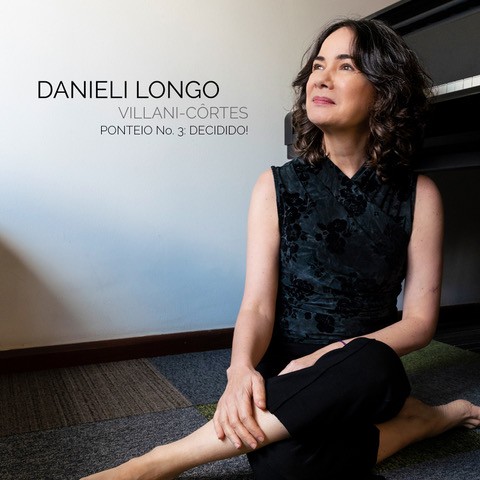
She also emphasises the collaborative dimension of the project, including her work with sound engineer Adonias Souza Jr. and the support of Azul Music Label. “Azul Music demonstrated great sensitivity in understanding the proposal and its importance,” she says, expressing particular gratitude to its founder, the pianist and composer Corciolli.
Ultimately, Longo hopes the album will expand listeners’ understanding of Villani-Côrtes. “I hope they will discover the richness and uniqueness of his work,” she says. More than that, she wishes to reveal a lesser-known side of the composer. “There is a very particular expressive strength in this repertoire, one that remained, for so long, confined to manuscript form.”
Her goal is not only to present the music, but to inspire further engagement. “I would like this album to spark curiosity,” she says. “Above all, this is music that deserves to be heard, studied, and widely shared.”
To learn more about Danieli Longo and the album, visit https://www.azulmusic.com.br/portfolio-item/villani-cortes-unreleased-piano-works/
For more of the best in classical music, sign up for our E-Newsletter