Kurt Magnus Atterberg (1887-1974) stands as one of the more remarkable yet somewhat paradoxical figures in 20th-century Scandinavian musical history. He was a civil engineer by profession and a prolific composer by vocation.
Despite his demanding “day job,” Atterberg produced a large body of deeply Romantic music, including symphonies, concertos, string quartets, and operas. He also shaped Swedish musical life through organisational roles, music criticism, and institutional leadership.
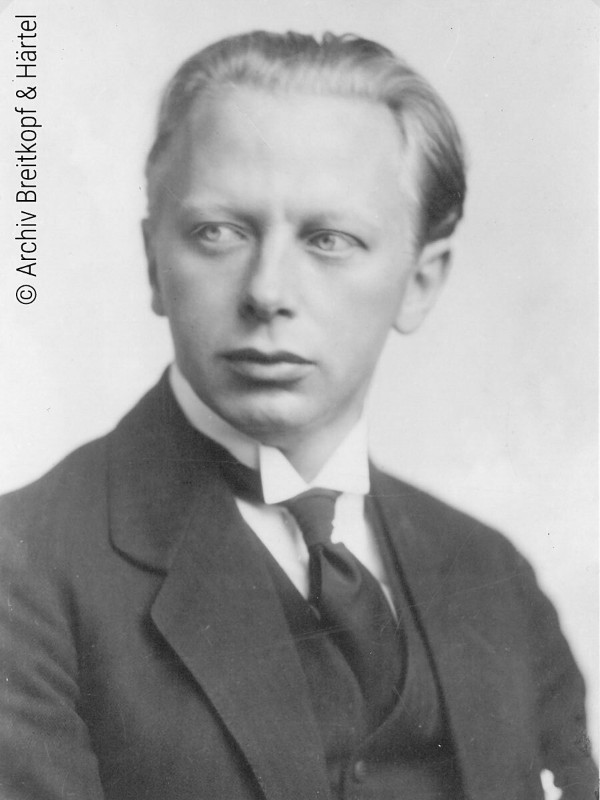
Kurt Magnus Atterberg
On the occasion of his birthday on 12 December, let’s explore his life and career, his musical output and style and his legacy. In addition, various controversies, some all but unavoidable, have continued to shape and complicate the appreciation of his works.
Kurt Atterberg: Cello Concerto in C minor, Op. 21
Dual Calling
Kurt Magnus Atterberg was born on 12 December 1887 in Gothenburg, Sweden, into a family combining technical and musical inclinations. His father, Anders Johan Atterberg, was an engineer, and his mother, Elvira Uddman, came from a musical background.
He first turned seriously toward music around 1902, after hearing a performance by the Leipzig Gewandhaus Orchestra. In fact, this particular experience compelled him to take up the cello.
Nevertheless, he enrolled at the Royal Institute of Technology in Stockholm, and he obtained a diploma in electrical engineering in 1910. At the same time, he pursued musical training.
From 1908 to 1911, he studied composition and orchestration at the Stockholm Conservatory under the guidance of Andreas Hallén. Yet, according to scholars, he remained “to a considerable extent self-taught,” refining his compositional voice on his own.
Kurt Atterberg: Symphony No. 2 in F Major, Op. 6 – I. Allegro con moto – Maestoso – Largamente (Frankfurt Radio Symphony Orchestra; Ari Rasilainen, cond.)
Engineering by Day, Symphonies by Night
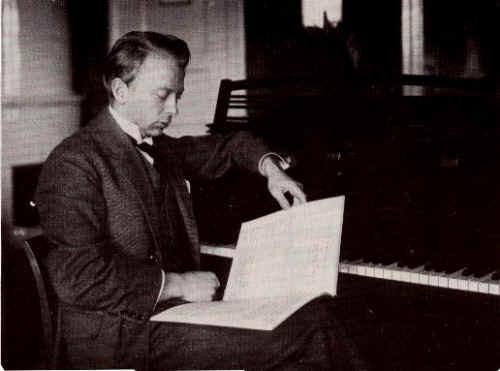
Kurt Atterberg
Shortly after graduating as an engineer, Atterberg began working at the Swedish Patent and Registration Office in 1912. He would hold that post for more than half a century, retiring only in 1968.
Simultaneously, he maintained his musical ambitions. In 1912, he made his conducting debut in Gothenburg with his own First Symphony and a Concert Overture, Op. 4.
Thus, from the earliest phase of his career, Atterberg embodied a remarkable duality. He was an engineer by day and a composer/conductor by night. As one modern account puts it, he was “a workaholic par excellence.”
Across his lifetime, Atterberg produced a surprisingly extensive oeuvre. We count ten symphonies, or 11 if we include the Symphony for Strings Op. 53, multiple concertos, orchestral suites, chamber works such as string quartets, at least one sonata, and several operas and ballets.
Kurt Atterberg: Suite for Violin, Viola and String Orchestra, Op. 19
Shaping a Romantic-Nordic Voice
Atterberg once declared, “the Russians, Brahms, and Reger as his chief models.” Indeed, his music tends toward lush Romanticism featuring broad melodies, clear forms, expressive orchestration, and often a weaving in of Swedish folk-inspired elements.
The Sonata in B minor, Op. 27, was originally written for his own instrument, the cello. It showcases a blend of Romantic tradition and national flavour. The second movement bears folkish inflections, while the first and third movements reflect a more classical-romantic structure.
Within his early symphonies, specifically the first four, scholars have traced his artistic development. Recordings and performances emphasise the evolution from youthful ambition to confident mastery of the orchestral palette.
Kurt Atterberg: Sonata for Cello and Piano in B minor, Op. 27
Dollar Symphony
Although Atterberg had already established himself in Swedish musical life, his international breakthrough came in 1928. That year, the Columbia Graphophone Company sponsored an international competition to commemorate the 100th anniversary of the death of Franz Schubert. Composers were invited to write a symphony inspired by Schubert’s “Unfinished.”
Atterberg submitted his Symphony No. 6 in C Major, Op. 31. Against hundreds of submissions, he won the first prize with two others and collected $10,000. Hence, the symphony was later nicknamed the “Dollar Symphony,” and it rapidly gained international performances and acclaim.
One contemporaneous appreciation highlights its “transparent orchestration, euphony, engaging melodies, rousing dance-like music in the outer movements, the poetic mood of the central Adagio, and a hint of Swedish folk music.”
Thus, the Sixth Symphony stands as his masterpiece in terms of reach and popularity. It was the work that introduced his Romantic-tinged Nordic voice to audiences across Europe and beyond.
Kurt Atterberg: Symphony No. 6 in C Major, Op. 31, “Dollar Symphony” (Hannover Radio Philharmonic Orchestra; Ari Rasilainen, cond.)
Leadership and Advocacy
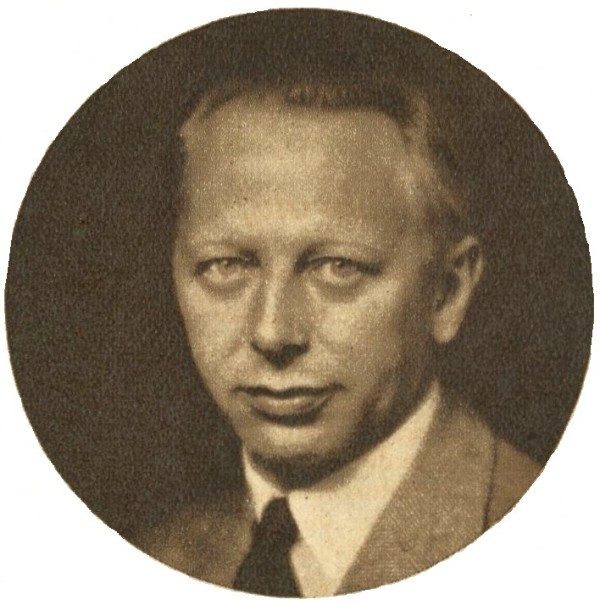
Kurt Atterberg © Georg Fayer
Kurt Atterberg’s impact went far beyond composition. In 1918, he co-founded the Society of Swedish Composers, alongside other leading Swedish composers of the time, and from 1924 to 1947 served as its president.
He was also active in music administration. From 1940 to 1953, he was the secretary of the Royal Swedish Academy of Music, and he chaired the Swedish performance-rights society STIM from 1924 to 1943. He also contributed music criticism to the newspaper Stockholms-Tidningen from 1919 to 1957.
Atterberg engaged with nearly every dimension of music life. His dual career, as an engineer in the office and a musician by passion, underscores his extraordinary work ethic. As one modern commentary observes, “he managed to compose nine symphonies, five concertos, five operas … while being part of various music societies and organisations.”
For much of the mid-20th century, Atterberg’s music enjoyed broad popularity in Scandinavia and parts of Europe. His lush, Romantic style, including evocative, melodic, national-inflected, provided an appealing counterpoint to avant-garde trends.
Kurt Atterberg: Horn Concerto, Op. 28
Darker Currents
Many listeners and musicians today regard Atterberg as an “underrated” symphonist. However, Atterberg’s legacy is complicated by political controversies, particularly his associations with German musical institutions during the Nazi era and anti-Semitic remarks in his correspondence.
The political controversies are well-documented and include membership in a Nazi-affiliated organisation of international composers. His private letters disclose anti-Semitic remarks against Jewish colleagues in STIM, and he continued to defend German music policy until 1945.
As a consequence, after 1945, he was “marginalised and ostracised by at least some of his fellow Swedish composers.” While some recent scholarship and programming have sought to re-evaluate him on purely musical grounds, disentangling artistic merit from political baggage, is not without problems.
The complexity of his biography serves as a cautionary tale. Appreciation of his music cannot be wholly separated from ethical reflection, but neither can the music be dismissed outright on the basis of biographical controversies alone.
Kurt Atterberg: Ballad utan ord (Ballad Without Words), Op. 56 (Norrköping Symphony Orchestra; Jun’ichi Hirokami, cond.)
Defined by Contrasts
What makes Atterberg historically and musically significant, beyond the mere volume of his output, is the fact that he embodied a synthesis. Romantic-Germanic traditions merged with Nordic sensibilities, including melodic references to Swedish folk music.
In an era when music was shifting toward modernism, serialism, and avant-garde experimentation, Atterberg represents a different path. His music remained rooted in tonality, melody, national identity, and accessibility.
From an aesthetic standpoint, some critics argue that Atterberg’s style, though skilful, lacks the formal innovation or harmonic daring of more modernist contemporaries. To be sure, Atterberg was a composer of paradoxes. An engineer by profession, a Romantic symphonist by vocation.
Kurt Atterberg: Suite No. 1, “Orientale” (Ferenc Balogh, violin; Gyorgy Kertesz, cello; Andras Kiss, violin; Ilona Prunyi, piano)
A Legacy of Brilliance and Burden
He was a celebrated Nordic musical voice, yet tarnished by political associations. And he was a man deeply cultivated in institutional leadership, yet also regarded as an underrated composer after decades of neglect.
The “Dollar Symphony” gave him global recognition, and modern recordings and growing interest among classical-music aficionados have begun to revive his name. In the end, Atterberg remains a figure who challenges simple narratives.
He was a major creative talent whose Romantic conservatism was both artistic choice and, in the darkest years, political alignment. To study him is to confront the tension between musical beauty and historical responsibility, and to consider how memory, morality, and art intersect.
For more of the best in classical music, sign up for our E-Newsletter