Writing classical music reviews can feel intimidating. After all, how can anyone possibly hope to capture what musicians do in words?
The unsatisfying answer is the same advice those musicians have been given: practice, practice, practice!
But there are some tips you can keep in mind while you practice. Today we have fifteen.
This won’t be a comprehensive technical guide about how to write classical music reviews. You’ll have to take a class or read a textbook for that.
Instead, this is more generalised advice about how to get started and cultivate a particular mindset.
So whether you’re just starting to write reviews or looking for tips to further sharpen your craft, hopefully these fifteen tips will help you find your voice.
1. Go to concerts with other people.
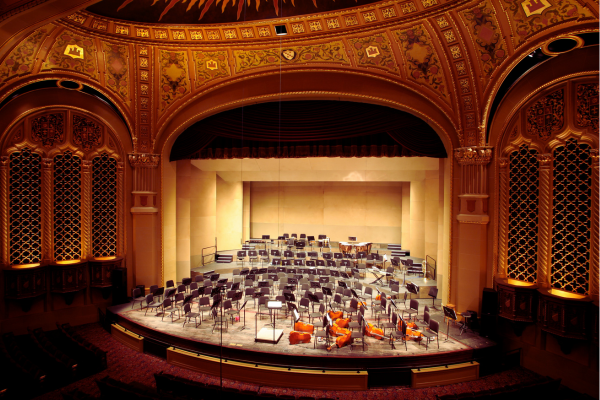
When you can, go to concerts with a friend or family member. Talk about the concert afterwards, whether on the drive home or over drinks.
Ask them questions and compare notes. What did you like best? What individual moments stood out to you? What performance was your favourite? Importantly, why? (That’s sometimes a harder question to answer than you’d think!)
When you go to a concert knowing that you’re going to have a conversation about it afterwards, you listen differently.
2. Try writing reviews like you’re describing a concert to someone who wanted to go but couldn’t make it.
When I was a teenager, I started writing about concerts because I wanted to share the experience with a pen pal.
In order for him to understand what certain formative concerts had meant to me, I had to figure out how to make him feel, in some small way, like he’d been there too.
Twenty years later, my favourite kind of review to write is one where I feel like I’m having coffee with a friend and telling them about the show, ideally in a way that evokes some kind of response from them.
Not coincidentally, these kinds of reviews are also my favourite ones to read.
Critic Anne Midgette talks about her career
3. Consider recording the concert.
Before you go to a concert, find out if it is going to be livestreamed. If it is, make sure you know how to access the archived performance after you get home, or teach yourself the basics of free recording software like Audacity.
If you aren’t able to get your hands on a recording, familiarise yourself with your phone or bring a dedicated voice recorder.
Yes, I know; technically, you’re not supposed to do this. But if you’re the only one who’s ever going to hear the recording, and if it helps jog your memory when you get home…perhaps that’s a crime worth committing. (Perhaps.)
That said, you have to be as discreet as a spy. If anyone notices you’re doing this, then it’s not worth doing.
4. Trust every thought.
Chances are, you’re probably not used to transcribing your internal monologue about music you’re hearing. Maybe you don’t even have an internal monologue about music you’re hearing.
You have to train yourself to notice all thoughts without judgment. (Automatic writing or even guided meditations can help you learn how to do this.)
Jot down any impressions, no matter how scattered they seem. Once you have a list of them, you’ll probably see a list of themes begin to emerge.
The most important part of review writing isn’t actually the writing part; it’s transcribing thoughts and organising them in a way that makes sense. The writing is just the thing that happens at the end of that process.
An interview with critic Donald Rosenberg
5. Trust your physical reactions.
It’s surprisingly easy to play mind games with yourself when you’re trying to put an ephemeral experience into words.
Sometimes my mind tells me what I should be feeling at a performance. Everything might be in tune and in time, and intellectually I’ll know I should be blown away, but I just…won’t be.
Other times, I’ll have a physiological reaction that I won’t control. I will get goosebumps or feel the hair on the back of my neck go up. And I trust my body to tell the truth over my mind.
If I experience that, I can work backwards to at least try to figure out what triggered the reaction, and then write about it.
On the flip side, it’s okay if that physiological reaction doesn’t happen. But if it does, take note.
6. Read reviews.

Read all the reviews you can find. Check out everything from the New York Times to your college paper.
The more you read, the more you will absorb what a good review looks like, how long it is, how it’s organised, what vocabulary is used, etc.
From there, find individual people whose work you like. Verbalise to yourself what you like about what they do.
Critic David Hurwitz talking about music criticism on his Youtube channel
7. Criticise reviews.
While reading reviews, you will find reviewers who you do not like, who (bluntly) are not very good at what they do.
If you can, connect with some other music nerds whom you can complain to privately. Complaining privately will help you verbalise what exactly you don’t like about what you’re reading.
I have learned so much about what I don’t want to do by reading critics whose work I do not like. Things like:
– I do not like when it sounds as if someone pre-wrote two-thirds of their review before the concert.
– I do not like it when critics come across as world-weary.
– I do not like it when critics reference obscure academic concepts when writing for lay audiences.
Reading bad reviews is good. Because if I play my cards right, their bad writing can make my writing better.
8. Continue your own musical education.

© Classy
One of the best ways to grow your musical vocabulary is to always be studying music performance.
A great teacher will have accumulated years’ worth of musical words, phrases, similes, and metaphors.
Learning them will not only help you play your instrument better, but also help you think about music in a way that’s easier to communicate to others.
If you like the way a teacher describes a concept, write it down in a journal or in your notes app. You can build on their idea someday. (And you should be keeping a record of your lessons anyway.)
9. Decide on a point of view.
Don’t just write a piece that describes the concert. Be brave and specific, and decide what you think about it.
I liked this concert because x, y, and z. I did not like the first half of this concert because x, y, and z. I didn’t know what to think about this concert because x, y, and z. I hated this concert because x, y, and z.
Even if you don’t put that opinion in the review in those words exactly, the rest of the review should support the general idea.
So often, you will find reviews online that go on for hundreds and hundreds of words, but by the end of it, you’re still not sure what the reviewer took away from the experience. What’s the point of reading that?
10. Nowadays, nobody is just a music critic. So decide what else you want to be.
In the past, most famous critics were most famous for their criticism.
Nowadays, though, it’s not really possible to make a living writing classical music criticism. So you’re going to have to branch out. You’re going to have to be a critic and something else.
Try thinking of yourself as a historian who writes reviews, or a music teacher who writes reviews, or a violinist who writes reviews.
Or maybe your classical music background can help you communicate about other genres of music.
A part of your training or your identity or your life experience can become a lens through which you create your reviews.
Make criticism that you specifically can write well.
Harpist and pianist Amy Schaffer from the channel Virgin Rock, where she uses her classical music background to interpret rock music
11. Accept that classical music isn’t intrinsically better than other genres of music.
Let’s get over ourselves. Classical music is not intrinsically better than other music genres, period.
Thinking that way alienates other people and keeps you from insights that would make your own listening life more enjoyable.
So put on your listening ears, check out other genres, and write criticism – even if it’s just on Reddit, or in a group chat, or in your notes app – about other genres that you hear. You’ll bring the skills you develop back to your classical music reviews.
Critic Alex Ross discusses his relationship with pop music
12. Write reviews of media you encounter, in addition to live performances.
A lot of classical music criticism is reserved for describing live concerts or full albums, but there’s no rule that says you have to stick to those.
Practice with the media that is all around you. Pull up YouTube videos and write mini reviews. Put Spotify on random and see what individual tracks pop up. Explore a certain composer, or era, or theme.
It has never been easier to find classical music performances to review, even if you can’t make it out to many concerts.
13. Realise that it might be a mistake to think of yourself as a writer.
Every year, it appears increasingly obvious that we’re moving toward a post-literate society. People are absorbing less and less information via the written word and more and more via audio and video.
Of course, that doesn’t mean that the written word is going to disappear entirely. It’s still going to be important to be a good writer.
But if you want your voice to resonate more broadly, you’re probably going to want to expand your skillset.
Get comfortable on camera, both in selfie mode and otherwise. Learn how to work a microphone. Experiment with format.
A video about Rubinstein and Horowitz from Ben Laude
14. Blogs, Substacks, or TikTok accounts are free to start, and you should start one.
It’s a very human thing to want to collect your thoughts and record them. Even if you’re the only one who reads them, they’re worth keeping. So start an online repository to do that!
You don’t need a teacher or editor to be your audience or push out what you have to say into the world. Reviewing can be a lifelong project for you, not just something you do as a job or at school.
15. You are not going to make your living doing this, so you might as well enjoy yourself.
Do you want the good news or the bad news first?
The bad news is, there are only a couple of people in America making a full-time living writing about classical music, if that. You are not going to join their number for quite a while, if ever. And if you do, chances are it will be via some crowdfunding method or starting a YouTube channel that gets you ad revenue…not by winning a secure salaried position with a newspaper.
We can certainly have a debate about whether this is a positive development. But it is what it is.
The good news is that freedom means you can afford to take risks with your criticism, be creative, and develop an intensely personal voice. Plus, hobbies tend to be more enjoyable than careers for a reason.
If you love communicating about music, that will come through in what you say. And if you don’t love it yet, keep experimenting and having fun until you do. Your reader (or viewer) will appreciate it.
For more of the best in classical music, sign up for our E-Newsletter